

Healthcare organisations rarely fail because of a lack of clinical expertise. They fail when recruitment, scheduling, communication, community management and digital administration operate as disconnected systems.
For surgeons, optometrists and healthcare decision-makers, this fragmentation creates avoidable operational friction. Valuable time is diverted from patient care into inbox management, candidate screening, document handling, platform administration and repetitive scheduling tasks.
The issue is structural.
Under the UK GDPR, health information is special category data requiring enhanced protection and appropriate governance. A clinic ecosystem that relies on unmanaged spreadsheets, personal inboxes and disconnected software is not merely inefficient. It creates compliance exposure, data leakage and technical debt.
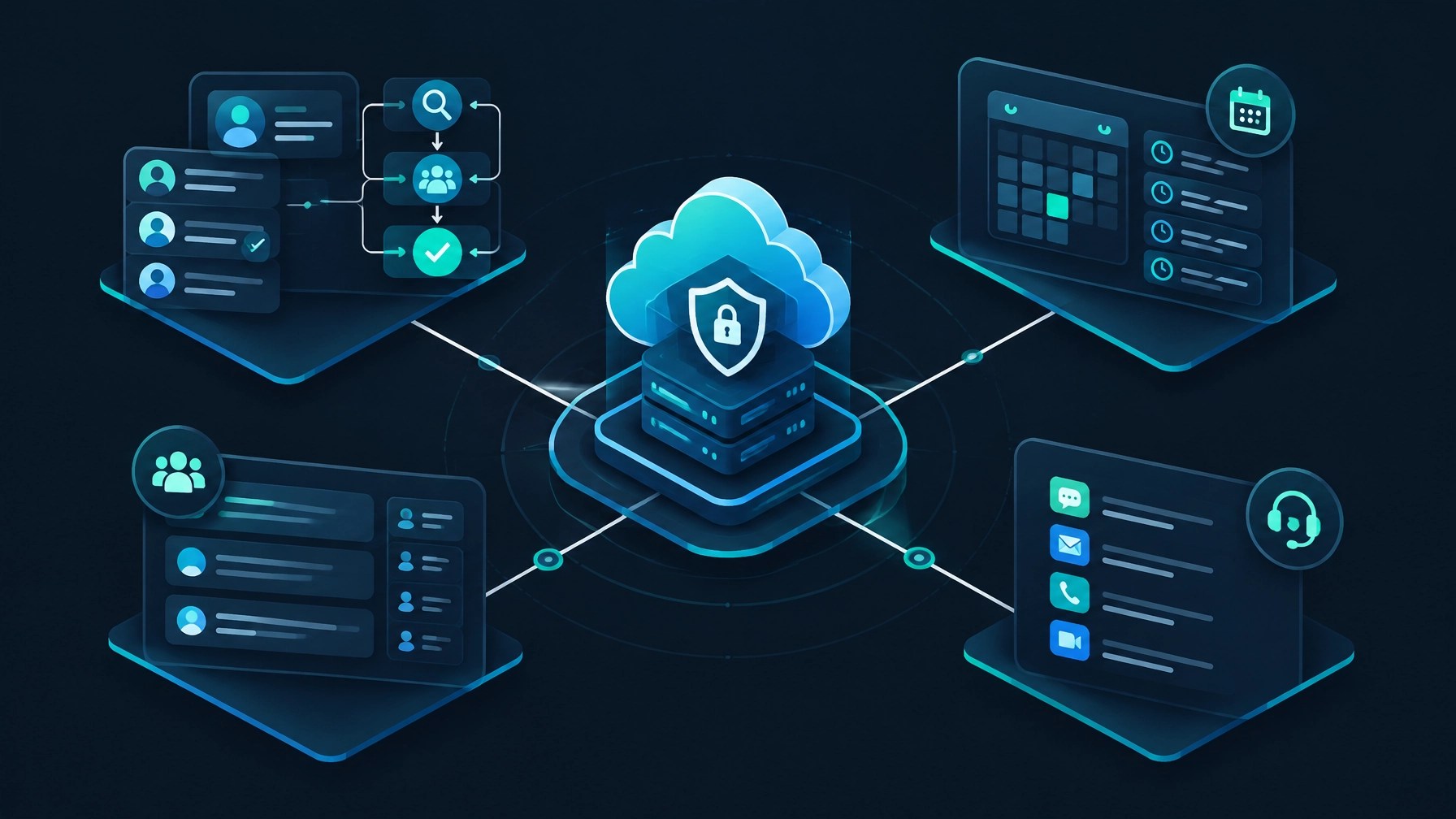
A managed clinic ecosystem provides a controlled alternative. It combines SaaS infrastructure, recruitment automation, professional community operations, scheduling and ongoing support within one governed framework.
This is the model being developed around NeedAnOptom Healthcare, with ZeroPoint Creative acting as the infrastructure and automation partner.
Key Takeaways
- NeedAnOptom Healthcare operates first as a healthcare recruitment company and second as a professional community platform.
- Its recruitment placements and community-generated donations support charitable giving; NeedAnOptom Healthcare is not itself a charity.
- ZeroPoint Creative provides the technical architecture, automation and digital operations management behind the ecosystem.
- Agentic workflows can reduce repetitive administrative work across recruitment, scheduling, communications and platform operations.
- Nova, Krishna’s MyGentic AI assistant, represents the type of managed AI infrastructure that can support complex business workflows without replacing clinical judgement.
- Reliable infrastructure allows clinicians to focus on care whilst healthcare organisations scale with greater control.
The Problem: Fragmented Operations and Clinical Time Loss
A modern clinic is not a single system. It is an operational network involving clinical staff, administrators, recruiters, candidates, patients, professional communities and external partners.
When these functions are managed independently, several systemic weaknesses emerge:
- Recruitment latency: Candidate enquiries remain unanswered whilst clinical leaders are occupied with patient care.
- Credentialing friction: Documents, references and professional information are collected inconsistently.
- Scheduling instability: Interviews, onboarding calls and operational meetings require unnecessary manual coordination.
- Community fragmentation: Professional knowledge is dispersed across email, messaging applications and informal networks.
- Visibility decay: Vacancies, resources and announcements become outdated across multiple channels.
- Compliance exposure: Sensitive information may be copied between systems without a clear audit trail or retention protocol.
These failures have a direct commercial impact. A delayed recruitment response can mean an unfilled clinical shift. A poorly co-ordinated onboarding process can delay service delivery. An inactive community platform can weaken trust and reduce the quality of professional engagement.
DIY and out-of-the-box tools do not rectify these issues. They often create another layer of technical debt.
Stability is the primary requirement.

The Infrastructure: A Managed Clinic Operating Layer
The managed clinic model treats digital operations as infrastructure rather than a collection of subscriptions.
ZeroPoint Creative provides the technical architecture required to connect the main operational components:
- SaaS infrastructure and secure hosting
- Healthcare recruitment automation
- Professional community operations
- Scheduling and communications
- Ongoing support, monitoring and optimisation
This does not mean that every decision is delegated to software. It means that routine, repeatable processes are standardised so that experienced professionals can concentrate on decisions requiring human judgement.
Recruitment as the Primary Engine
NeedAnOptom Healthcare is first a healthcare recruitment company. Its core purpose is to connect healthcare professionals and employers through carefully managed recruitment activity.
The organisation supports clinical recruitment across areas rooted in optometry and ophthalmic care, with wider healthcare applications. Its employer-facing model focuses on understanding requirements, identifying appropriate candidates and supporting the placement process. This is materially different from treating recruitment as a generic job-board function.
ZeroPoint Creative’s role is to engineer the supporting infrastructure.
Agentic workflows can assist with:
- Initial candidate enquiry handling
- Vacancy information and response management
- Structured pre-screening
- Document collection
- Credential and information checks
- Interview scheduling
- Candidate reminders
- Internal notifications
- Recruitment pipeline reporting
The purpose is not to automate clinical authorisation. Professional qualifications, suitability and final recruitment decisions remain subject to appropriate human review.
The purpose is to remove administrative repetition.
Community as the Second Layer
NeedAnOptom Healthcare is also developing a professional community platform, including the Clinical Exchange concept. This provides a structured environment for clinicians to share knowledge, seek peer input and remain connected to relevant professional developments.
The community function is important because recruitment alone does not create a durable clinical network. Professional relationships require continuity, useful information and a trusted operating environment.
ZeroPoint Creative supports the infrastructure behind this layer through platform administration, access controls, content workflows, moderation processes and system oversight.
A community platform should not be treated as an unmanaged discussion board. It is social infrastructure. Its structural integrity affects professional trust.
Scheduling and Operational Support
Scheduling is often underestimated because each individual task appears minor. Across a growing healthcare organisation, however, small scheduling tasks accumulate into a substantial administrative burden.
A managed scheduling framework can co-ordinate:
- Candidate interviews
- Employer consultations
- Onboarding appointments
- Community events
- Internal reviews
- Support requests
- Follow-up communications
Automated reminders reduce missed appointments. Centralised availability reduces duplication. Clear escalation rules ensure that exceptions reach the correct human operator.
This is where managed digital operations become valuable. ZeroPoint Creative’s Digital Operations Management service is designed around workflow support, operational co-ordination, platform oversight and routine digital administration.
The system creates order without imposing unnecessary complexity.
Transformation: Introducing Nova into the Managed Ecosystem

Nova is Krishna’s MyGentic AI assistant. She is part of the wider AI infrastructure used to support managed workflows and operational co-ordination.
Nova should not be understood as a replacement for a surgeon, optometrist, recruiter or practice manager. She is not a clinical decision-maker. She does not replace professional accountability.
Her role is to support the operational layer.
Within a properly governed workflow, an AI assistant such as Nova can help organise information, direct enquiries, prepare structured summaries, trigger routine actions and escalate matters requiring human attention. This is particularly valuable where the process is repetitive, rules-based and distributed across multiple platforms.
For a healthcare recruitment and community ecosystem, that may include:
- Routing a candidate to the correct recruitment pathway
- Identifying missing information before human review
- Preparing an internal task for a recruiter
- Supporting appointment and interview coordination
- Directing community members to approved resources
- Escalating safeguarding, compliance or clinical queries
- Maintaining consistent communication standards
The value is not artificial autonomy for its own sake. The value is controlled reduction of operational friction.
ZeroPoint Creative’s AI Staffing and Automation service provides a broader framework for businesses requiring AI support with administration, lead handling, customer communication and digital workflows.
In healthcare, those workflows must be configured with additional care. Access permissions, data minimisation, human review and auditability are not optional design features. They are part of the architecture.
Community-Led Giving and Professional Responsibility
NeedAnOptom Healthcare is not itself a charity. It is a healthcare recruitment company and professional community platform.
Its charitable contribution operates through the activity surrounding the organisation. Successful placements and donations generated through the community support associated charitable initiatives, including the aims described through Place with Purpose.
This distinction matters. Accurate positioning protects trust.
The commercial recruitment function, the professional community and the charitable giving mechanism are connected, but they are not identical. A resilient digital ecosystem must represent those functions clearly so that clinicians, employers, community members and charitable partners understand how the structure operates.
Clear architecture supports clear accountability.
Growth: Scaling Without Scaling Administrative Burden
A managed clinic ecosystem creates a more predictable foundation for growth.
NeedAnOptom Healthcare can expand its recruitment reach, strengthen its professional community and support wider charitable giving without relying entirely on manual administration. ZeroPoint Creative can monitor the technical environment, refine workflows and maintain the operational systems that support the platform.
This produces several practical outcomes:
- Greater recruitment throughput: More candidate and employer interactions can be processed consistently.
- Protected clinical time: Surgeons and optometrists spend less time handling non-clinical administration.
- Improved professional engagement: Community members have a structured environment for communication and knowledge exchange.
- Reduced operational overhead: Routine work is handled through standardised workflows rather than repeated manual intervention.
- Scalable infrastructure: New services, integrations and processes can be added without rebuilding the entire system.
- Stronger ecosystem stability: Recruitment, community activity and support functions operate from a more coherent technical foundation.
Growth becomes a consequence of stability.
That is the distinction between adding software and engineering infrastructure. Software provides isolated functions. Infrastructure provides controlled interaction between those functions.
The ZeroPoint Creative Role: Technical Architecture and Guardianship
ZeroPoint Creative operates as the technical architect behind the digital ecosystem. The role extends beyond building a platform. It includes ongoing oversight, workflow design, automation management, technical support and operational refinement.
The relevant services include:
- AI staffing and automation
- Digital operations management
- SEO and visibility support
- Managed hosting, security and continuous technical maintenance
Healthcare organisations should not be expected to become part-time systems administrators. Their responsibility is to deliver safe, effective and professional care. Their digital partner should assume responsibility for the structural integrity of the supporting ecosystem.
DIY infrastructure is a liability when no one owns the complete operating picture.
Managed infrastructure provides ownership, governance and continuity.
Conclusion: Clinical Focus Requires Operational Precision
The future of healthcare operations will not be defined by isolated AI tools. It will be defined by integrated, governed ecosystems that connect recruitment, community, scheduling, support and digital administration.
NeedAnOptom Healthcare demonstrates how a healthcare recruitment company can develop into a wider professional community platform, with placements and community donations supporting charitable giving. ZeroPoint Creative provides the infrastructure and automation required to make that model resilient.
The objective is straightforward: reduce administrative friction so clinicians can return their attention to clinical care.
If you are a surgeon, optometrist, practice leader or healthcare decision-maker assessing your own Agentic Workflow requirements, contact Krishna through ZeroPoint Creative.
Precision is the only path to operational confidence. Stability is the foundation of growth.
Category: SEO
Leave a Reply