Author: Krishna de Gruchy

  • ZPC Spaces: The CRM That Answers While You Sleep

    ZPC Spaces: The CRM That Answers While You Sleep

    If you are still handling every enquiry yourself, missed messages and scattered tools can push routine administration into your evenings. ZPC Spaces is designed to bring these tasks into one connected system, with your approval retained for anything sent out.

    Join the ZPC Spaces waitlist

    ▶ Watch the 59-second ZPC Spaces video

    Problem 1: enquiries come in from everywhere and some get missed

    Website chat, forms, email, LinkedIn and WhatsApp all used to live in separate places. A prospective customer may contact you while you are serving someone, driving, or finishing the work already booked into your day, and when enquiries sit across separate platforms, keeping track of who needs a reply becomes another manual process.

    In Spaces:

    • Every enquiry lands in one inbox and one pipeline, each tied to a contact.
    • A new lead automatically gets a call-back task, so nobody is left waiting.
    • Nova, our website chat brain, answers visitors around the clock and passes them straight into the pipeline.

    Problem 2: admin eats the day

    The working day does not end when client work is complete; it continues in the inbox. Spaces is built to take the routine work off your desk:

    • The inbox sorter reads incoming mail, sorts it and drafts replies for you to check.
    • Call prep gives you a short brief on the person before a booked call.
    • A Monday report shows what came in, what moved and what's stuck.
    • Bookings, forms, landing pages, QR codes, invoices and support tickets with response deadlines all live in the same place, so there's no jumping between tools.
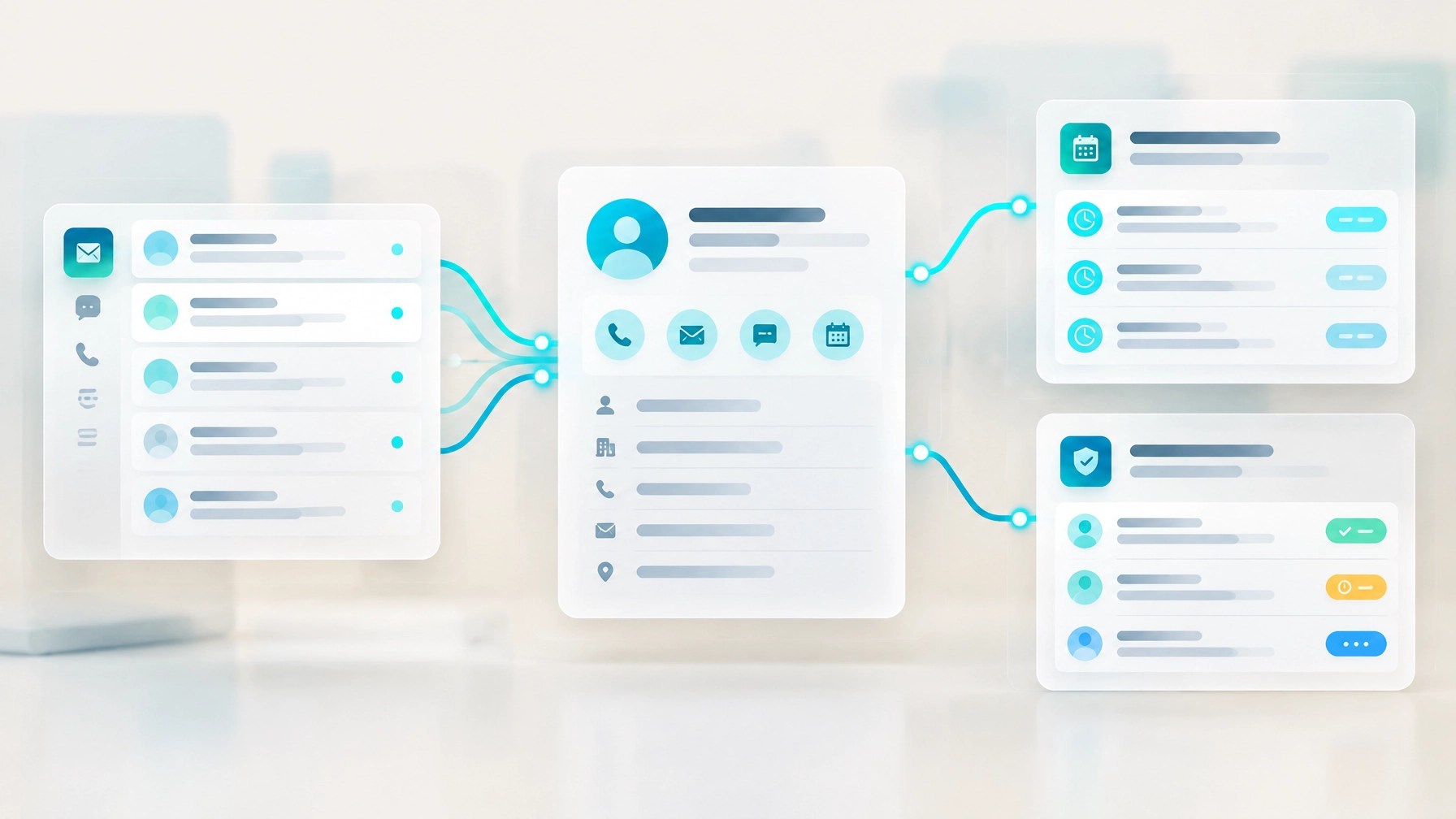
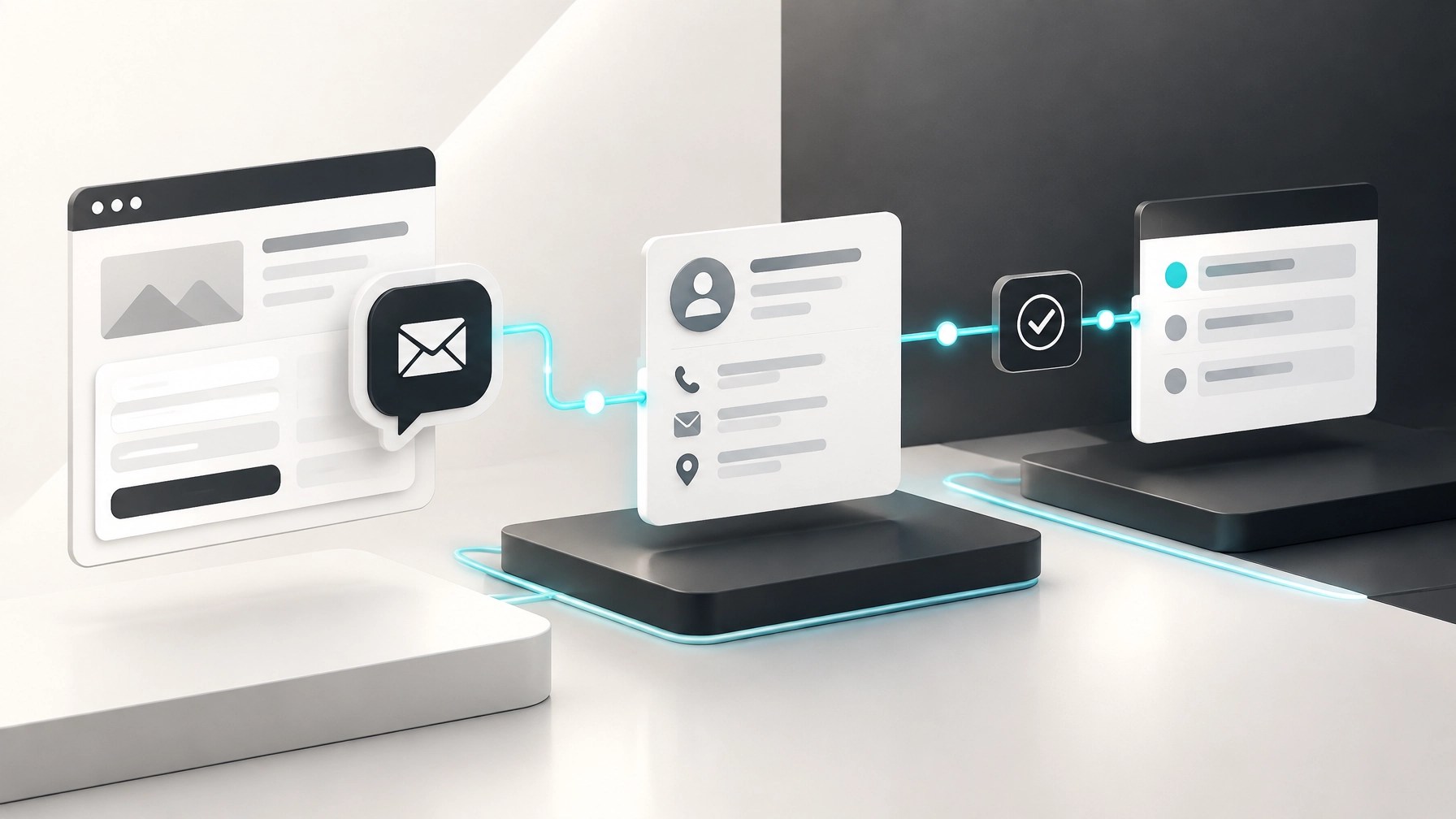
    Abstract CRM workflow showing enquiry records, pipeline stages, call-back tasks and an approval queue

    Problem 3: AI you can't trust to act alone

    This is the part I care about most.

    • Everything the brains draft goes into a "Needs your yes" list. Nothing goes out without your approval.
    • When you correct something, it's remembered, so the brains learn how you work instead of repeating mistakes.
    • Your data and your knowledge stay yours.

    Automation should not remove accountability from the business owner. You retain control over what is sent in your name, while the system organises the work around it.

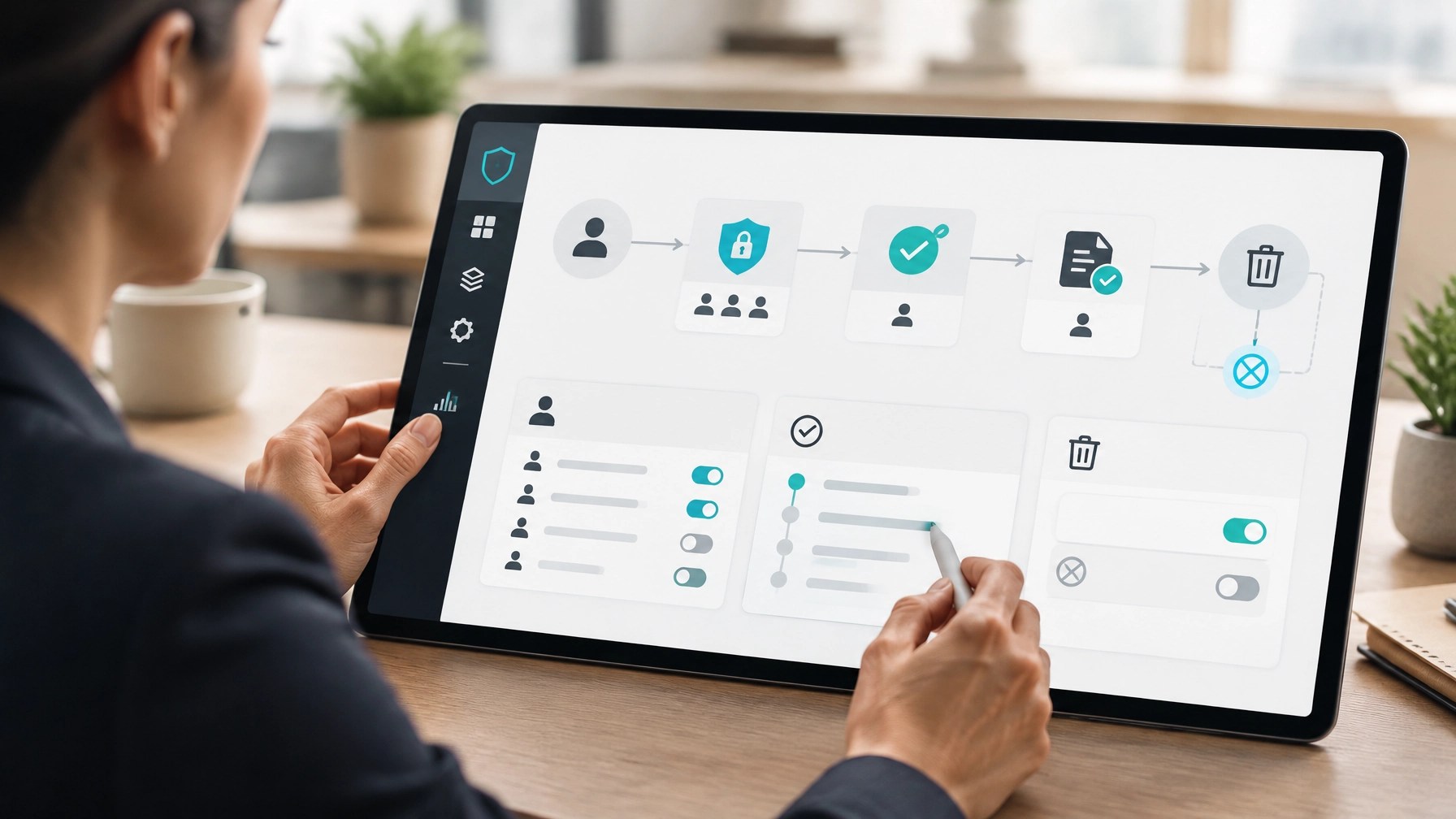
    A solo business owner reviewing an approval queue on a tablet in a calm, warm-toned workspace

    Problem 4: generic AI doesn't know your business

    Spaces has over 700 skills and more than one brain behind it. Thirteen brains in total work across the system, and they then attach to MyGentic's own brains such as BrainSeeder and IR (Rockstar), extending what each agent can draw on. The CRM roster includes the Founder Decision-Desk (founders desk), Nova, Publishing Desk, Marketing Ops, Sales and others, each trained on your business.

    The Legal Brain sits underneath them all as one legal and compliance layer. It supports your solicitor rather than replacing them.

    The full roster of thirteen brains

    The thirteen brains cover the wider functions a small business needs day to day:

    • Nova — the website chat brain and front-of-house assistant: business knowledge, enquiries and bookings handled with context.
    • Founder Decision-Desk (founders desk) — organises information to support founder decision-making; decisions remain subject to human review.
    • Publishing Desk — supports publishing workflows and content operations.
    • Marketing Ops — supports marketing operations, from campaigns to follow-up.
    • Sales Desk — supports sales follow-up and the handling of sales work.
    • Customer Support — supports customer-service workflows within approved boundaries.
    • Creative Agent — supports creative tasks within its assigned role and approved context.
    • Head of Design — supports design-related work within defined business standards.
    • Operations Specialist — supports operational processes and their coordination.
    • Business IT Expert — provides a defined business IT support role within the agreed scope.
    • BrainSeeder — supports the initial seeding of business context into a brain, according to the agreed build scope.
    • IR Brain/Rockstar — a specialist brain for its designated remit, providing structured support within agreed responsibilities.
    • Coordinator — supports coordination between assigned tasks, roles and workflows.

    These names describe distinct roles, not a requirement to deploy all thirteen in every business. The right configuration depends on the work, information and approval boundaries you define.

    The Legal Brain: where it supports, and where it stops

    The Legal Brain is included as a founding-member benefit for 12 months, so it is worth understanding its scope.

    It supports your solicitor: it can help flag clauses in contracts and other documents for attention, and assist with drafting, with a person reviewing and approving the work.

    It does not give regulated legal advice, and it is not a substitute for a qualified legal professional. A person remains responsible for approval.

    That boundary is the same principle that governs the whole system: automation organises and prepares, humans decide.


    A solo legal professional reviewing a contract interface with highlighted clauses for human review

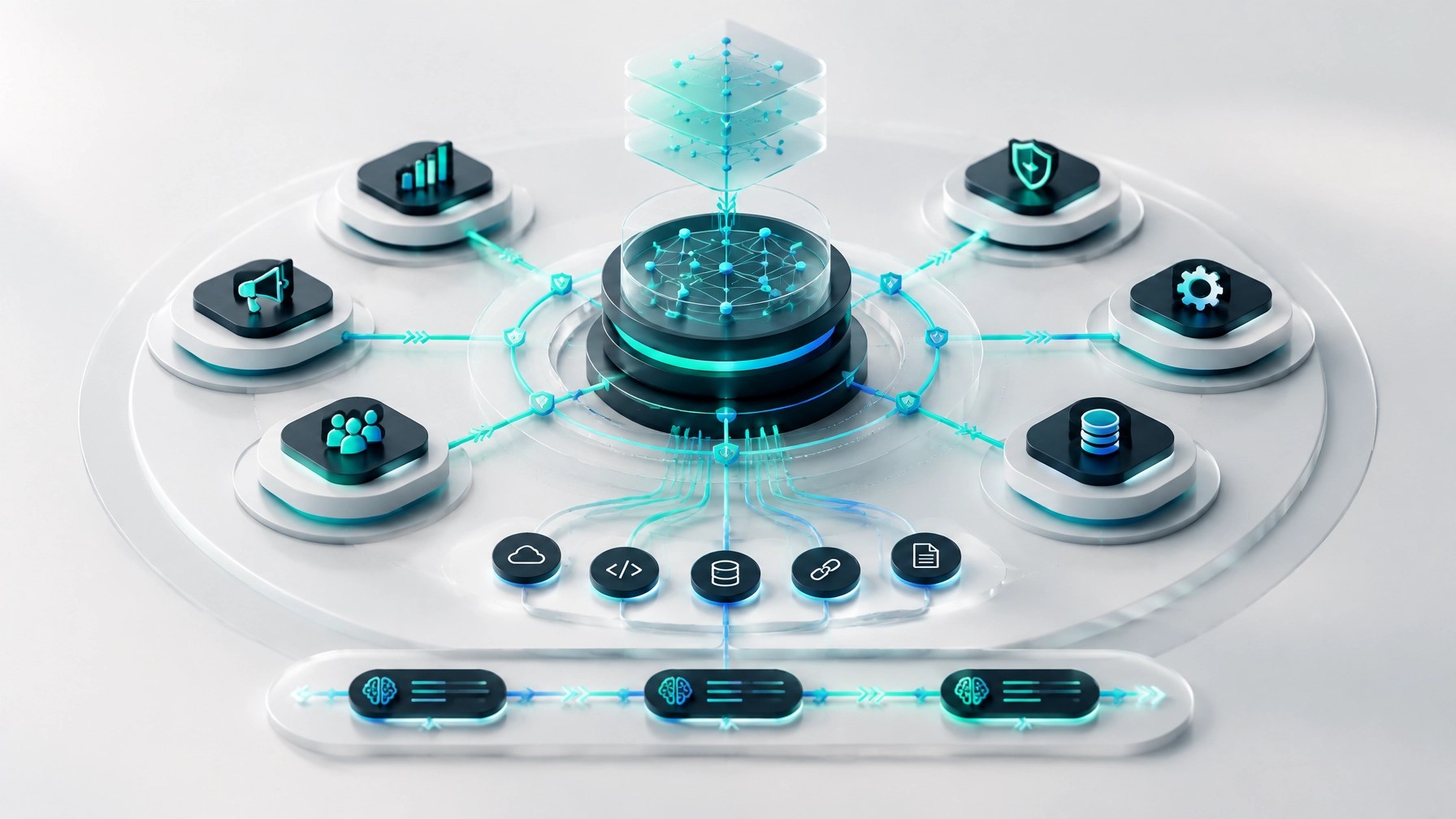
    Abstract visualisation of specialised AI brains connected to a CRM workflow

    Problem 5: finding new work is a slog

    Visibility and new business need attention too:

    • The prospect finder brings you companies to approach, and the brains draft the outreach for you to approve.
    • Content drafts and a content calendar keep you visible without writing every post from scratch.

    Who it's for

    Business owners and small teams who are buried in enquiries and admin and want things done at a click: recruiters, clinics and healthcare practices, agencies, service businesses and growing SMEs. It's especially for people who want AI to do the heavy lifting but still want the final say.

    A client’s words

    Richard West, also known as Mr C, of Bed Light & Beyond, says:

    “Fantastic work, I really highly recommend them.”

    The testimonial is Richard’s feedback about his experience with ZeroPoint Creative. It is not a claim about ZPC Spaces’ performance or a guarantee of outcomes.

    Join the waitlist for ZPC Spaces

    The founding offer: soft launch 2 January 2027

    We soft launch on 2 January 2027. If you join the waitlist, you get a third off for the first 6 months, plus the Legal Brain free for 12 months.

    The offer is only for people on the waitlist, and I'm keeping that list to serious business owners. Joining now registers your interest ahead of the soft launch and gives you a direct route to information about access and the offer.

    Join the ZPC Spaces waitlist

    If you would rather speak to someone, call 0800 870 8203 or email info@zeropointcreative.com.

    ZeroPoint Creative Ltd
    71–75 Shelton Street, Covent Garden, London, WC2H 9JQ

    Key Takeaways

    • Every enquiry lands in one inbox and one pipeline, each tied to a contact, with a call-back task for every new lead.
    • Nova, the website chat brain, answers visitors around the clock and passes them straight into the pipeline.
    • The inbox sorter drafts replies for you to check; call prep, a Monday report, bookings, forms, landing pages, QR codes, invoices and support tickets all live in the same place.
    • Everything the brains draft goes into a "Needs your yes" list. Nothing goes out without your approval.
    • Corrections are remembered, so the brains learn how you work instead of repeating mistakes.
    • Spaces runs on over 700 skills and thirteen brains in total, which attach to MyGentic's own brains such as BrainSeeder and IR (Rockstar); the CRM roster includes the Founder Decision-Desk, Nova, Publishing Desk, Marketing Ops, Sales and others.
    • The Legal Brain supports your solicitor rather than replacing them; it does not give regulated legal advice.
    • The prospect finder and content drafts with a content calendar help you find new work and stay visible.
    • We soft launch on 2 January 2027. Waitlist members get a third off for the first 6 months, plus the Legal Brain free for 12 months.
    • Join the waitlist to register your interest.

    Sources and References

  • ZPC Spaces: One System for the Admin Work That Keeps Business Owners Late at the Desk

    ZPC Spaces: One System for the Admin Work That Keeps Business Owners Late at the Desk

    Krishna’s 59-second vertical promotional video introduces ZPC Spaces and shows selected platform screens. The product is opening up; viewers are invited to join the waitlist.

    For many business owners, the working day does not end when client work is complete. It continues in the inbox: sorting messages, recording leads, remembering who needs a call back and checking whether a website enquiry has been noticed.

    The UK Department for Business and Trade found that 68% of surveyed SMEs used more than one type of business technology. Its research also records integration difficulties, including compatibility problems and the cost of connecting separate systems. The statistic does not mean every business has the same problem. It does establish the operating context: business administration often sits across multiple tools, creating friction that leaders must manage. (DBT, Understanding technology adoption among UK SMEs)

    ZPC Spaces is being developed as a CRM system to bring several kinds of administrative work into one place. Krishna’s video presents its intended scope and invites businesses to join the waitlist. It is not an announcement that the platform is already generally available.

    The problem: administration scattered across the day

    A customer enquiry can begin on a website, appear as a message, require a call back and then need to be tracked as a lead. When those steps are handled in separate places, the business owner becomes the connection point between them.

    That creates operational friction. Information has to be found, transferred or remembered, while follow-up tasks compete with client delivery and decision-making. A missed handover is not merely inconvenient: it weakens the structural integrity of the customer process.

    Adding another out-of-the-box tool without a clear operational purpose can deepen the problem. More interfaces do not automatically produce better oversight. The requirement is a coherent system for the administrative tasks that otherwise keep returning to the owner’s desk.

    A solo business owner considering the transition from scattered administrative tasks to a more organised digital workspace

    The promotional video frames ZPC Spaces around that everyday burden. Its voiceover addresses business owners directly, then presents the system as an all-in-one CRM solution. The value proposition is administrative consolidation, not a promise of specific financial or performance results.

    The problem is not a lack of effort. It is operational work distributed across disconnected tasks.

    The infrastructure: the functions shown in the video

    The video’s screen recordings show four core CRM functions:

    • AI website chat, presented as a way to handle website conversations.
    • CRM lead tracking, for viewing and following up leads.
    • Call-back tasks, to keep a requested follow-up visible.
    • An inbox sorter, shown organising incoming messages.

    It also highlights AI “brains” for different business functions. These are presented as part of the broader ZPC Spaces concept: business-oriented AI capabilities organised around different areas of work.

    Abstract illustration of website enquiries, lead records and follow-up tasks as connected administrative steps

    These are the elements shown in the promotional video. It does not establish every integration, workflow, permission or configuration that may be available in the eventual system, so businesses should not assume details beyond what has been demonstrated. The product is upcoming, and its waitlist is the stated next step.

    That distinction matters. A short promotional film can introduce the intended system, but it is not a substitute for a product specification. Before adopting any operational platform, you should assess whether its functions, access controls and day-to-day processes fit your own business requirements.

    For a broader explanation of the AI architecture referenced in the video, read What Is an Agentic Brain, and How Do You Own Your Own?. For the routes Krishna describes, see Two Ways to Get an Agentic Brain: Bespoke Consultancy or Krishna’s Existing Brains.

    A clear view of the functions is the first step towards deciding whether the system fits your operation.

    The growth case: less chasing, more operational calm

    The immediate aim presented by ZPC Spaces is practical: keep lead tracking, call-back tasks and inbox sorting within a single CRM environment, alongside AI website chat and business-function brains.

    If those administrative tasks are easier to locate and manage, the owner has less reason to chase them across disconnected apps. That is the operational case for consolidation. It does not guarantee more leads, faster response times or increased revenue; those outcomes depend on implementation, business processes and customer demand.

    Growth begins with visibility and control. When routine follow-up has a defined place in the system, you can make decisions with greater clarity about what needs attention, without relying solely on memory. That is a more resilient foundation for running day-to-day operations.

    A business owner in a focused solo workspace with an abstract, unreadable inbox interface

    The video also features ZPC client Richard West, known as MrC, of The Shamen and co-founder of Bed Light & Beyond. He says: “Fantastic work, I really highly recommend them.” The quote appears in the promotional video; it is his testimonial about the work and should not be read as a claim about ZPC Spaces’ performance.

    Key takeaways

    • ZPC Spaces is an upcoming CRM system, not a generally available product.
    • The video shows AI website chat, CRM lead tracking, call-back tasks, an inbox sorter and AI brains for business functions.
    • Its stated direction is to bring administrative tasks into one system.
    • The promotional video invites businesses to join the waitlist.
    • Product suitability and specific outcomes should be assessed against your own operational requirements.

    Join the ZPC Spaces waitlist

    ZPC Spaces is opening up, and the video closes with an invitation to join the waitlist. No separate waitlist URL is supplied here. To register your interest or ask Krishna about the forthcoming system, contact ZeroPoint Creative Ltd directly or use the call symbol on the ZeroPoint Creative website to reach Nova, Krishna’s AI assistant.

    Email: info@zeropointcreative.com
    Telephone: 0800 870 8203

    ZeroPoint Creative Ltd
    71–75 Shelton Street, Covent Garden
    London WC2H 9JQ

    ZeroPoint Creative Z-circuit emblem

    ZPC Spaces is intended to bring common administrative tasks into clearer operational view. The next step is to join the waitlist and review the system as it opens up.

  • The Thirteen Brains of ZeroPoint Creative: What Each One Does (And How to Get One)

    The Thirteen Brains of ZeroPoint Creative: What Each One Does (And How to Get One)

    https://cdn.marblism.com/-SbTKMqj2QZ.mp4

    An AI agent can support a defined business role. An agentic brain provides the operating context around that role: business knowledge, responsibilities, workflows and boundaries. This four-minute explainer introduces the thirteen brains and the ways a business can access them. The guide below expands on their roles, build stages, governance and confirmed pricing.

    Problem: specialist work without specialist headcount

    As a business grows, its operational needs become more varied. Legal document review, sales follow-up, publishing, customer support and internal coordination all require attention, but many small businesses cannot justify a full-time employee for every function.

    The alternative can be a patchwork of disconnected tools and repeated manual tasks. Knowledge is scattered, workflows become difficult to oversee, and important processes can depend too heavily on one person’s memory.

    Adding a generic, out-of-the-box AI tool does not automatically resolve that friction. Without a defined remit, business context and approval structure, it can become one more disconnected system to manage.

    The issue is architectural: businesses need specialist support that fits within a governed operating model.

    Infrastructure: thirteen brains, defined roles

    An agentic brain is a purpose-built AI agent with a defined role and business context. The thirteen brains described in the explainer cover different functional areas. Their precise scope should be agreed for the business and workflow they support.

    Client-facing and decision support

    • Nova: Krishna’s MyGentic assistant, featured as an example of a structured assistant. Nova is not a ZeroPoint Creative product or internal agent.
    • IR Brain/Rockstar: A specialist brain for its designated IR/Rockstar remit, providing structured support within the responsibilities agreed for that role.
    • Customer Support Specialist: Supports customer-service workflows using the approved business context and boundaries.
    • Sales Desk: Supports sales-related follow-up and the handling of sales work.
    • Founder Decision-Desk: Organises information to support founder decision-making. Decisions remain subject to human review.
    • Coordinator: Supports coordination between assigned tasks, roles and workflows.

    Operations, technology and publishing

    • Operations Specialist: Supports operational processes and their coordination.
    • Business IT Expert: Provides a defined business IT support role within the agreed scope.
    • Publishing Desk: Supports publishing workflows and related operational tasks.
    • Brain Seeder: Supports the initial seeding of business context into a brain, according to the agreed build scope.

    Creative support

    • Head of Design: Supports design-related work within defined business standards and requirements.
    • Creative Agent: Supports creative tasks within its assigned role and approved context.

    Governance and legal support

    • Legal Brain: Supports contract and document review by flagging clauses and assisting with drafting, subject to human approval. It is not given independent authority to approve or sign documents.

    These names describe distinct roles, not a requirement to deploy all thirteen in every business. The appropriate configuration depends on the work, information and approval boundaries you define.

    Abstract visualisation of specialised AI agents connected to a central business knowledge architecture

    The Legal Brain: review support under human control

    For a small business, the Legal Brain is intended to support work on contracts and other documents. It can help flag clauses for attention and provide drafting support, with a human reviewing and approving the work.

    That boundary matters. The brain supports a legal workflow; it does not take over the business’s authority to accept terms or make decisions. A person remains responsible for approval.

    A solo legal professional reviewing a contract interface with highlighted clauses for human review

    Two routes to getting a brain

    There are two routes to explore:

    1. Start with the Agentic Brain Blueprint. This provides a starting point for assessing the business, its requirements and a potential build.
    2. Discuss a bespoke build through consultancy. The brain is structured around your organisation’s knowledge, operating context and requirements.

    The article on the two routes explains the distinction. For a broader introduction, see What is an agentic brain, and how do you own your own?.

    Seven stages for a bespoke build

    The build follows a sequence that establishes context and controls before the system is refined:

    1. Gather context: establish the business information and operating requirements relevant to the build.
    2. Define domains: identify the professional and operational areas the brain must support.
    3. Structure the brain: organise knowledge and workflows into a coherent framework.
    4. Connect tools: determine which existing tools are relevant to the agreed scope.
    5. Assign agent roles: define each role, its remit and boundaries.
    6. Establish governance: specify human approval and oversight.
    7. Refine: review and update the system as requirements change.

    Governance is a core commitment, not an optional extra. Business knowledge belongs to the client; clients can delete or revoke information; and human approval remains part of decisions. As the human oversight guide explains, responsibilities and approval levels should be defined in the workflow.

    Nothing ships without a human yes.

    An operations leader reviewing a workflow dashboard with clear permissions and human approval checkpoints

    Growth: choose an investment level that fits

    The confirmed prices below describe ZeroPoint Creative service options. The appropriate route depends on the scope of support and the business’s requirements.

    • Agentic Brain Blueprint: £750 one-off, credited against a build.
    • Ready-made brains: £149 per month, or a bundle of three for £349 per month.
    • Bespoke builds: from £2,500, plus a £249-per-month care plan.
    • Premium partnership: from £995 per month.
    • Full bespoke consultancy retainer: £5,000 per month.
    • Legal Brain add-on: £99 per month.
    • ZPC Spaces CRM seats: Pro, three seats, £65 per month; five seats, £100 per month.

    These are distinct entry points, not a recommendation that every business needs the same arrangement. A Blueprint can establish a starting point; a bespoke build can address organisation-specific requirements; and ongoing options provide a route for continued support. For the CRM waitlist, see ZPC Spaces.

    The objective is a governed system matched to your operating needs, with costs and responsibilities understood before work begins. Clear scope and human oversight provide the foundation for controlled adoption.

    Key Takeaways

    • An agentic brain is a purpose-built AI agent with a defined business role and operating context.
    • The thirteen brains cover client-facing support, operations, creative work, decision support and governance.
    • The Legal Brain supports document review, clause flagging and drafting under human approval.
    • You can begin with the Agentic Brain Blueprint or discuss a bespoke consultancy build.
    • A bespoke build follows seven stages, from context gathering through ongoing refinement.
    • Business knowledge remains client-owned, and clients can delete or revoke information.
    • Human approval is a core governance commitment: Nothing ships without a human yes.
    • Pricing depends on the chosen service and scope; the confirmed options are listed above.

    Discuss the right route for your business

    To discuss a Blueprint, a bespoke build or one of the existing brains, contact Krishna directly:

    ZeroPoint Creative Ltd
    71–75 Shelton Street, Covent Garden, London, WC2H 9JQ
    zeropointcreative.com

    ZeroPoint Creative Z-circuit emblem

    Sources and References

  • Inside ZeroPoint Creative’s Agentic Brains: What’s Built, Who’s Using Them, and How to Get One

    Inside ZeroPoint Creative’s Agentic Brains: What’s Built, Who’s Using Them, and How to Get One

    An agentic brain is a structured way of organising business knowledge and operational processes so AI can work within a defined context. It is not simply a chatbot or a collection of prompts. It is an operational framework whose usefulness depends on clear purpose and governance.

    For context, ZeroPoint Creative Ltd was incorporated on 7 May 2026 and is registered under company number 17204294. Krishna de Gruchy, the company’s founder and director, explains the agentic brain concept and the available routes in the video below.

    Krishna de Gruchy’s explainer presents agentic brain profiles, the build process, governance policies and routes for businesses to obtain a brain.

    The problem: business knowledge is not an operating system

    Businesses accumulate expertise through decisions, processes and experience. But when that knowledge remains dispersed across people and materials, it can be difficult to apply consistently. A generic AI tool does not automatically understand an organisation’s context or how its work should be handled.

    That gap is an infrastructure problem. Adding an out-of-the-box tool without defining its role, governance and boundaries can create more operational friction rather than rectify it.

    An agentic brain is intended to provide structure: a business-specific framework that can inform AI-supported work. As outlined in What Is an Agentic Brain, and How Do You Own Your Own?, the concept is about organising business context and controlled execution, not treating AI as an answer engine with unlimited authority.

    Context is the starting point. Governance is the control layer.

    Illustration of connected business knowledge, tools and agent pathways

    What the explainer shows

    Krishna’s video uses an animated presentation on a dark grid, with a glowing circular Z emblem. It gives a visual overview of:

    • Routes for acquiring an agentic brain.
    • Brain profiles, including Nova, the IR Brain and the Legal Brain.
    • Stages in the process of building a brain.
    • Governance policies.
    • Tiered options presented in British Pounds.
    • A closing contact screen with the phone number, email address and website.

    The video includes pricing information, but this article does not reproduce prices or figures. The relevant point is that options are presented as tiered choices; package names are Lite, Core and Custom. The available information does not define specific inclusions for those tiers, so no further package details are inferred here.

    The brain profiles are names shown in the video, not a basis for making assumptions about their scope. In particular, the video does not establish what the IR Brain does or define the Legal Brain’s remit. Their appropriate use should be discussed directly with Krishna.

    What is built: Nova and existing brains

    Nova is Krishna’s MyGentic AI assistant. She handles business knowledge, bookings, appointments, social replies and one-to-one sessions, and coordinates multiple AI agents. She has more than 700 saved skills.

    Nova is a working example of an assistant operating in Krishna’s business environment. She is not a ZeroPoint Creative product, and her capabilities should not be taken as a promise that every brain will perform the same functions. The right structure depends on the business context and the requirements agreed for each engagement.

    The video also names the IR Brain and the Legal Brain. These are Krishna’s existing brains that businesses can discuss utilising. Their names alone do not establish their detailed functions, suitability or limits; those require direct clarification before adoption.

    “Who’s using them?” requires precision. The verified information identifies Nova as Krishna’s assistant and says businesses can utilise his existing brains, but it does not provide a verified list of business customers currently using the IR Brain or Legal Brain. This article therefore makes no customer-use claims.

    The infrastructure: two routes to an agentic brain

    Businesses can explore two routes with Krishna: a bespoke consultancy build or the use of one of his existing brains. The Two Ways to Get an Agentic Brain article explains this distinction in more detail.

    1. Bespoke consultancy

    A bespoke route is for a business seeking a brain structured around its own context. The process described in the company’s explainer article includes gathering context, defining professional domains, structuring the brain, connecting relevant tools, establishing agent roles and setting governance and human-oversight arrangements. Refinement is part of maintaining the system as business requirements change.

    This is not a DIY shortcut. The work begins with understanding the operation and defining what the system should and should not do. Clinical precision at the design stage supports clearer operational boundaries.

    2. Krishna’s existing brains

    The alternative is to discuss using a brain Krishna has already built, including the IR Brain or Legal Brain shown in the video. This gives a business a route to consider an existing operational framework rather than commissioning a brain from the beginning.

    That does not mean every existing brain will be appropriate for every organisation. Suitability, context and governance need to be discussed with Krishna before a business decides how to proceed.

    Human review of controlled workflow pathways and approval points

    Governance is a core commitment

    Agentic systems require defined boundaries. Governance is not a decorative policy added after implementation; it is part of the operating architecture. The video shows governance policies as one of its core topics, while the associated company material describes human oversight and agreed approval levels as central considerations.

    For a business considering a brain, the practical questions are direct:

    • What context is required for the intended work?
    • What is the agreed role of the brain?
    • Which actions require human review or approval?
    • How will the brain’s use be governed as business needs change?

    The answers must come from the specific engagement, not assumptions based on a profile name or a general description of agentic AI. Clear governance is the basis for controlled use.

    Growth: match the route to the operational need

    A brain is infrastructure, not a guarantee of commercial outcomes. Its role is to provide a structured way to bring business context into AI-supported work, with governance considered as part of the system.

    Your decision is whether to explore a bespoke consultancy build or discuss one of Krishna’s existing brains. A tiered package may be relevant to the discussion, but Lite, Core and Custom are package names only here; their specific inclusions should be confirmed directly. No performance or growth outcome should be assumed without an agreed scope.

    The correct next step is a discussion about fit, scope and governance.

    Key takeaways

    • An agentic brain structures business knowledge and operational context for AI-supported work.
    • The explainer video shows Nova, the IR Brain and the Legal Brain, alongside routes to acquire a brain, build stages and governance policies.
    • Nova is Krishna’s MyGentic AI assistant; the IR Brain and Legal Brain are existing brains businesses can discuss using.
    • There is no verified list here of businesses currently using the IR Brain or Legal Brain.
    • Businesses can discuss either bespoke consultancy or Krishna’s existing brains.
    • Governance and human oversight need to be addressed directly, not assumed.
    • Lite, Core and Custom are package names; no prices or specific tier inclusions are stated here.

    Discuss the right route with Krishna

    To discuss building a brain for your organisation or utilising one of Krishna’s existing brains, contact him directly:

    ZeroPoint Creative Ltd
    71–75 Shelton Street, Covent Garden, London WC2H 9JQ
    Company number 17204294

    ZeroPoint Creative circular Z emblem

  • How to Choose the Best Website Maintenance Services (Compared)

    How to Choose the Best Website Maintenance Services (Compared)

    A website can be online and still be operationally unsafe: backups may never have been restored, security patches may be overdue, and monitoring may not alert anyone when a form stops working. Google’s Core Web Vitals provide measurable performance reference points: a good experience targets LCP at 2.5 seconds or less, INP below 200 milliseconds and CLS at 0.1 or less. These measures are assessed at the 75th percentile of real-user data.

    Choosing website maintenance services is therefore an infrastructure decision, not simply a choice of who to call when something breaks. You need a managed operating system with defined responsibilities, evidence of oversight and a recovery path.

    Key Takeaways

    • Compare providers by evidence, written scope and accountability, not by the word “managed”.
    • Require monitoring and tested restores; a backup status alone is not proof of recovery readiness.
    • Put response commitments, exclusions, asset ownership and exit terms in writing.
    • Choose a delivery model that matches your internal capability and the business importance of your website.
    • Treat maintenance as continuous risk management that supports measured growth.

    Problem: Reactive support leaves operational gaps

    When maintenance happens only after an issue appears, small weaknesses accumulate. An update may disrupt a key page; an expired certificate may undermine trust; or an unnoticed integration failure may interrupt lead capture. The resulting technical debt is harder to diagnose when hosting, domains, software and support are split across different suppliers.

    The compliance context matters too. UK GDPR Article 32 requires appropriate technical and organisational security measures, including the ability to restore access to personal data after an incident and to test the effectiveness of measures where appropriate. If a maintenance provider processes personal data on your behalf, Article 28 also sets requirements for the controller–processor contract.

    Maintenance does not remove every risk. It should make responsibilities visible, reduce avoidable exposure and provide a controlled route to recovery.

    Compare the common delivery models

    Delivery model What it can suit Points to verify
    Ad-hoc hourly support A site with infrequent changes and an owner able to monitor it day to day. There may be no continuous oversight or guaranteed availability. Check how urgent work is prioritised, what the minimum engagement is and whether someone monitors issues between requests.
    Low-cost offshore retainer A business with clear documentation, an internal technical lead and processes that can operate across time zones. Geography alone does not establish quality. Verify communication arrangements, access controls, security practices, escalation coverage, named responsibility and the evidence supplied for work completed.
    Agency retainer bundled with marketing A business seeking coordinated support across marketing and technical tasks. Confirm the maintenance scope, technical skill coverage, response commitments and how website incidents are prioritised alongside campaign work. Marketing activity does not automatically include infrastructure management.
    Fully managed infrastructure package A business seeking a defined operational framework for hosting, maintenance and support. “Fully managed” varies by provider. Confirm exact inclusions, service hours, exclusions, ownership, recovery testing and exit arrangements before signing.

    No model is automatically right for every organisation. The best fit depends on your operational requirements and the quality of the documented service. A retainer should provide continuity and defined accountability, not simply a monthly allocation of hours.

    Focused operations professional reviewing an abstract uptime monitoring interface

    Infrastructure: What should website maintenance services include?

    Treat the retainer as an operating protocol. Ask the provider to define how each control is delivered, how often it is checked and what happens when it fails.

    Patching and controlled changes

    The scope should identify which application components are reviewed and patched, how compatibility is assessed, and how changes are checked afterwards. A staging environment can support controlled testing before changes reach the live site. Confirm who approves deployments and who can authorise an urgent change.

    Backups and tested restores

    Ask what the backup covers, where copies are held, how long they are retained and who can access them. Most importantly, ask for evidence of restore testing: the date, what was restored, whether it was verified and how long the process took. A successful backup job does not prove that the website can be recovered.

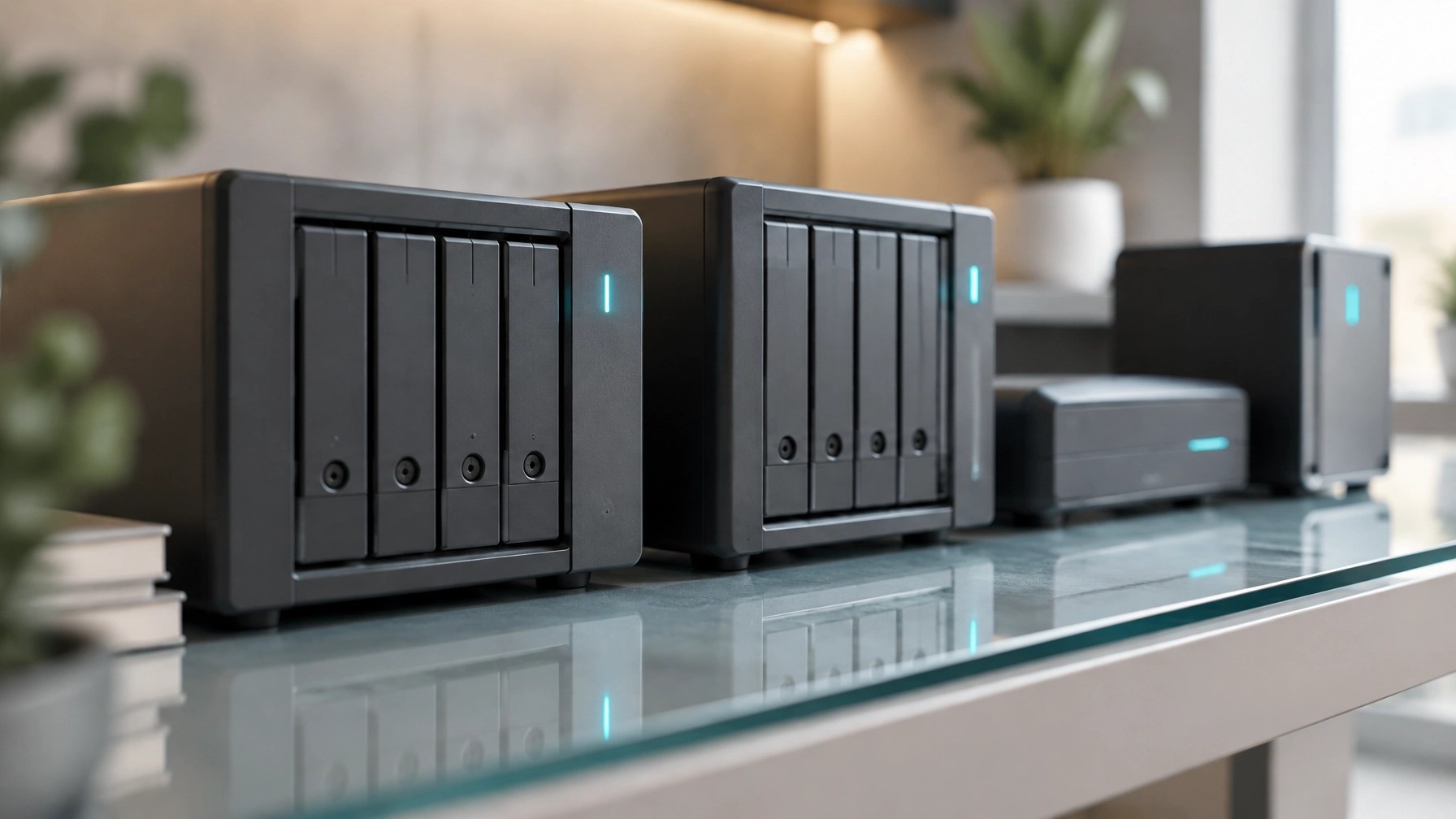
    Secure backup infrastructure hardware with a clear status indicator and softly blurred background

    SSL, DNS and asset ownership

    The provider should state who monitors SSL certificate expiry and manages DNS changes. Your business should retain clear ownership and access to its domain, hosting account, website files and relevant credentials. Avoid arrangements where transferring an essential asset depends on an informal request to a former supplier.

    Monitoring, alerting and incident response

    Ask what is monitored: uptime alone, or also performance, key user journeys, certificates and important forms? Confirm how alerts are routed, who reviews them and what acknowledgement and response times apply to each incident severity. “24/7 monitoring” and “24/7 support” are not interchangeable; ask exactly what is available outside standard working hours.

    Security, accessibility and performance checks

    A written scope should address security hardening and patch management, alongside regular accessibility checks and Core Web Vitals reviews. Google’s thresholds are useful measurement references, not a promise of search rankings. Clarify which devices, pages and user data are included in reporting and what happens when results deteriorate.

    Approvals and communication

    You need a named route for approvals, planned changes and urgent decisions. Agree who can request work, who can approve it, how decisions are recorded and how unresolved issues are escalated. This simple governance layer prevents avoidable delays and uncertainty.

    A practical vetting and scoring framework

    First, apply pass/fail gates. Do not proceed unless the provider can show:

    • Evidence of active monitoring and alerting, not just a backup dashboard.
    • A documented restore process and a dated restore-test record.
    • Written response commitments and escalation arrangements.
    • A clear statement of what is excluded from the service.
    • Defined ownership of your domain, hosting, site files and access credentials.
    • Contractual exit terms covering access, data return and transfer of operational information.

    If the gates are met, score the proposal against evidence using this 100-point framework. Rate each area from 0 to 5; calculate its weighted result as rating ÷ 5 × weight.

    Area Weight
    Maintenance scope and change control 25
    Monitoring, alerting and incident response 20
    Backup and recovery evidence 20
    Security and privacy controls 15
    Performance and accessibility checks 10
    Ownership, reporting and exit terms 10

    This is a practical procurement tool, not a regulatory standard. Give credit for verifiable evidence: sample reports, a service-level agreement, test records and clear contract language. A polished proposal without proof should not score as highly as a demonstrable process.

    Engineer working alone at a workstation reviewing a controlled staging environment

    Growth: Choose maintenance that can scale with the business

    The purpose of a managed system is not to guarantee that incidents never happen. It is to make routine oversight consistent, identify problems sooner and support recovery with less confusion. That stability gives your team a more dependable basis for publishing, acquisition and cross-platform integrations.

    Your internal capability should guide the service level. If your team already monitors the site and can respond to technical incidents, ad-hoc help or a clearly scoped retainer may be appropriate. If the website is business-critical and no one internally owns its technical operation, a managed infrastructure package may provide a more complete framework.

    ZeroPoint Creative offers managed service options named Lite, Core and Custom. The appropriate scope should be established against your requirements and documented before work begins. You can review stand-alone digital services, including hosting and security support, or contact ZeroPoint Creative to discuss your website’s operational needs.

    Maintenance is not a reactive support contract. It is a continuing control system for structural integrity, recovery readiness and operational clarity.

    ZeroPoint Creative emblem

    ZeroPoint Creative Ltd
    71–75 Shelton Street, Covent Garden, London, WC2H 9JQ
    info@zeropointcreative.com · 0800 870 8203

    Sources and References

  • Measuring AI Search Visibility: Why Named Share of Voice Beats Citation Counts

    Measuring AI Search Visibility: Why Named Share of Voice Beats Citation Counts

    AI search visibility is difficult to manage when the measurement system reports one blended score. A business might be cited in an answer without being named, or appear in one platform while remaining absent from another. If those outcomes are collapsed into a single number, the dashboard obscures the operational gap.

    A useful measurement framework separates three questions: Was your business named? Was your website cited? Which competitors were named instead? Answering them consistently gives you a more reliable view of visibility and a clearer basis for action.

    The problem: one score can hide several failures

    AI search is not a single channel with a uniform source pool. In an August 2026 study of 31 topics, Rankability found that no pair of the platforms it analysed shared more than 24.1% of the pages they cited. That was the highest overlap in the study, between Brave AI and Claude, not a universal benchmark for every topic or platform (Rankability, 23 September 2026).

    Eugen Ullrich’s one-month analysis across eight B2B projects also found substantial separation between the cited-domain pools of ChatGPT, Perplexity and Google AI Overview. Four in five cited domains appeared on only one engine in that dataset (Ullrich, 19 July 2026).

    The practical consequence is straightforward: performance on one engine cannot stand in for performance on another. A blended dashboard may show an apparently stable total while one platform loses visibility and another gains it. You cannot identify that change if results are combined before they are reviewed.

    Measure each engine separately. A blended score is not a diagnosis.

    Citation counts do not equal brand visibility

    A citation count records how often a source is cited. It does not tell you whether the answer names your business.

    A Search Engine Land analysis of nine million AI answers describes “ghost citations”: cases where an AI answer cites or draws on a brand’s content without naming the brand. Its analysis argues that competitive share of voice is more useful for understanding whether a brand is visible in the answer itself.

    Keep these measures distinct:

    • Raw citation count: how often your pages appear as cited sources.
    • Named mention: how often an answer explicitly identifies your business by name.
    • Named share of voice: your business’s share of the named visibility received by you and a defined set of competitors.

    Citations still matter. They show that a page is being used as a source. But a citation without a named mention is not the same outcome as a buyer seeing your business presented as an option. Treat citations as a diagnostic measure, not a substitute for named visibility.

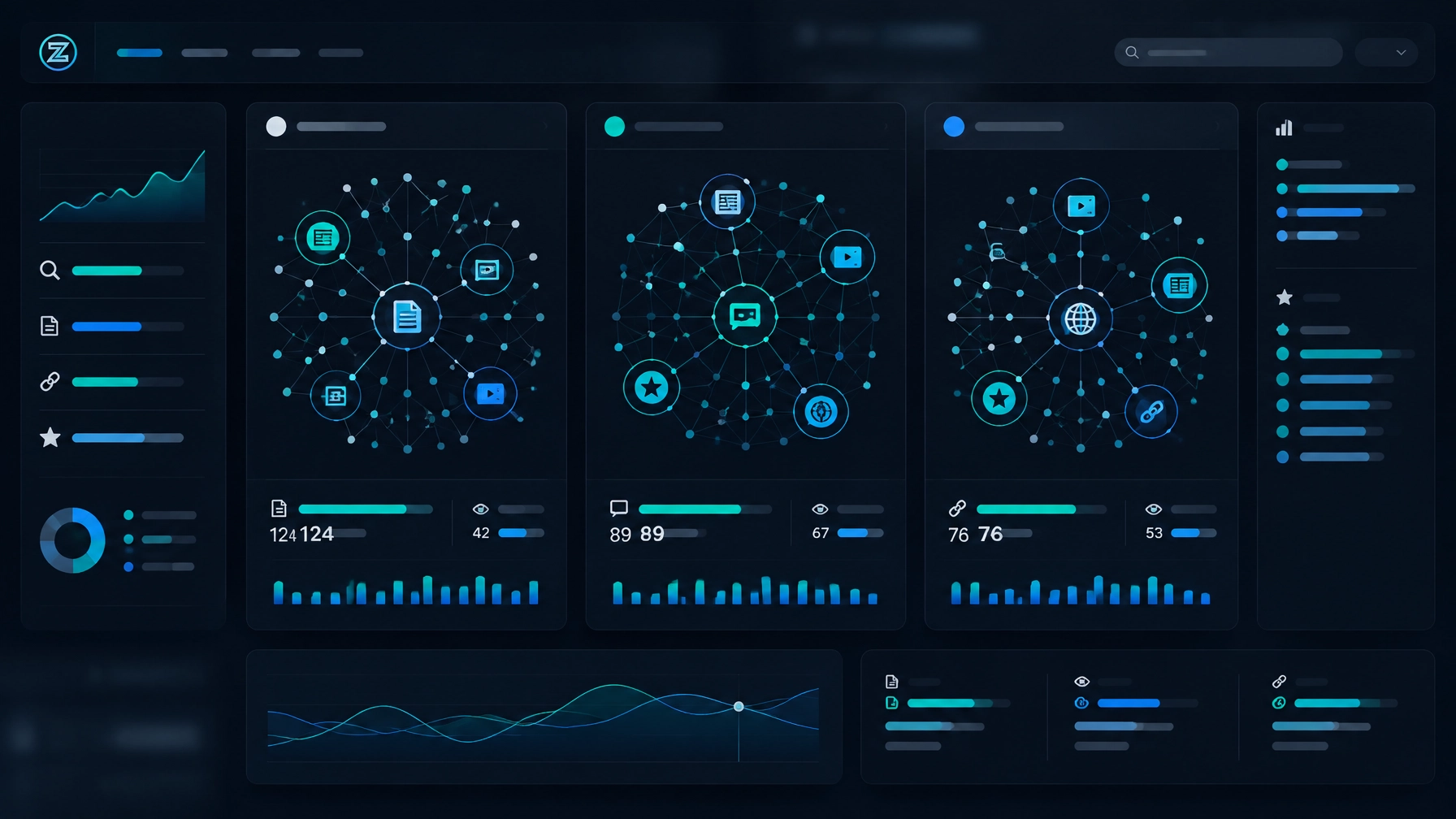
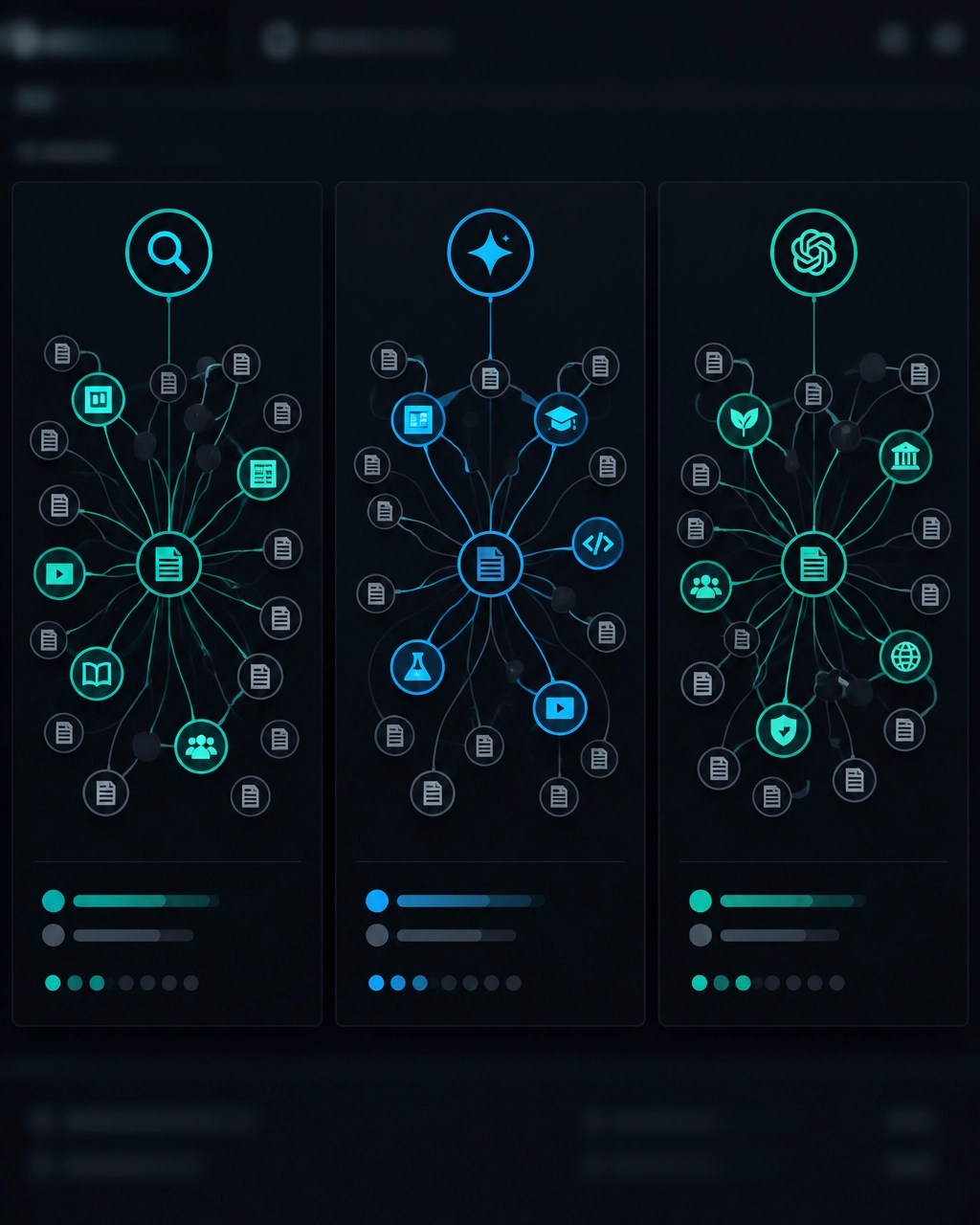
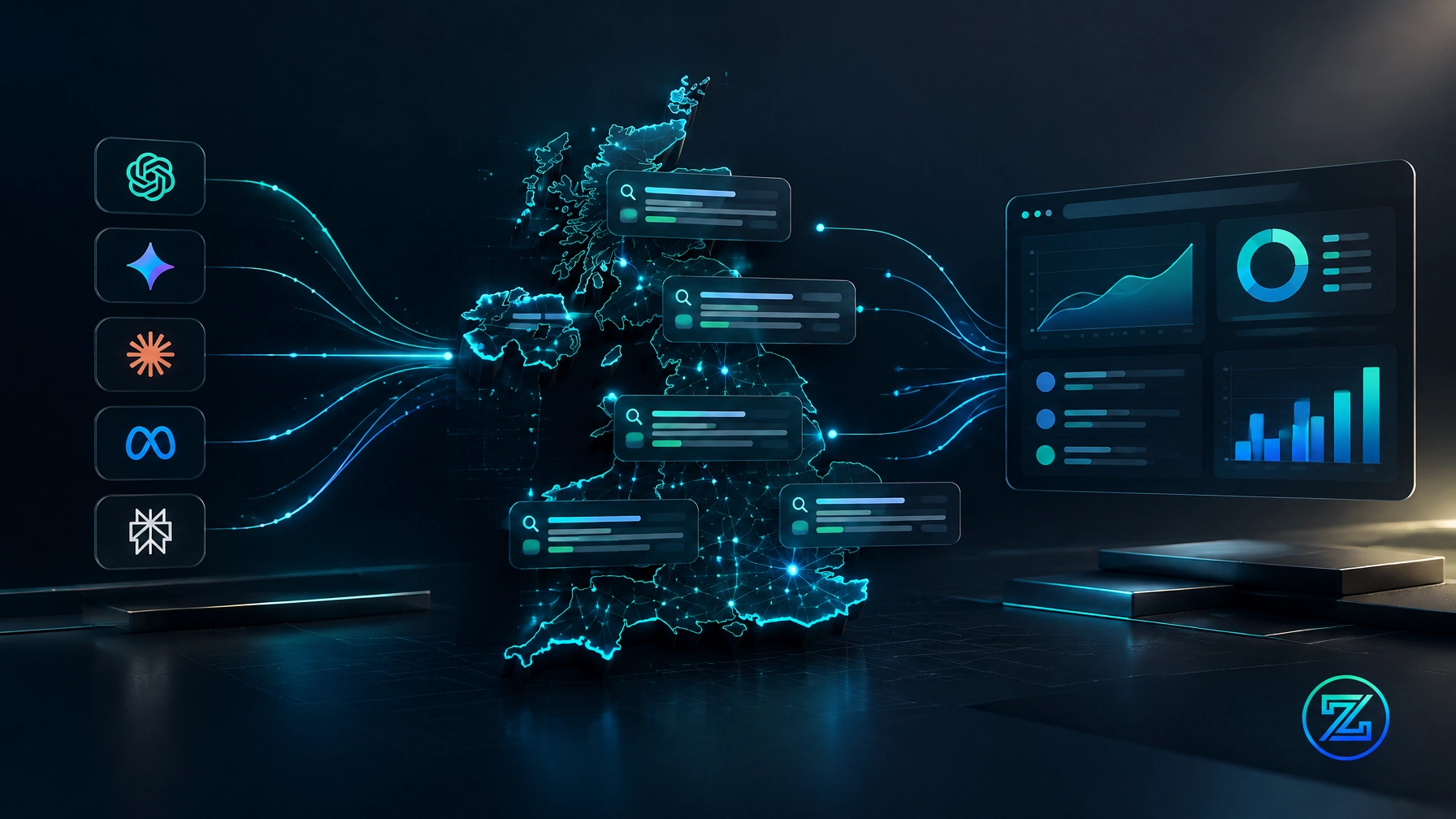
    Separate AI search engine panels display distinct source-domain networks with teal markers highlighting named brand mentions

    Track your own website as a source

    A named mention does not reveal which material informed the answer. Your business might be named on the basis of a third-party directory, review site or news article, while its own website is absent from the cited sources.

    That distinction matters when deciding what to improve. You need to know whether your own pages are being retrieved and cited, as well as whether your brand is being named.

    Itera’s analysis of 1.2 million AI citations found that companies whose own websites accounted for at least 5% of sources were named in 32.3% of answers on average. Companies whose websites were not used as sources were named in 4.7% of answers. This is a correlation, not evidence that increasing your website’s share of citations will cause more mentions (Itera, 6 October 2026).

    The operational lesson is to record both the named result and the source behind it. That makes it possible to distinguish your site’s contribution from third-party coverage.

    A practical measurement framework

    Begin with a repeatable protocol. The purpose is not to produce a perfect score from a single test, but to establish comparable observations over time.

    1. Define a consistent prompt set

    Select realistic questions relevant to your market, services and buyer intent. Include research and comparison prompts, not only searches that contain your company name. Keep the prompt wording and market context consistent between measurement cycles.

    2. Run the prompts on each engine

    Record the results separately for every engine you monitor. Do not combine them into a cross-platform total before reviewing the individual outcomes. The source-pool studies show why: platforms can return materially different sources for similar prompts.

    3. Record the same fields for every response

    For each prompt and engine, note:

    • Whether your business is named.
    • Whether your website is cited.
    • Which pages or other sources are cited.
    • Which defined competitors are named.
    • The date the response was checked.

    Apply the same counting rules each time. If an answer names your business and two competitors, record all three. If it cites your website without naming your business, record the citation but not a named mention.

    4. Calculate named share of voice

    Define your competitor set before calculating the metric. One practical method is:

    Named share of voice = your named mentions ÷ all named mentions of you and your defined competitors

    For example, if the tracked answers contain 10 named mentions across your business and competitors, and 3 belong to your business, your share is 30%. This is a share of recorded brand mentions, not a claim that your business appeared in 30% of all AI answers.

    Also track your named answer rate: the percentage of tested answers that name your business. That measure shows how often you appear across the full prompt set. Reporting both prevents a small number of answers with many brand names from distorting the picture.

    5. Repeat on a fixed cadence

    Run the same prompt set at regular intervals and compare the trend, not isolated snapshots. Answers can change, so record the date and preserve the response evidence behind each result.

    A spreadsheet is sufficient to start. As the process matures, tracking can be automated, provided the underlying prompt set, engine-specific results and counting rules remain transparent.

    A focused business analyst reviews an AI search visibility dashboard in a quiet, softly lit workspace

    Turn the measurement into a diagnosis

    Different result patterns point to different technical work.

    High citations, low named share of voice: your pages may be informing answers without your business receiving clear attribution. Review entity clarity across your website, including consistent business details, descriptive page content and relevant structured data. More content volume is not the first response. The goal is to make the relationship between your organisation, services and evidence easier to interpret.

    Strong visibility on one engine, little or none on another: treat this as a platform-specific gap. Examine the pages and sources used by each engine, then assess whether the relevant content is accessible, clearly structured and supported by appropriate evidence. Do not assume that a change that coincides with improvement on one platform will transfer to another.

    Brand named, own site not cited: investigate which third-party sources are being used. This may reveal that your current visibility depends on external listings or coverage rather than your own information architecture.

    These are diagnostic signals, not guaranteed explanations. Use them to prioritise investigation, then connect the findings to the technical and content foundations in our AI SEO guide. Our technical SEO services address site structure and accessibility, while managed digital operations provide ongoing oversight as systems and content change.

    Key takeaways

    • Measure named visibility separately from citations.
    • Report each AI engine independently because source pools differ.
    • Track whether your own website appears among cited sources.
    • Define prompts, competitors and counting rules before measuring.
    • Use named answer rate and named share of voice together.
    • Compare consistent measurements over time, not one-off snapshots.
    • Treat low named visibility as a diagnostic signal, not a reason to publish more content indiscriminately.

    A disciplined measurement system turns AI search visibility from an anecdotal observation into an operational process. It gives you evidence to identify platform-specific gaps, assess whether your own site contributes to answers and prioritise improvements with greater precision.

    Discuss your AI search visibility measurement

    To discuss an engine-by-engine measurement framework with Krishna, email info@zeropointcreative.com, call 0800 870 8203, or use the call symbol on zeropointcreative.com to reach Nova.

    Nova beside a discreet Z-circuit emblem, representing a calm and governed route to a business conversation

    ZeroPoint Creative Ltd
    71–75 Shelton Street
    Covent Garden, London WC2H 9JQ

    Sources and References

    1. Rankability, 35 new AI search statistics for 2026, 23 September 2026.
    2. Eugen Ullrich, Why visibility in one AI engine says little about the next, 19 July 2026.
    3. Search Engine Land, What 9 million AI answers reveal about search visibility.
    4. Itera, Whether your name appears in an AI answer differs sevenfold depending on whether your own site is used as a source, 6 October 2026.

  • Choosing an AI SEO Agency in the UK: What to Look For (And What to Avoid)

    Choosing an AI SEO Agency in the UK: What to Look For (And What to Avoid)

    AI search visibility is not one ranking to win. It is a set of changing retrieval and citation systems, each selecting information differently. A provider that promises to “get you into AI” without explaining which platforms it measures, or how it distinguishes a citation from a named brand mention, is asking you to accept a claim without an audit trail.

    That distinction matters. In a month-long analysis of eight B2B projects, Eugen Ullrich found that ChatGPT, Perplexity and Google AI Overview drew on substantially different cited-source pools. Across the tracked prompts, around four in five cited domains appeared on one engine only. A separate Rankability study found that no pair of platforms in its sample shared more than 24.1% of cited pages. These findings describe specific studies, not a guarantee of how every sector or future platform will behave. But they make one point clear: a single blended “AI visibility” score can hide important gaps.

    Your task as a buyer is to identify an AI SEO agency that treats visibility as an engineered system, not a bundle of buzzwords. Precision is the starting point.

    The problem: a new label can conceal an old offer

    Some AI SEO services are simply traditional SEO relabelled. Others focus on producing a volume of content or promise inclusion in particular AI answers without showing how that result will be achieved or verified.

    Both approaches leave a decision-maker with the same problem: what work is being done, what evidence will show progress, and what happens if visibility changes?

    AI search adds complexity, but it does not make core technical discipline irrelevant. A page still needs to be accessible, useful and clearly connected to the organisation it represents. Your content and structured information need to present an accurate, consistent account of your business. And measurement needs to reflect the platform being assessed.

    A DIY checklist may help establish a baseline. It is not a substitute for accountable technical oversight. Out-of-the-box promises of “optimisation for all AI” can be a trap: they obscure platform differences and create technical debt rather than a resilient system.

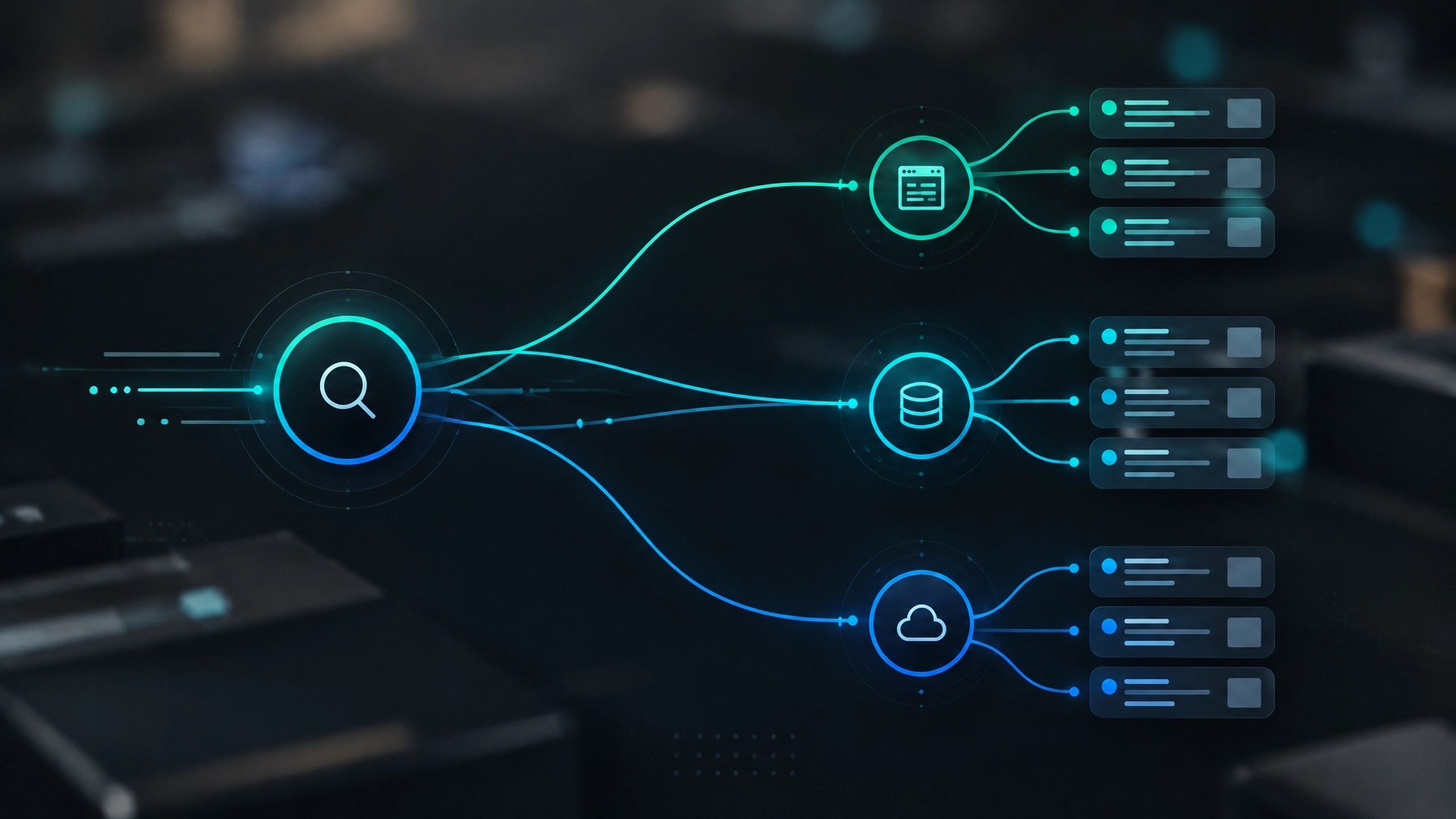
    Abstract search query splitting into distinct, lightly overlapping AI source pathways

    What should AI SEO services include?

    An AI SEO engagement should explain its scope and connect each activity to a defined operational purpose. The following components provide a useful benchmark.

    1. Technical retrievability

    Before publishing more content, a provider should review whether priority pages can be crawled, accessed and understood. That means examining technical barriers, site structure, internal links and page-level clarity, then documenting issues and priorities.

    Technical SEO is the foundation, not a claim of guaranteed citation. It supports discoverability and gives the rest of the work a sound structure.

    2. Entity clarity and structured information

    Your organisation, services and expertise should be described consistently across your digital presence. A provider should explain how it will review this information, including relevant structured data, and how it will keep claims accurate.

    Schema can help clarify what a page describes. It is not a universal citation switch.

    3. Connected content hubs

    A collection of isolated articles is harder to govern than a connected information system. Related pages should answer distinct user needs, link to one another where useful, and reinforce a clear picture of your services and expertise.

    This is not an argument for publishing more pages for every query variation. It is a case for useful coverage, controlled terminology and deliberate internal linking. Our article on query fan-out and search visibility explains why connected intent matters.

    4. Accurate, maintained information

    A provider should have a process for reviewing facts, service descriptions, dates and references when information changes. Freshness is a governance task, not a publication-date trick. In its August 2026 snapshot, Rankability reported the same 61-day median age for AI-cited and traditional search results. That finding does not show that freshness never matters; it cautions against assuming there is one universal age threshold for every platform.

    Ask how updates are prioritised and recorded. Changing a date without materially reviewing the information is not maintenance.

    5. Third-party reinforcement

    Your own website is one part of your visibility ecosystem. Other credible sources may provide useful context, depending on the platform and subject. Search Engine Land’s analysis of nine million AI answers reported an association between YouTube citations and a 2.8-times visibility lift. That is an observed relationship, not proof that adding videos will cause a lift for your business.

    A responsible provider should explain why external coverage or video is relevant to your audience, how it will be developed, and how its impact will be assessed.

    6. Per-engine measurement

    Reporting should separate platforms and distinguish retrieved sources, citations and named brand mentions where the data allows. Search Engine Land also reported that up to 75% of answers citing a page did not name the brand. That finding makes raw citation counts an incomplete measure of whether buyers can recognise your business.

    Ask for a repeatable method: which prompts are tracked, which engines are included, how often measurement happens, and how changes in the method are disclosed. Our guide to getting your business cited in AI search sets out the wider visibility framework.

    A buyer’s checklist: questions to ask any provider

    Close view of a technical specialist reviewing an abstract search visibility dashboard

    Use these questions in a supplier conversation. Ask for a clear answer and an example of the evidence you would receive.

    1. How do you measure AI visibility, and do you report results separately for each engine?
      Ask for the prompt set, reporting frequency and method. A blended score can conceal platform-level weaknesses.

    2. Do you distinguish citations from named brand mentions?
      A source may inform an answer without the business being named. Ask how the report handles that difference and its limitations.

    3. Which technical foundations do you audit before recommending new content?
      Look for a documented review of accessibility, site structure and relevant page issues, not an immediate recommendation to publish at scale.

    4. How do you assess entity clarity and schema?
      A credible answer should cover accurate organisation and service information, and explain schema as a means of clarification rather than a guaranteed ranking lever.

    5. How do you manage content freshness?
      Ask what triggers a review, how substantive updates are recorded, and how the approach accounts for differences between platforms. Be cautious of blanket promises based only on changing publication dates.

    6. What deliverables arrive each month, and what evidence accompanies them?
      Request an itemised description of work completed, findings, decisions and next steps. Reporting should help you understand what changed and why.

    7. Do you guarantee rankings, citations or specific placements?
      A guarantee of inclusion in a particular AI answer is a warning sign. Providers can define the work and measurement protocol; they cannot control a platform’s answer.

    What to avoid

    Be cautious of unverifiable claims such as “AI-proof content”, or assurances of guaranteed citation. Treat a single proprietary visibility score with care if the provider cannot explain its inputs and limitations.

    One-off content exercises without follow-up measurement make it difficult to separate useful change from noise. So do undifferentiated citation totals, dashboards that blend platforms without explanation, and strategies that prioritise volume over accurate information.

    Finally, clarify ownership. Your business should retain appropriate access to its content, reporting and data. Ask how those assets are handled if the engagement ends. Operational clarity is part of the service, not an optional detail.

    Where ZeroPoint Creative fits

    ZeroPoint Creative Ltd approaches AI search visibility through technical SEO and ongoing digital operations. The work can include a technical review, on-page optimisation, entity clarity, connected content hubs, information maintenance and per-engine measurement. The scope should be based on your website, requirements and available evidence, not an assumed package of tactics.

    Our technical SEO services provide the technical and on-page foundation. Our article on managed digital operations explains why maintaining that foundation requires ongoing oversight.

    We do not claim that any single intervention guarantees a citation or ranking. The objective is a more coherent, well-maintained information system, with measurement that makes gaps visible and informs the next decision.

    Key takeaways

    • AI search platforms do not share one universal source pool; evaluate each separately.
    • Genuine AI SEO services should cover technical retrievability, entity clarity, connected content, information maintenance, appropriate third-party signals and measurement.
    • Ask how a provider distinguishes citations from named brand mentions.
    • Treat guarantees of specific AI search placements as a warning sign.
    • Require transparent deliverables, explainable reporting and clear ownership of content and data.
    • Choose evidence and accountability over volume, buzzwords and blended scores.

    Discuss your AI search visibility

    To discuss your visibility requirements with Krishna, email info@zeropointcreative.com or call 0800 870 8203. You can also use the call symbol on zeropointcreative.com to reach Nova.

    Nova represented in a calm, teal-accented digital setting as a route to arrange a business conversation

    ZeroPoint Creative Ltd
    71–75 Shelton Street, Covent Garden, London, WC2H 9JQ

    Sources and References

    1. Eugen Ullrich, Why visibility in one AI engine says little about the next. One-month retrieval and citation analysis across eight B2B projects.
    2. Rankability, AI search statistics. Published 23 September 2026.
    3. Search Engine Land, What 9 million AI answers reveal about search visibility.
    4. ZeroPoint Creative, AI SEO: How to Get Your Business Cited in AI Search.
    5. ZeroPoint Creative, SEO Services.
    6. ZeroPoint Creative, Who Fixes It When Nobody Is Watching? The Case for Managed Digital Operations.
    7. ZeroPoint Creative, One Query, Twenty Answers: How Google’s New Query Fan-Out Rewrites Search Visibility.

  • AI SEO: How to Get Your Business Cited in AI Search

    AI SEO: How to Get Your Business Cited in AI Search

    AI search is changing how people discover businesses. A potential customer can receive a synthesised answer before they visit a website, compare providers or see a traditional search results page. Your business may rank in conventional search and still be absent from that answer.

    The evidence points to a visibility problem that is fragmented by platform. Rankability’s 2026 research, published on 23 September, found that no pair of AI platforms shared more than 24.1% of the pages they cited in its analysis. This is a research finding, not a forecast or a guarantee. It does, however, show why one blended visibility score can conceal important gaps.

    AI SEO is the practice of making a business retrievable, quotable and nameable by AI answer engines. It combines traditional technical SEO with structured content and clear, consistent information about the business and its expertise. Generative engine optimisation (GEO) and answer engine optimisation describe related efforts. The underlying task is the same: build an accessible, coherent evidence base that search systems can interpret.

    The problem: ranking is no longer the whole picture

    Traditional rankings remain relevant. They are not the complete measure of search visibility.

    AI answer engines retrieve information, select sources and generate responses in different ways. As AthenaHQ’s State of AI Search report explains, platforms draw on diverse sources and may name a business without citing its own website. Research by Eugen Ullrich, based on eight B2B projects, likewise found that the cited source pools of ChatGPT, Perplexity and Google AI Overview differed substantially. In that study, most cited domains appeared on only one of the three engines.

    There is a further distinction: being cited is not always the same as being credited. Search Engine Land’s analysis of nine million AI answers reports that some citations are “ghost citations”, where an engine uses content without naming the brand. It also identifies share of voice against competitors, rather than raw citation totals, as a more useful measure of visibility.

    That matters commercially. If an answer uses your expertise but does not identify your business, the customer may not know where that information came from. And if your measurement combines different engines into one score, it can hide where your business is visible and where it is missing.

    A citation is a signal, not a guarantee

    Research from Itera, analysing 1.2 million AI citations, found a marked difference in how often a company was named in answers depending on whether its own website appeared among the sources. Companies whose websites accounted for at least 5% of sources were named in 32.3% of answers on average. For companies whose site accounted for none of the sources, the figure was 4.7%.

    Itera describes this as a correlation, not proof that website citations cause brand mentions. The practical implication is still clear: your site needs to provide useful, attributable evidence, while your wider presence must reinforce what your site says.

    AI SEO is therefore not a shortcut around technical SEO. It is a broader visibility system built on it.

    The infrastructure: what makes a business easier to cite

    A resilient AI search visibility system has several connected parts. Each should be assessed as part of your digital infrastructure, not treated as an isolated content task.

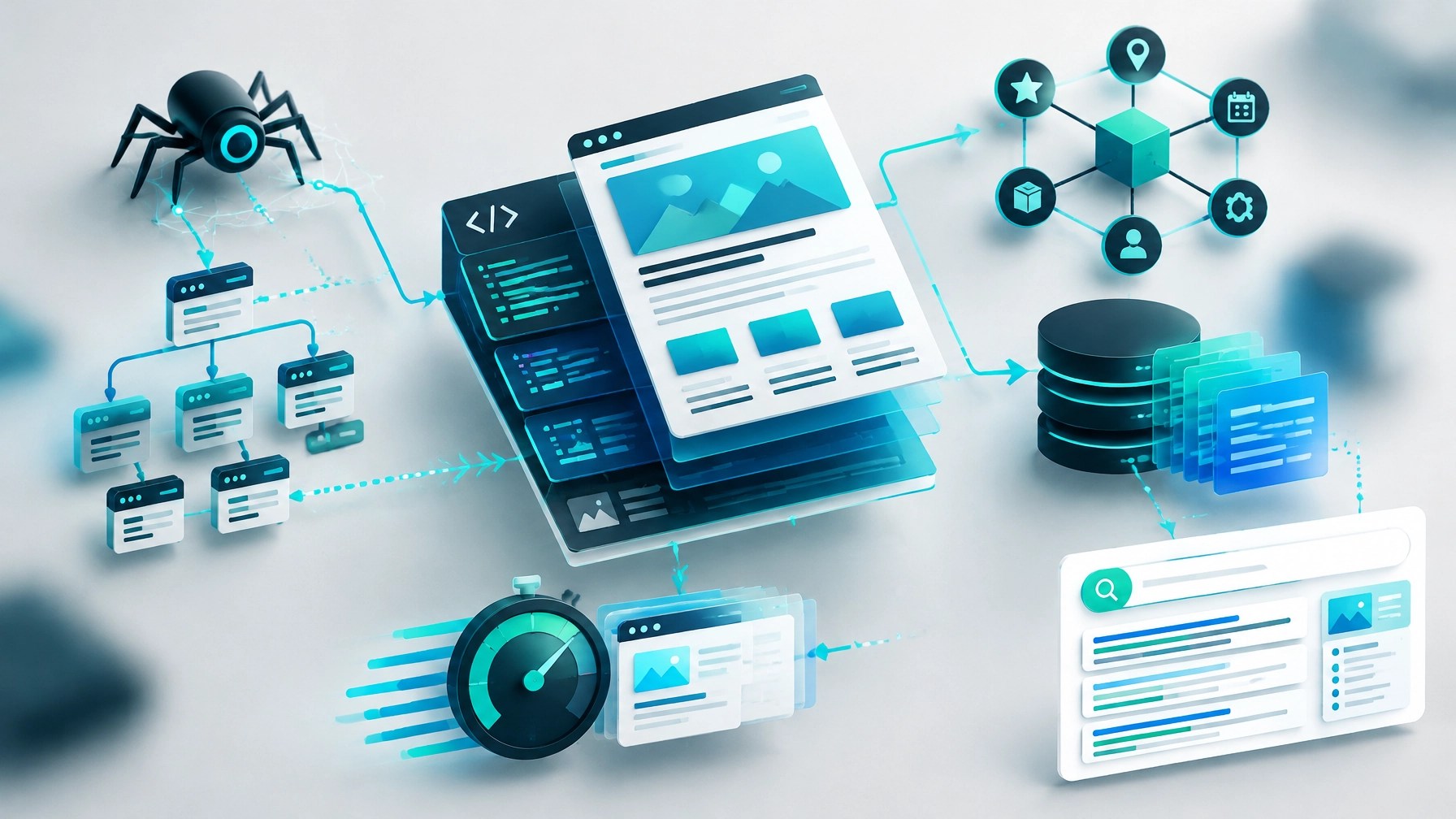
    Structured web content, crawl paths and index signals represented as a clear technical infrastructure diagram

    1. Technical retrievability

    AI systems cannot reliably cite information they cannot find, access or interpret. Priority pages should be crawlable and indexable, with clean HTML, sensible internal links and clear page structure. Structured data can help describe a page and its organisation, but it should accurately reflect visible content. It is not a citation guarantee.

    Performance matters too. Fast-loading pages and stable infrastructure help ensure that useful information is available without avoidable technical friction. ZeroPoint Creative’s technical SEO services address these foundations through technical review, on-page optimisation and ongoing attention to visibility issues.

    2. Clear business identity

    Your organisation should be described consistently across your website. Use the same business name and clear language for your services, expertise and areas of operation. Maintain a useful About page and accurate Organisation schema, and ensure that key facts can be verified from appropriate source pages.

    Entity clarity helps connect your organisation to its services and published expertise. For more on the role of a clear business identity, see Who Is Krishna de Gruchy and What Is ZeroPoint Creative?.

    3. Connected content hubs

    A set of isolated articles can leave gaps in your evidence. A structured topic hub gives search systems and readers a clearer path through related questions, services and explanations.

    Build content around the questions a prospective customer is likely to ask. Explain what a service is, when it is appropriate, how it works and what considerations affect the decision. Link related pages together so their relationship is explicit. The query fan-out article explores why search systems may need to address several related intents around a single query.

    Rankability’s study found that pages with thorough topic coverage had a higher rate of appearing among the first ten AI citations than pages with less complete coverage. That is an observed association, not evidence that longer content or exhaustive coverage alone will earn a citation. Relevance and a clear structure remain essential.

    4. Accurate, maintained information

    Search systems need dependable information. Review facts, examples, service details and references when they change. Search Engine Land’s analysis reports that AI engines favour content updated within the past year. Treat that as a finding from the study, not a universal freshness rule: updates should reflect genuine changes, not cosmetic date changes.

    Ongoing review also mitigates data rot. ZeroPoint Creative’s managed digital operations approach helps businesses maintain their digital systems and content as requirements evolve.

    5. Third-party reinforcement

    Your own website is central, but it is not the entire source environment. Search Engine Land identifies YouTube as a strong citation surface and discusses Reddit’s role in AI search. AthenaHQ’s report also identifies video and community platforms among frequently cited off-site sources.

    The right channel depends on your market and the questions customers ask. Publish useful, accurate material where your audience already seeks information. Keep it consistent with your own verified service details. Repeating promotional claims across platforms is not a substitute for credible, useful evidence.

    6. Measurement by engine

    Use a consistent set of relevant prompts and review results separately for each AI search platform. Track whether your business is named, whether your site is cited, which pages are used, and how your visibility compares with relevant competitors.

    Measure named share of voice, not raw citations alone. Keep traditional rankings in view, but do not combine them with AI visibility in a way that hides differences between channels. Clinical measurement gives you a clearer diagnosis and a more disciplined basis for action.

    The growth outcome: qualified visibility

    When a business becomes a named, relevant source in AI answers, it has an opportunity to enter a customer’s consideration earlier. That visibility can support more informed conversations and help qualified prospects understand your expertise before they make contact.

    It is not a promise of rankings, traffic or revenue. AI answers and their sources change, and no responsible AI SEO agency can guarantee inclusion across platforms. The commercial aim is to create a more coherent, verifiable and accessible digital presence, then monitor how it performs.

    Disciplined infrastructure creates a more resilient basis for visibility. That is how technical stability supports sustainable growth.

    Key takeaways

    • AI SEO makes your business more retrievable, quotable and nameable in AI-generated answers.
    • Traditional rankings remain useful, but they do not describe the whole AI search landscape.
    • Source pools vary between engines, so a single blended visibility score can hide gaps.
    • Technical retrievability, entity clarity and connected content hubs provide the foundation.
    • Maintain accurate information and reinforce it through relevant third-party channels.
    • Measure named share of voice and citations separately for each platform.
    • Research findings describe observed patterns, not guaranteed outcomes.

    Discuss your AI search visibility

    ZeroPoint Creative’s technical SEO services treat AI search optimisation as an engineered visibility system, not a one-off content exercise.

    To discuss your requirements with Krishna, email info@zeropointcreative.com, call 0800 870 8203, or use the call symbol on zeropointcreative.com to reach Nova.

    ZeroPoint Creative Ltd
    71–75 Shelton Street, Covent Garden, London, WC2H 9JQ

    Nova, a professional digital operations persona, alongside the ZeroPoint Creative Z-circuit emblem

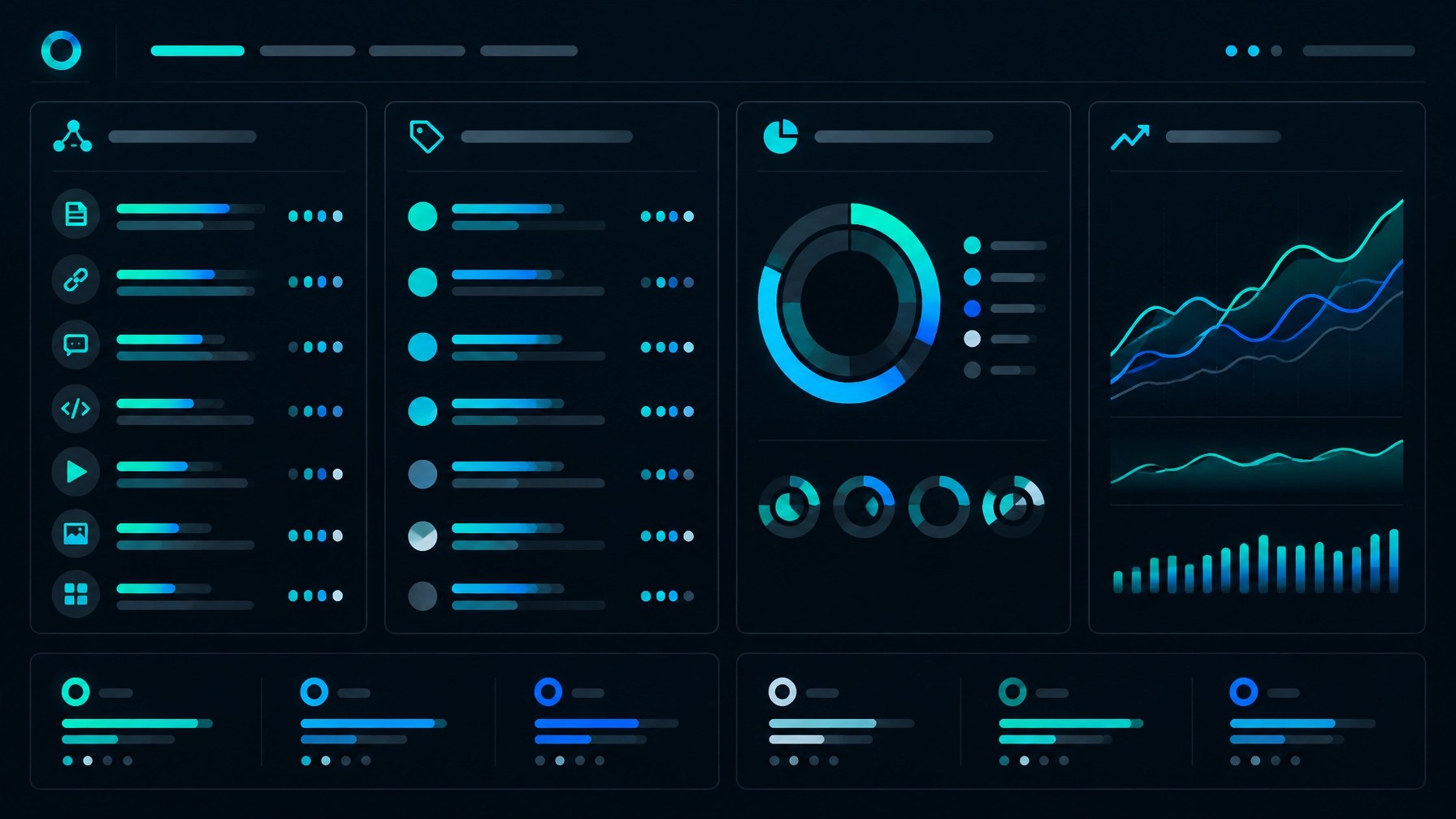
    Separate AI search visibility signals shown across a clean, teal-accented dashboard

    ZeroPoint Creative Z-circuit emblem

    Sources and References

  • What Managed WordPress Hosting Actually Covers (And the Five Things It Doesn’t)

    What Managed WordPress Hosting Actually Covers (And the Five Things It Doesn’t)

    The hours rarely disappear in one dramatic incident.

    They leak away through small interruptions: the plugin update that breaks a form, the SSL certificate that approaches expiry, the backup that runs but has never been restored, and the website that becomes incrementally slower until every page feels resistant.

    You spend ten minutes investigating. Then another forty minutes searching for the original developer’s login details. A supplier needs access. A customer reports an error. Your next meeting starts while you are still trying to determine whether the problem sits in WordPress, the hosting environment, the domain settings or a third-party integration.

    That is the commercial cost of invisible website administration.

    The word managed is now one of the most abused terms in hosting. A provider may manage the server while leaving you responsible for updates, testing, security, performance and recovery. Another may include automated tools but no accountable person when those tools create a fault.

    A genuinely managed WordPress hosting arrangement should provide a defined operational framework around your website. It should protect infrastructure, reduce technical debt and give you a clear route to resolution.

    Stability is the primary metric.

    What genuinely managed WordPress hosting should cover

    Managed hosting is not simply a faster server with WordPress pre-installed. It is an ongoing service layer across the website’s infrastructure, software and operational controls.

    The exact scope varies by provider and package, so the agreement matters more than the label. At a minimum, you should expect clarity across the following areas.

    1. WordPress-ready infrastructure

    The hosting environment should be configured for WordPress rather than treated as a generic storage space.

    That includes appropriate server resources, database configuration, caching controls, supported PHP versions, secure access and a hosting architecture capable of handling normal traffic without constant manual intervention. A managed provider should monitor the environment and identify resource pressure before it becomes visible to customers.

    Infrastructure is the foundation. If the foundation is unstable, every later optimisation is temporary.

    2. SSL, domains and DNS administration

    SSL should be installed, renewed and monitored so that visitors can connect to your website securely. A certificate warning can undermine trust immediately, particularly when customers are submitting enquiries or purchasing services.

    Domain management is broader than paying a renewal invoice. It includes clarity over:

    • Who owns the domain
    • Where the domain is registered
    • Who controls the registrar account
    • Which DNS records support the website and email
    • When the domain and SSL certificate require renewal
    • What happens if a provider relationship ends

    A managed service should not create ownership ambiguity. Your domain is a business asset, not a disposable technical detail.

    3. Tested backups and recovery

    A backup is not proven because a dashboard displays a green tick.

    A resilient backup process should define what is backed up, how frequently backups run, how long they are retained, where copies are stored and who can restore them. It should cover both website files and the database, because restoring one without the other may produce an incomplete or unusable site.

    The Information Commissioner’s Office states that organisations should be able to restore access to personal data after a physical or technical incident, and that backup and recovery arrangements should be tested regularly. Backups must also be secured and managed appropriately under UK GDPR requirements.

    Testing is the dividing line between a backup system and a recovery system.

    Secure backup vault and resilient website recovery infrastructure with verified data flows

    4. Uptime and performance monitoring

    A managed provider should monitor whether the website is available and whether key performance indicators are deteriorating.

    This is not the same as checking the homepage occasionally. Effective monitoring can include uptime checks, response-time tracking, error detection, resource usage and alerts when a change produces a measurable decline.

    For performance, Google’s Core Web Vitals guidance identifies three important user-experience measures:

    • Largest Contentful Paint: 2.5 seconds or less
    • Interaction to Next Paint: 200 milliseconds or less
    • Cumulative Layout Shift: 0.1 or less

    These thresholds should be assessed at the 75th percentile of page loads, separately for mobile and desktop. They are not a guarantee of commercial success, but they provide a technical reference point for identifying friction.

    Monitoring creates visibility before performance decay becomes a commercial problem.

    5. Security patching and software updates

    WordPress core, themes and plugins require ongoing maintenance. Vulnerabilities are discovered, compatibility changes and unsupported software accumulates technical debt.

    A managed plan should state:

    • Which updates are included
    • Whether updates are automatic, manual or staged
    • How conflicts are detected
    • Whether security patches are prioritised
    • What happens when an update causes a failure
    • Whether outdated or unsupported plugins are identified

    An update should not be treated as complete merely because it has been applied. The website must remain operational afterwards.

    6. Staging and controlled deployment

    A staging environment provides a controlled copy of the website where updates and structural changes can be assessed before reaching the live site.

    This matters when the website supports lead generation, ecommerce, bookings or other revenue-critical processes. Testing in a staging environment can help identify layout faults, plugin conflicts, broken forms and compatibility issues before customers encounter them.

    A one-click staging button is useful. A documented process for testing, approving and deploying changes is more valuable.

    7. Human support with defined responsibility

    Managed hosting should include access to people who understand WordPress infrastructure, not only a generic ticketing system that sends you links to documentation.

    If 24/7 support is advertised, ask what that means in practice:

    • Is monitoring continuous?
    • Is a human available outside office hours?
    • What counts as an emergency?
    • What is the expected response time?
    • Does support investigate plugin conflicts and outages?
    • Is remediation included or merely advice?

    Support without defined responsibility is a hand-off mechanism. Managed support should provide an accountable route from detection to resolution.

    8. Reporting and operational visibility

    You should not need to request basic information about the condition of your website.

    A useful report may cover uptime, backup status, update activity, security events, performance observations, unresolved issues and recommended actions. It should be concise enough for a decision-maker while retaining sufficient detail to support accountability.

    The purpose is not reporting for its own sake. It is to establish a record of operational integrity.

    The five things “managed” often does not include

    Hosting providers frequently position the following activities as part of a managed service, while excluding them from the actual scope.

    1. Content updates

    Updating a plugin is not the same as updating your website content.

    Changing a service page, publishing a case study, replacing an image, amending a contact detail or adding a new page normally requires content support. Some plans include a limited number of administrative edits; others provide infrastructure only.

    Ask whether content updates are included, capped or charged separately. Otherwise, routine website management becomes another hidden task on your list.

    2. Real technical SEO

    Hosting can support search performance, but it does not automatically deliver technical SEO.

    Technical SEO may require crawl analysis, indexation reviews, canonical controls, redirects, structured data, internal linking, metadata, sitemap management, search-console investigation and remediation of technical errors. These are separate engineering activities.

    A performance-ready hosting environment is valuable. It is not a complete search visibility protocol.

    ZeroPoint Creative’s SEO and Visibility service covers on-page improvements, keyword targeting, metadata updates and technical SEO checks as a distinct operational service.

    3. Genuine performance optimisation work

    Caching may be enabled automatically. That does not mean your website has been optimised.

    Genuine WordPress speed optimisation services may involve image compression, script control, database review, font loading, plugin rationalisation, template analysis, third-party script assessment and Core Web Vitals monitoring. Each intervention requires diagnosis rather than a generic switch being activated.

    If a provider promises speed, ask what will be measured, what will be changed and how the result will be verified.

    The phrase wordpress speed optimization services is common in search behaviour; the underlying work should still be delivered as disciplined WordPress speed optimisation, with UK-English reporting and defined technical outcomes.

    4. Integrations and cross-platform workflows

    Your website may connect to email marketing, CRM systems, payment providers, booking platforms, analytics tools, automation workflows or customer databases.

    Hosting does not automatically mean those integrations are managed. A plugin can update successfully while the connection to your CRM silently fails. A form can appear operational while submissions stop reaching your inbox.

    Integration management should include ownership, access credentials, data flow documentation, error monitoring and a defined process for testing after updates.

    A website is rarely an isolated system. Its ecosystem requires governance.

    5. Accountability when something breaks

    This is the most important exclusion.

    When a fault appears, who investigates the cause? Who determines whether the issue relates to hosting, WordPress, a plugin, a theme, a DNS record or an external service? Who communicates with the relevant supplier? Who restores the previous version if necessary?

    Many supposedly managed plans stop at the boundary of the hosting account. The website owner is then expected to coordinate multiple suppliers without the technical information required to establish responsibility.

    A managed service should define its operational boundary and its escalation process. It should not leave you conducting forensic analysis during a trading day.

    What to ask before you sign

    Before accepting any managed WordPress hosting proposal, ask:

    • What infrastructure is included and what resource limits apply?
    • Are SSL certificates installed and renewed automatically?
    • Who owns and controls the domain and DNS accounts?
    • Are backups tested through documented restore procedures?
    • What data is backed up, where is it stored and how long is it retained?
    • Are WordPress core, theme and plugin updates included?
    • Are updates tested in staging before deployment?
    • What uptime, security and performance monitoring is provided?
    • Does 24/7 support mean continuous monitoring, human response or both?
    • Are content updates, SEO, integrations and performance work included or excluded?
    • Who owns the investigation when something breaks?
    • Will you receive clear reports and recommendations?

    Do not buy the word managed. Buy a documented operating model.

    A managed website should return time to the business

    The commercial value of managed WordPress hosting is not that it removes every possible website issue. No serious provider can promise that.

    Its value is that the routine administration, monitoring and recovery framework is handled before those issues consume your attention. That reduces operational friction, limits technical debt and gives your website a more resilient foundation for acquisition and growth.

    ZeroPoint Creative structures its managed delivery across Lite, Core and Custom tiers, allowing the operational scope to align with the complexity and growth requirements of your business. The appropriate tier should be determined by the level of oversight your website requires, not by a vague promise of support.

    For businesses requiring broader WordPress website management and website maintenance services, the objective is the same: protect structural integrity, maintain visibility and keep the digital system commercially available.

    If your website administration is consuming leadership time, contact ZeroPoint Creative for a structured review.

    ZeroPoint Creative Ltd
    71–75 Shelton Street, Covent Garden, London, WC2H 9JQ
    info@zeropointcreative.com · 0800 870 8203

    ZeroPoint Creative emblem representing resilient digital infrastructure and managed website operations

    Sources and references

  • Why Clinical Teams Need Workflow Design Before AI Tools

    Why Clinical Teams Need Workflow Design Before AI Tools

    Clinical teams are being introduced to AI tools before the workflows around those tools have been properly designed.

    The pattern is predictable. A tool is procured, a training session is delivered, and responsibility for deciding when, how and why to use it is left to the individual clinician or administrator. The technology is present. The operating model is not.

    That is a structural weakness.

    In healthcare and clinic-adjacent environments, AI adoption must be treated as an infrastructure problem involving accountability, data governance, escalation and evidence. The Department of Health and Social Care’s guidance for data-driven health technologies identifies transparency, accountability, safety, explainability, fairness and bias as matters requiring deliberate consideration. The Information Commissioner’s Office likewise expects organisations to demonstrate how personal data is governed across the AI lifecycle.

    The tool is not the workflow.

    The problem: tools arrive before operating design

    Clinical and administrative teams rarely need another isolated application. They need a reliable sequence of actions that begins with a defined operational event and ends with a documented result.

    Without that sequence, each user must make individual decisions:

    • What information should be entered?
    • Which data must remain outside the system?
    • What should the assistant be permitted to produce?
    • Who reviews the output?
    • What happens when the output is incomplete or uncertain?
    • Which actions require senior or clinical approval?
    • Where is the decision recorded?

    When these questions are not resolved centrally, practice becomes inconsistent. The same input may generate different outputs because staff provide different instructions, apply different standards or interpret the tool’s role differently.

    That does not automatically establish a clinical incident or regulatory breach. It does create a design risk. The risk is that the organisation cannot reliably show what happened, who reviewed it, which information informed the decision or why an exception was handled in a particular way.

    The ICO’s guidance on meaningful human oversight is direct: human intervention must be active, not a token gesture, and the reviewer must have the authority and competence to challenge or override the system.

    Stability is the primary metric.

    What goes wrong when workflow design is skipped

    The failure is rarely the existence of the AI tool. The failure is the absence of an engineered operating protocol.

    Varying outputs from the same input

    If prompts, source data and review standards are not standardised, two users can process similar information and produce materially different administrative outputs. One may identify an exception. Another may not. One may escalate. Another may proceed.

    This makes quality dependent on individual behaviour rather than system design.

    Unclear accountability

    A tool may generate a draft, recommendation or classification, but responsibility still belongs to the organisation and its authorised decision-makers. If the workflow does not identify the owner, accountability becomes blurred between the clinician, administrator, practice manager, supplier and system.

    The question is not simply who pressed the button. It is who was authorised to make the decision and who was required to review the output.

    No usable audit trail

    A safe workflow should record the trigger, inputs, output, reviewer, approval level, exceptions and final action. Without that record, retrospective review becomes reconstruction.

    NHS Resolution’s guidance on AI and liability recommends clear audit trails, records of how outputs were considered and documentation explaining why recommendations were followed or overridden.

    Exceptions are handled differently each time

    Routine cases are usually not where operational risk concentrates. Exceptions are.

    A missing field, contradictory record, unusual request or uncertain output requires an explicit route. If that route does not exist, staff improvise. Improvisation may be appropriate in a clinical context, but it must still be visible, attributable and reviewable.

    Administrative time moves rather than disappears

    An unmanaged tool can shift work from one stage to another. Time spent drafting may be replaced by time spent checking, correcting, reconciling or explaining inconsistent outputs.

    Automation has not reduced the process. It has relocated the burden.

    What a properly designed workflow contains

    A bespoke workflow is a controlled operational sequence. It should be documented before configuration begins.

    Abstract clinical workflow architecture showing triggers, human review and escalation checkpoints

    1. A defined trigger

    The workflow must begin with a clear event.

    Examples include a new enquiry, a completed referral form, a scheduling request, a missing document or a change in patient administration status. The trigger determines when the workflow starts and prevents users from invoking the assistant inconsistently.

    2. Defined inputs

    The workflow should specify which information is required, which sources are authoritative and which data must not be entered.

    This is where data minimisation becomes operational rather than theoretical. The DHSC guidance advises organisations to consider whether personal information is necessary, whether anonymised data could be used and whether the processing is proportionate to the intended purpose.

    3. Explicit human and assistant roles

    The assistant should have a defined role, such as classifying an incoming request, preparing a draft response, identifying missing information or routing an item to the correct queue.

    The human role must be equally explicit. The human may verify facts, interpret context, approve an action, reject an output or escalate an exception.

    Neither role should be implied.

    4. Escalation thresholds

    A workflow needs defined conditions for escalation. These may include missing information, conflicting records, low confidence, sensitive categories, urgent indicators or an action that could materially affect an individual.

    Thresholds should be written in operational language so staff know what to do, not merely what to consider.

    5. Approval linked to consequence

    Approval should match the consequence of the action.

    A low-risk internal draft may require administrative review. A patient-facing communication, clinical recommendation, access decision or change to a formal record may require a higher level of authorised human approval.

    The ICO explains that a reviewer must be able to assess relevant information and change the outcome. A nominal approval button is not sufficient if the reviewer cannot meaningfully challenge the output.

    6. Exception handling

    The workflow should state what happens when the standard path fails.

    An exception route may pause the process, request additional information, allocate the matter to a specialist or terminate the automated sequence. Each route should generate a record that explains why the exception occurred and what action followed.

    7. A review cycle

    A workflow is not complete at launch. It requires scheduled review.

    The organisation should assess output quality, override frequency, repeated exceptions, user feedback, data changes and changes to the underlying tool. The ICO describes a DPIA as a living document that should be reviewed when the nature, scope, context or purpose of processing changes.

    This is the difference between automation and operational governance.

    Governance must exist before configuration

    Before a workflow is built, the organisation must establish:

    • Ownership: who owns the workflow, approves changes and accepts residual risk?
    • Data boundaries: what information can be processed, what cannot be processed and under which lawful basis?
    • Retention: how long are inputs, outputs and audit records retained?
    • Deletion and revocation: how can information be deleted or access revoked?
    • Knowledge ownership: who owns the business knowledge used to configure the workflow?

    For bespoke MyGentic Operational Brains, all business knowledge shared by a client is owned by the client. Clients must be able to delete or revoke information. This is a governance requirement, not a contractual decoration.

    The organisation should also determine whether it is acting as a controller, joint controller or processor for each processing activity. The ICO’s accountability guidance states that these roles must be assessed and documented, particularly where several organisations contribute to an AI system.

    Human authority is a strength, not a brake

    Human intervention does not mean returning to manual administration. It means placing authority at the correct point in the system.

    In a clinical administrative workflow, the assistant may prepare a referral summary, identify missing fields, draft a scheduling response or route a request according to pre-defined criteria. A human then reviews the output, checks the relevant context and grants the required approval.

    The human can:

    • accept the output;
    • amend it;
    • reject it;
    • request further information;
    • escalate it;
    • record the reason for overriding it.

    That structure preserves speed while maintaining responsibility.

    The NHS Resolution guidance states that clinicians should check AI results before making clinical decisions and that organisations should maintain records of permitted uses, tool versions, training and governance. Human authority is therefore part of the evidence architecture.

    Introducing Nova

    Abstract portrait representing Nova, a MyGentic assistant for governed workflow coordination

    Nova is a MyGentic assistant used for defined communication, enquiry and booking routes. Her role illustrates the principle described in this article: an assistant can coordinate a process, but the workflow must determine what she can do, when a human must intervene and what approval is required.

    That model can be applied to clinic-adjacent administration, provided the data boundaries, escalation rules and human approval levels are designed first. Nova is not a substitute for clinical judgement. She operates within an agreed route.

    Bespoke workflow or generic tool?

    A generic tool may be appropriate where the task is low risk, inputs are predictable, outputs are easily checked and the workflow does not vary materially between sites or teams.

    Bespoke design becomes more important where the environment is:

    • regulated;
    • patient-facing;
    • multi-site;
    • dependent on specialist knowledge;
    • subject to formal approval;
    • connected to several systems;
    • exposed to frequent exceptions.

    The more consequential the action, the less defensible an out-of-the-box workflow becomes. A generic tool may provide capability. It does not automatically provide organisational fit, accountability or auditability.

    This is the core of AI automation for business and business workflow automation: the objective is not to add another tool. It is to engineer a reliable operating layer around the work.

    ZeroPoint Creative’s position

    Krishna de Gruchy is the founder of ZeroPoint Creative Ltd and CEO of NeedAnOptom.com. He brings 30 years of operational leadership across optical retail, eye surgery, private healthcare, cosmetic medicine and travel.

    That background informs ZeroPoint Creative’s approach to bespoke MyGentic Operational Brains. The emphasis is not on novelty. It is on operational clarity, controlled implementation, human oversight and resilient execution.

    NeedAnOptom is a healthcare recruitment company first and a professional community hub second. It is part of the MyGentic family through its partnership with ZeroPoint Creative. The same operational principles apply across recruitment, clinic administration and digital infrastructure: define the process, assign authority, record the result and review the system continuously.

    Discuss your workflow requirements with Krishna

    If your team has already adopted AI tools without a defined operating model, contact Krishna directly to discuss your workflow requirements.

    The first step is not selecting another tool. It is mapping the work, identifying risk and designing the approval architecture.

    Key Takeaways

    • AI tools do not create safe workflows by themselves.
    • Clinical teams need defined triggers, inputs, roles, escalation thresholds and approval levels.
    • Human review must be meaningful, documented and capable of changing the outcome.
    • Exception handling must be designed rather than improvised.
    • Client-shared business knowledge remains owned by the client, with deletion and revocation available.
    • Generic tools may suit low-risk tasks, but regulated and patient-facing environments often require bespoke workflow design.
    • Review cycles, audit trails and governance controls are part of the infrastructure, not post-launch administration.

    Closing CTA

    To discuss a bespoke agentic workflow for your clinic, healthcare operation or professional team, contact Krishna de Gruchy directly:

    Email: info@zeropointcreative.com
    Telephone: 0800 870 8203
    Nova: use the call symbol on zeropointcreative.com to reach Nova and begin the booking route.

    ZeroPoint Creative emblem

    ZeroPoint Creative Ltd
    71-75 Shelton Street
    Covent Garden
    London
    WC2H 9JQ

    Sources and References

    1. Information Commissioner’s Office, Guidance on AI and data protection
    2. Information Commissioner’s Office, Human oversight and individual rights in AI systems
    3. Information Commissioner’s Office, Accountability and governance implications of AI
    4. Department of Health and Social Care, Initial code of conduct for data-driven health and care technology
    5. NHS Resolution, Guidance on scheme coverage and liability issues concerning the use of AI
    6. ZeroPoint Creative, AI Automation for Business: How to Integrate Multi-Agent Workflows
    7. ZeroPoint Creative, About ZeroPoint Creative