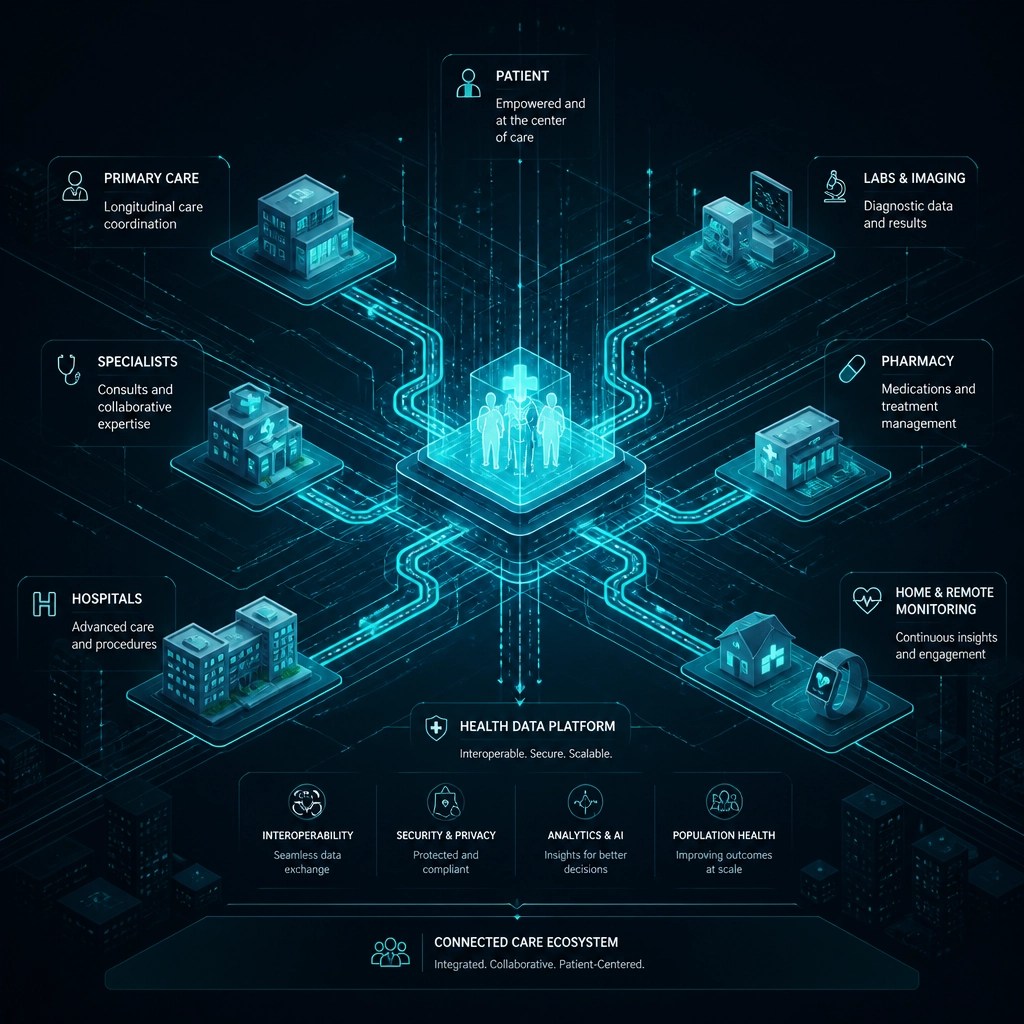
Category: AI & Automation

  • NeedAnOptom Healthcare: How ZeroPoint Creative Powers a Clinical Community Ecosystem

    NeedAnOptom Healthcare: How ZeroPoint Creative Powers a Clinical Community Ecosystem

    In the high-stakes environment of healthcare, operational friction is more than a logistical inconvenience; it is a systemic risk. For clinical organisations, the inability to synchronise professional knowledge or automate critical staffing workflows leads to visibility decay and institutional technical debt.

    NeedAnOptom (NAO) Healthcare, a Healthcare Recruitment and Community platform and a prominent member of the MyGentic family, has recognised that clinical excellence cannot exist in a vacuum. To scale its recruitment operations and central community function, it required a technical backbone capable of supporting a robust professional hub and a streamlined recruitment engine.

    ZeroPoint Creative (ZPC) serves as the technical architect behind this ecosystem. By engineering a custom community forum and bespoke recruitment automation, we have transformed NAO from a fragmented network into a resilient healthcare recruitment and community infrastructure, with recruitment automation operating as the primary engine.

    The Problem: Fragmented Clinical Networking and Staffing Decay

    Traditional healthcare networking is often characterised by siloed communication and manual, high-friction recruitment processes. This fragmentation creates several critical vulnerabilities:

    • Data Leakage: Valuable clinical insights and peer-to-peer support are often lost in ephemeral messaging apps or unorganised email threads.
    • Operational Friction: Manual recruitment for specialist roles like optometrists is inefficient, expensive, and prone to human error.
    • Visibility Decay: Without a centralised hub, a healthcare recruitment and community platform loses control over its professional standards, member engagement, and operational consistency as it grows.
    • Compliance Risk: In the era of UK GDPR and strict clinical governance, unmanaged data sharing presents a significant liability.

    For NeedAnOptom, these weren't just "creative" problems; they were structural failures that threatened the scalability of its recruitment operations, community function, and the initiatives supported by placements and community donations. They needed a managed architectural solution that could mitigate these risks while fostering a culture of standardisation.

    A professional healthcare specialist in a focused pose, representing clinical precision

    Infrastructure: The NAO Community Forum as a Technical Backbone

    The first step in rectifying these systemic failures was the implementation of the NAO Community Forum. Managed and engineered by ZeroPoint Creative, this platform is far more than a simple discussion board; it is a clinical infrastructure designed for peer-to-peer clinical support and standardisation.

    Standardising Professional Dialogue

    By providing a secure, high-performance environment for clinicians to interact, we have enabled a level of knowledge-sharing that was previously impossible. This forum allows for the formalisation of clinical protocols and the rapid dissemination of best practices.

    Resilience and Monitoring

    Like all systems managed by ZPC, the NAO forum is built on performance-focused infrastructure. We provide continuous monitoring and proactive maintenance to ensure that this mission-critical resource is "always-on." This eliminates the risk of downtime that often plagues DIY or out-of-the-box community solutions.

    Key Takeaway: Clinical standardisation is the primary metric for long-term operational stability.
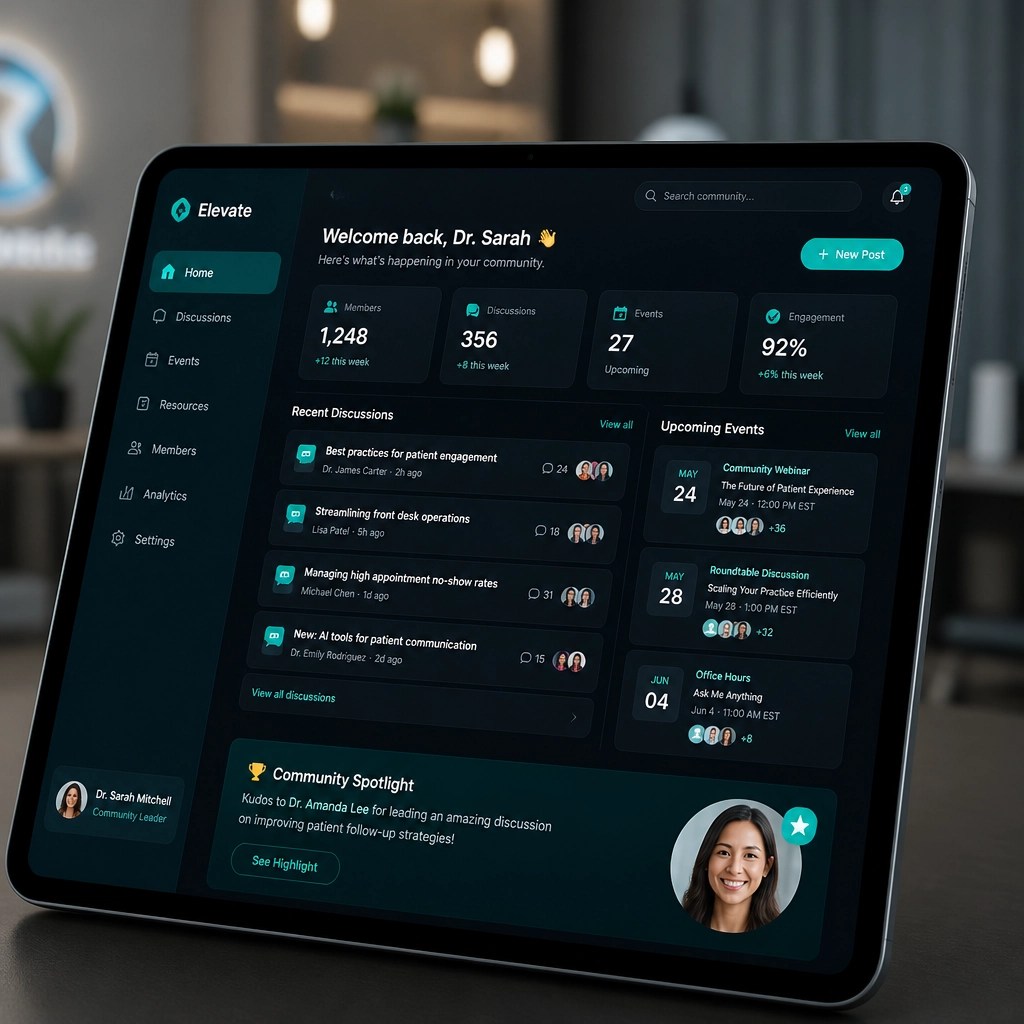
    A close-up of a high-end digital dashboard representing the NAO Community Forum interface

    Engineering Growth: Recruitment Automation and AI Workflows

    The most significant bottleneck for any healthcare recruitment and community platform is staffing. Recruiting qualified optometrists and clinical support staff is a resource-intensive process that frequently suffers from data silos.

    ZeroPoint Creative has engineered a Recruitment Automation framework for NAO that leverages AI-driven workflows to streamline the entire hiring lifecycle. This recruitment automation is the primary engine of the wider NAO ecosystem, with the community platform supporting professional engagement around it. This is not a creative "fix" but a technical protocol for human resource management.

    Bespoke AI Workflows

    We utilise automated workflows to handle initial screenings, document verification, and interview scheduling. This reduces the administrative burden on NAO staff, allowing them to focus on clinical oversight rather than data entry. For more on how we approach this, see our guide on how to integrate AI staffing with your existing business operations.

    Automated Clinical Staffing Infrastructure

    The system is designed to be cross-platform and data-dense. Every applicant's journey is tracked with clinical precision, ensuring that no potential recruit falls through the cracks. This level of automation is similar to the architecture we used for Alison, our AI sales agent, adapted for the specific rigours of healthcare recruitment.
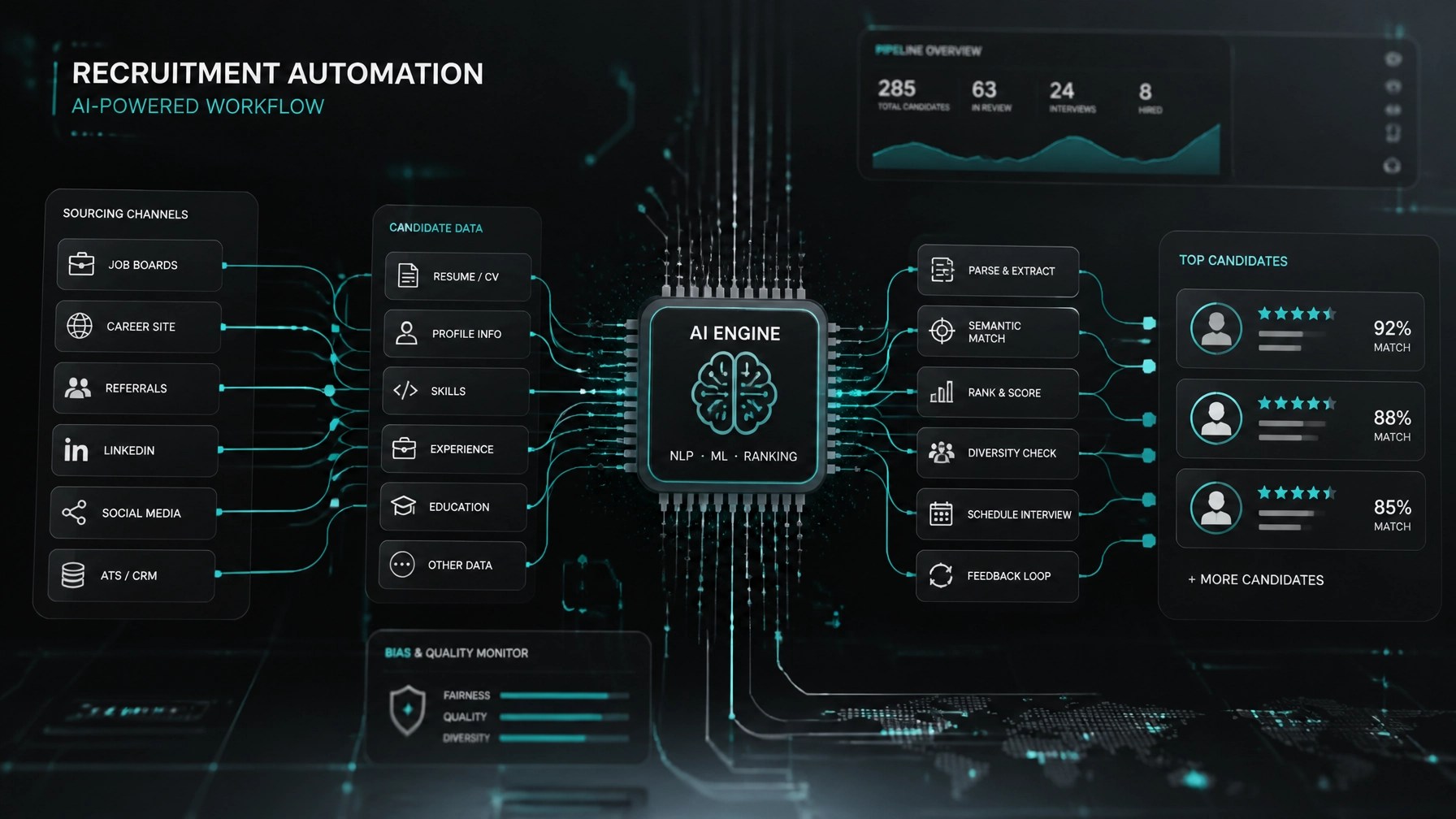
    Abstract technical visual of data flows and digital circuitry representing recruitment automation

    Growth: Scalable Staffing and Communal Trust

    The synergy between ZPC’s precision engineering and NAO’s operational model has resulted in a resilient ecosystem that is built for recruitment-led growth, community stability, and broader initiative support.

    Scalable Acquisition

    With the recruitment automation in place, NAO can scale its staffing requirements without a linear increase in overhead. The technical framework absorbs the complexity, allowing the platform to grow its reach across the UK while generating the placements that underpin wider community-supported charitable initiatives.

    Communal Trust and Authority

    The forum has established NAO as a centre of excellence within the optometry community. By providing a technical platform for high-level professional discourse, we have helped NAO build a level of communal trust that acts as a powerful trust signal for clinicians, partners, supporters, and the wider MyGentic family.

    We have previously explored the intersection of clinical expertise and digital strategy in our case study on Professor David Gartry, and the work with NAO is a natural evolution of that technical philosophy.
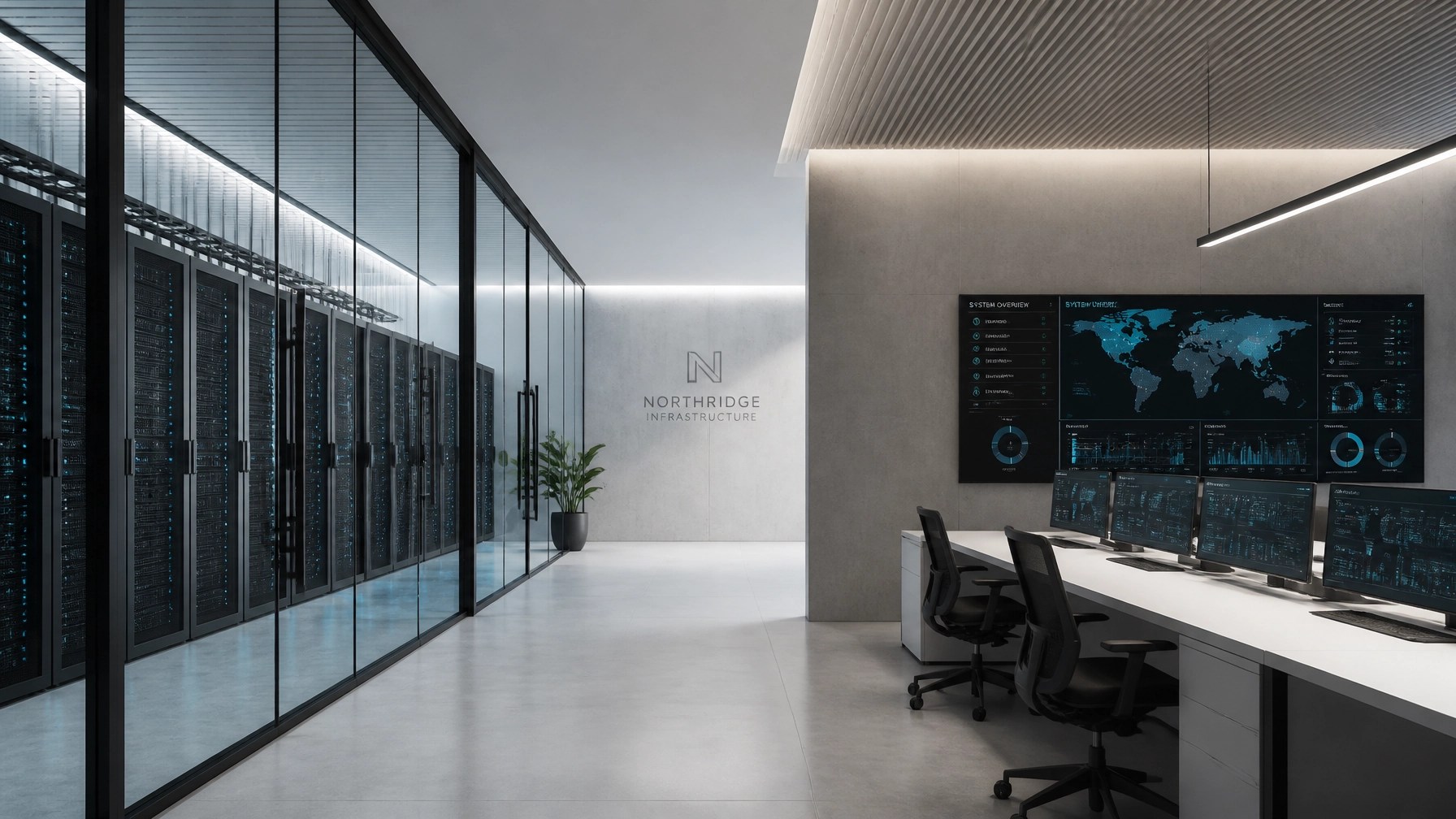
    Minimalist architectural shot of a modern, professional workspace representing stability

    Conclusion: Precision is the Only Path to Expansion

    The collaboration between NeedAnOptom Healthcare and ZeroPoint Creative demonstrates that digital services are most effective when framed as mission-critical operational systems. By addressing systemic failures with engineered infrastructure, we have provided NAO with the tools to rectify fragmentation, power recruitment through automation, and leverage their community for scalable growth.

    Stability is our primary metric. Whether it is managing a high-traffic forum or architecting an AI-driven recruitment engine, our goal remains the same: to provide the clinical precision and operational excellence required by modern healthcare organisations.

    Take the Next Step in Clinical Automation

    If your organisation is facing operational bottlenecks or technical debt, it is time to transition to a managed digital ecosystem.

    Connect with NeedAnOptom Healthcare to learn more about their Healthcare Recruitment and Community platform, or contact Krishna at ZeroPoint Creative to discuss how we can engineer a custom automation workflow for your business.

    Enquire about Clinical Automation

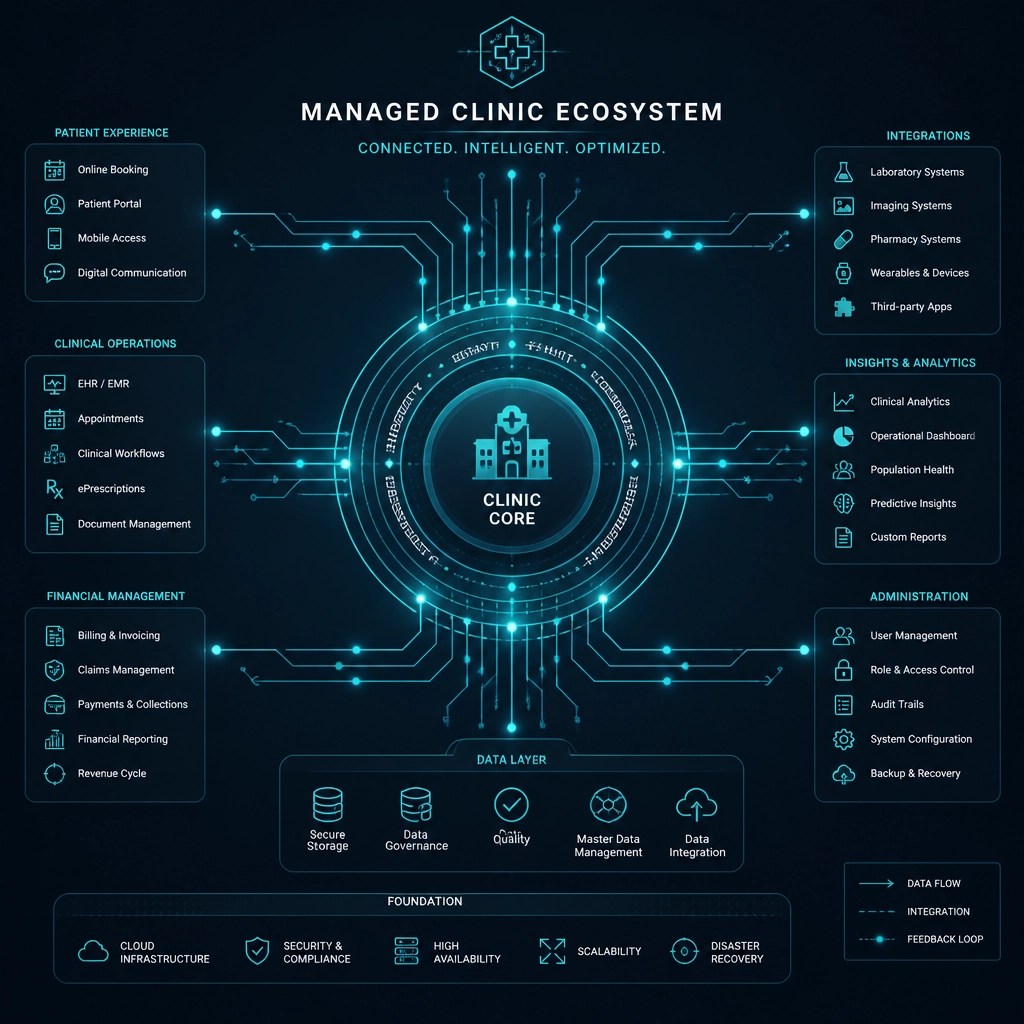
  • The Managed Clinic Ecosystem: How ZeroPoint Creative Powers NeedAnOptom Healthcare’s Digital Evolution

    The Managed Clinic Ecosystem: How ZeroPoint Creative Powers NeedAnOptom Healthcare’s Digital Evolution

    The modern healthcare landscape is currently experiencing a period of intense systemic friction. For clinicians and practice managers, the primary obstacle to operational excellence is no longer clinical skill, but the accumulation of technical debt and fragmented digital infrastructure. In the optometry sector, this "digital noise" manifests as EHR fragmentation, manual recruitment bottlenecks, and the unmanaged decay of professional networking platforms.

    ZeroPoint Creative (ZPC) serves as the technical architect behind the Managed Clinic ecosystem: a specialised infrastructure designed to rectify these systemic failures. By assuming full responsibility for the digital operations of NeedAnOptom (NAO) Healthcare, ZPC enables surgeons and optometrists to transition from "technical troubleshooters" back to their primary roles as providers of clinical care.

    1. The Problem: Systemic Failure and Digital Noise

    In many healthcare environments, the digital "ecosystem" is not an ecosystem at all, but a collection of siloed, brittle tools. Clinicians are frequently bogged down by administrative documentation, manual verification of locum credentials, and the management of disparate communication channels. This leads to what we categorise as visibility decay: where the professional reputation and operational efficiency of a clinic are compromised by inefficient digital systems.

    The impact of this friction is measurable. Research indicates that the documentation burden alone can occupy significant portions of a clinician's day, leading to burnout and reduced patient throughput. Furthermore, manual recruitment processes in the eye care sector often result in high labour costs and operational instability. Without a resilient, always-on monitoring system, these digital liabilities compound, creating a significant barrier to commercial scalability.

    Abstract data flows and nodes representing a resilient, always-on digital infrastructure for healthcare.

    2. The Infrastructure: The Managed Clinic Ecosystem

    To mitigate these risks, ZeroPoint Creative has engineered the Managed Clinic model for NeedAnOptom Healthcare. This is not a creative service; it is a clinical-grade operational framework. ZPC provides the technical backbone for the entire NAO ecosystem, encompassing SaaS infrastructure, a robust community forum, and automated recruitment workflows.

    Managed SaaS and Technical Stability

    NeedAnOptom functions on a high-performance infrastructure managed entirely by ZPC. This includes secure hosting, continuous monitoring, and the integration of Agentic Workflows. These workflows utilise autonomous AI agents to handle complex operational tasks across recruitment, community management, and platform administration with clinical precision. By leveraging these systems, NAO has strengthened recruitment throughput, reduced administrative friction, and reclaimed significant operational hours for its network.

    The Community Forum: Social Infrastructure

    Standardisation is critical in eye care. ZPC maintains the technical integrity of the NAO community forum, which serves as a peer-to-peer clinical support platform. This "social infrastructure" allows for the dissemination of best practices and collaborative care models, ensuring that the collective intelligence of the network is organised and accessible.

    Recruitment Automation

    Recruitment is often the most significant point of failure in clinical operations. ZPC has rectified this by implementing bespoke, AI-driven automation for NAO's recruitment engine. These systems automate the screening, verification, and scheduling processes for clinician hiring. By standardising the verification of credentials and automating the initial engagement, ZPC ensures that only high-quality talent enters the ecosystem, thereby maintaining structural integrity across the network.

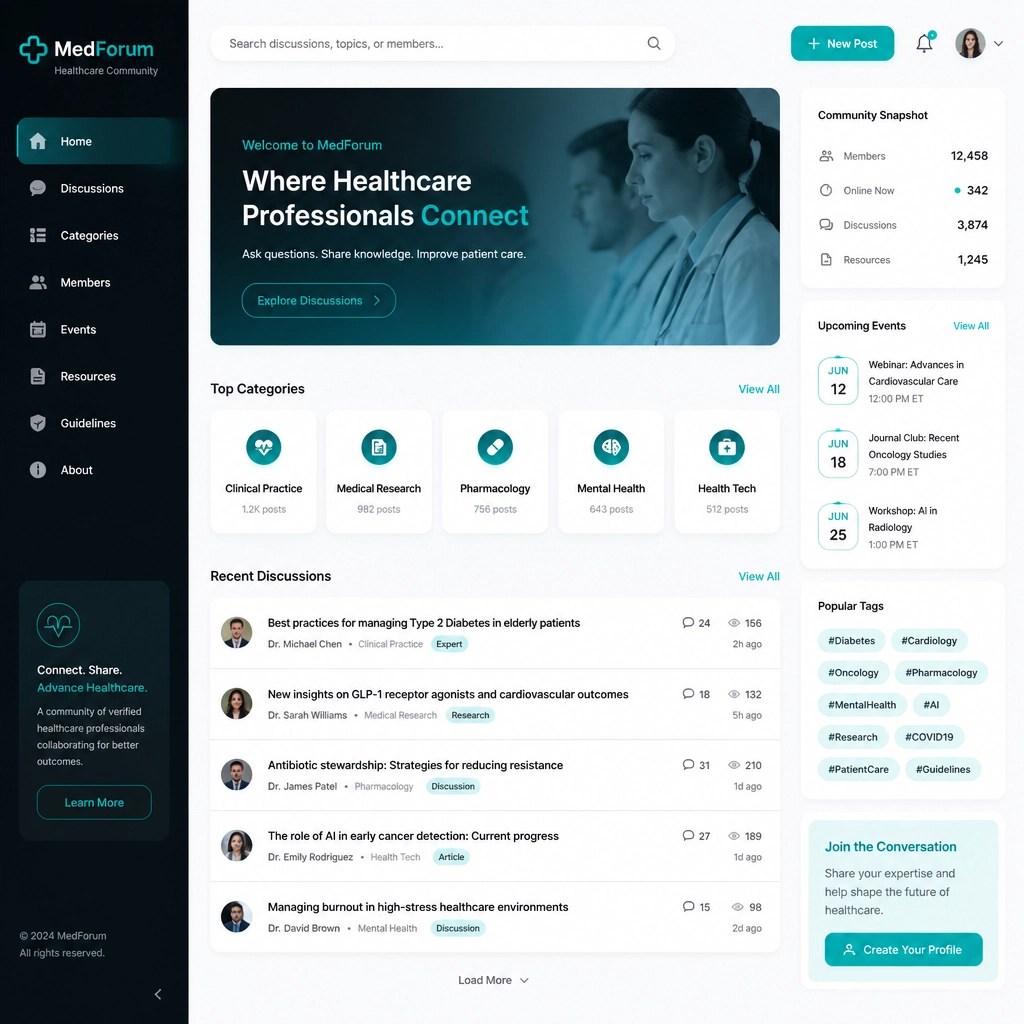
    A minimalist UI mockup of the NeedAnOptom community forum, designed for clinical collaboration and standardisation.

    3. Growth: Predictable Performance and MyGentic Synergy

    Strategic growth in the digital age requires more than just visibility; it requires a resilient foundation. NeedAnOptom Healthcare operates first as a healthcare recruitment company and a central community hub, with ZeroPoint Creative providing the infrastructure that keeps both systems stable, scalable, and always-on. This alignment provides NAO with access to advanced architectural frameworks and data-dense reporting, further strengthening trust, authority, and operational reach across its network.

    By offloading the "heavy lifting" of digital management to ZPC, NeedAnOptom has achieved predictable performance. The platform can scale recruitment operations, community engagement, and professional services without incurring additional technical debt. Placements and donations generated through this ecosystem then help support wider charitable initiatives, creating a more resilient growth model built on operational strength rather than unsupported overhead. This transition toward a Collaborative Shared Care model: exemplified by campaigns like "Surgeons and Shifts" featuring Professor David Gartry: demonstrates how integrated technology can bridge the gap between primary optometry and advanced surgical intervention.

    A digital strategist monitoring clinical dashboards, representing the role of ZPC as a Digital Guardian.

    4. Social Responsibility: Community-Led Impact

    Integrity extends beyond technical performance. NeedAnOptom Healthcare is not a charity; it is a healthcare recruitment company and central community hub operating on infrastructure managed by ZeroPoint Creative. Its recruitment placements and the donations generated through its community are what support associated charitable initiatives.

    Our role is to ensure that this operational model remains resilient, frictionless, and commercially viable. By maintaining the structural integrity of the NAO platform, ZPC helps create the stability required for both commercial performance and community-led social impact.

    Conclusion: Precision as the Path to Conversion

    The collaboration between ZeroPoint Creative and NeedAnOptom Healthcare is a blueprint for the future of healthcare management. By treating digital presence as mission-critical infrastructure rather than a creative exercise, we have built a resilient environment where clinicians can thrive.

    Reliability is our primary metric. Precision is our only path to conversion.

    Contact Krishna to discuss your Managed Clinic requirements.

    ZeroPoint Creative Logo


  • AI Agents Now Control WordPress Hosting: What This Means for Your Business Operations in 2026

    AI Agents Now Control WordPress Hosting: What This Means for Your Business Operations in 2026

    The landscape of digital infrastructure has reached a critical inflection point. As of July 2026, the management of WordPress environments has transitioned from manual, human-centric administration to autonomous, agent-driven operations. This shift is not merely a technical trend; it is a fundamental restructuring of how businesses maintain their digital presence.

    With the recent launch of native Model Context Protocol (MCP) integrations by industry leaders such as Pressable and Rocket.net, AI agents now possess direct control over hosting infrastructure. This allows for the execution of complex operational tasks: from site provisioning to real-time security mitigation: through natural language protocols. For the modern business owner, the "DIY" approach to hosting is no longer just a burden; it is a systemic liability.

    At ZeroPoint Creative Ltd, we act as the Digital Guardian of your infrastructure, leveraging these advanced protocols to ensure your business operations remain resilient, scalable, and frictionless.
    1. The Problem: The High Cost of Manual Hosting Friction

    For years, UK businesses have struggled with the "technical debt" inherent in traditional WordPress hosting. Managing a digital ecosystem manually introduces three primary systemic failures:

    Operational Latency and Data Decay

    In a standard hosting environment, updates to PHP versions, WordPress core, and security patches require manual intervention. This creates a window of vulnerability and performance decay. When these tasks are neglected, "data rot" sets in, leading to sluggish load speeds and compromised integrity. According to our research into website speed and conversions, even minor latencies can erode commercial scalability.

    Human Error in Scaling

    As your business grows, the complexity of your digital architecture increases exponentially. Manually cloning staging environments, managing SSL certificates, and configuring CDN caches across multiple sites is prone to human error. In 2026, a single misconfigured firewall or a failed backup recovery can result in significant operational downtime, impacting your bottom line and reputation.

    The Resource Drain

    With the National Living Wage rising and the complexity of digital systems increasing, dedicating internal human resources to technical maintenance is an inefficient use of capital. Business owners should be focused on strategic expansion, not the minutiae of server-side troubleshooting.

    A professional technical architect in a focused pose, reflecting the Digital Guardian persona of ZeroPoint Creative.

    2. The Infrastructure: The Rise of the Model Context Protocol (MCP)

    To rectify these systemic inefficiencies, the industry has adopted the Model Context Protocol (MCP). This is a standardised framework that allows AI assistants: such as Claude, ChatGPT, and Gemini: to interface directly with hosting servers.

    How AI Agents Operate Your Hosting

    In July 2026, hosting providers have bifurcated into two camps: those offering native agent control and those requiring DIY development.

    • Pressable's Native Integration: Pressable has launched a production-grade MCP server. This allows AI agents to perform "bulk operations" across entire site portfolios. An agent can now "inventory all staging sites, upgrade them to the latest PHP version, check for errors, and report back" in seconds.
    • Rocket.net's Provisioning Excellence: Rocket.net has introduced an official MCP server focused on automated provisioning. This means an AI agent can sign up for an account, deploy a WordPress site, and attach a domain with zero human clicks.
    • Kinsta’s Developer Pathway: While Kinsta has published guides for integrating AI via their API, they position this as a developer exercise. This is a "trap" for many business owners, as it requires maintaining custom integration code, further increasing technical debt.

    ZeroPoint’s Managed Foundation

    At ZeroPoint Creative Ltd, we have pre-emptively aligned our managed WordPress hosting infrastructure with these autonomous protocols. We do not expect you to write code or manage MCP tokens. Our role is to architect the system, ensuring that these AI agents work within a secure, governed framework.

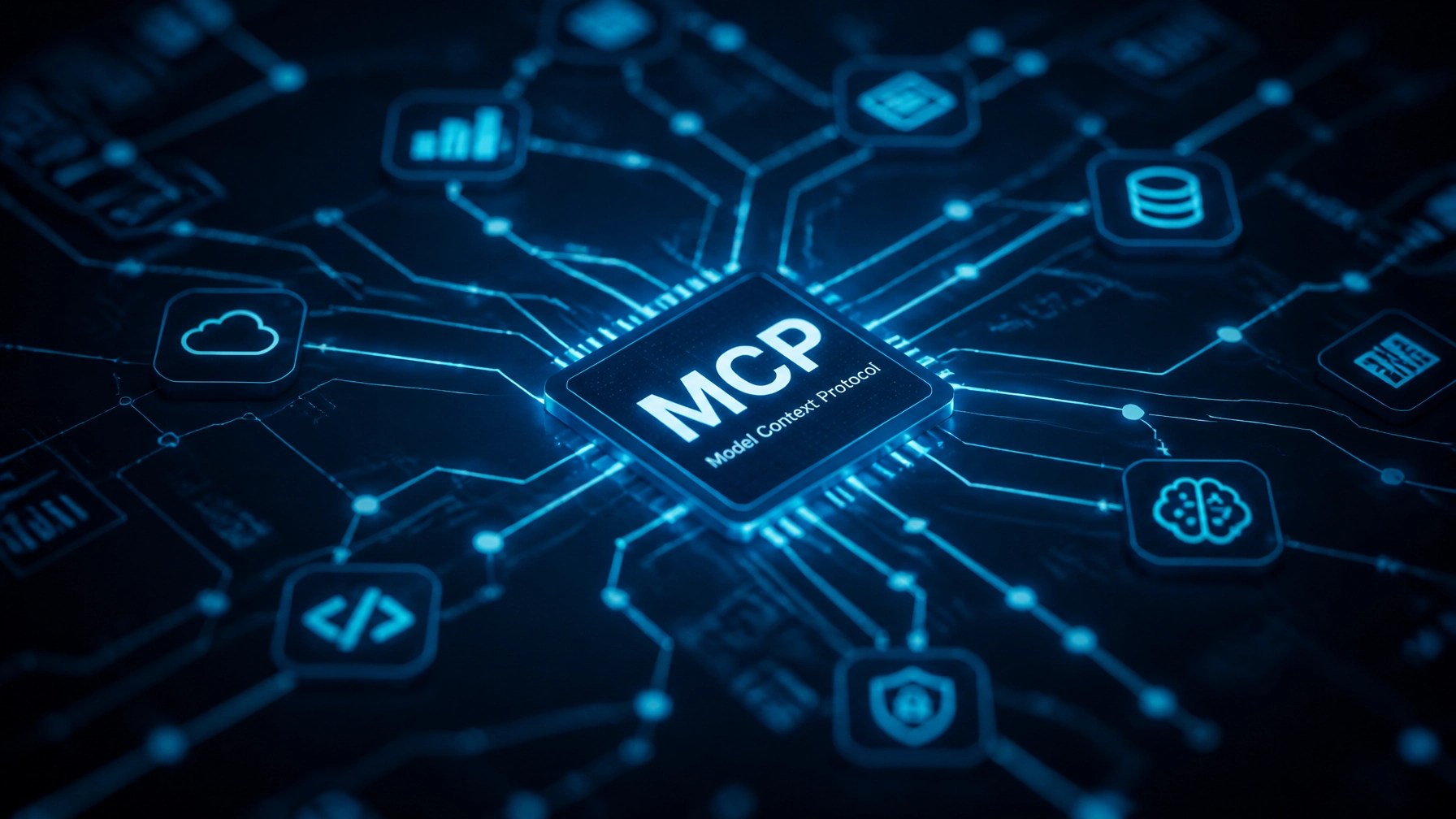
    Abstract technical visual of interconnected data nodes representing the Model Context Protocol (MCP).

    3. Growth: Engineering Scalable Excellence

    The integration of AI agents into hosting infrastructure is not just about efficiency; it is about enabling commercial expansion through stability.

    Clinical Precision in Maintenance

    By leveraging agent-driven maintenance, we mitigate the risks associated with manual updates. Our Maintenance Add-On now utilises automated workflows to monitor uptime and performance 24/7. When a system anomaly is detected, the agent can rectify the issue: clearing caches or rolling back a faulty plugin: before it affects the user experience.

    Predictable Performance

    A performance-driven build is only as good as the infrastructure supporting it. With AI-managed hosting, we ensure that your site is always optimised for speed and usability. This leads to a frictionless journey for your customers, turning clicks into clients with precision.

    Reducing Operational Overhead

    By moving away from manual admin and toward AI-driven workflows, businesses can achieve a higher level of output with lower overhead. Our tiered packages are designed to scale with you:

    • Lite: For businesses requiring a stable, professional digital presence with managed infrastructure.
    • Core: Our most popular plan, designed for businesses that need priority updates and continuous security monitoring.
    • Custom: A fully managed, high-performance ecosystem for businesses looking to dominate their market with advanced automation and 24/7 support.

    Sleek, high-end server rack in a modern facility with cyan LED lighting, representing resilient infrastructure.

    Key Takeaways for UK Business Owners

    1. Autonomous Management is the New Standard: By mid-2026, manual hosting management is an obsolete and risky practice.
    2. MCP is the Critical Protocol: The Model Context Protocol allows AI agents to handle hosting operations with engineering-grade clarity.
    3. Avoid DIY AI Integration: Implementing AI agents yourself creates technical debt. Favour managed solutions that provide "agent-ready" foundations.
    4. Stability Leads to Growth: A managed, always-on infrastructure is the only way to ensure scalable acquisition and reduced operational friction.

    Conclusion: Securing Your Digital Future

    The emergence of AI agents in the WordPress ecosystem represents a shift toward "Digital Guardianship." At ZeroPoint Creative Ltd, we provide the technical architecture required to leverage these advancements without the operational headache. Whether you are looking to redesign your website or migrate to a more resilient hosting environment, our systems are engineered for the future.

    Precision is the only path to conversion. Ensure your business is built on a foundation of operational excellence.


  • Agentic Workflows in Eye Care: Engineering Clinical Efficiency with ZPC and MyGentic

    Agentic Workflows in Eye Care: Engineering Clinical Efficiency with ZPC and MyGentic

    In the current landscape of ophthalmic practice, the primary bottleneck to commercial scalability is no longer clinical expertise: it is administrative friction. Eye care professionals are increasingly positioned as data entry clerks rather than surgeons or optometrists, trapped within fragmented ecosystems that fail to communicate. At ZeroPoint Creative (ZPC), we view this not as a creative challenge, but as a technical system failure.

    NeedAnOptom Healthcare is now a member of the MyGentic family through its partnership with ZeroPoint Creative, which provides an added layer of trust for clinicians.

    The introduction of agentic workflows, orchestrated via the MyGentic framework, represents a shift from static automation to dynamic, autonomous digital systems. By engineering bespoke infrastructures that leverage "Sage" AI interviewers and advanced token compaction, ZPC is rectifying the systemic inefficiencies that have long plagued eye care clinics. This is the new architecture of clinical operations.

    1. The Problem: The Cognitive Load and Systemic Failure of Modern Eye Care

    The modern clinic is currently suffering from a state of "visibility decay." Patient data is captured across disparate systems: EHRs, imaging devices, and manual intake forms: creating a massive cognitive load on the clinician.

    The Administrative Burden

    Recent research indicates that clinicians spend an average of 2.1 hours daily on documentation and administrative tasks. This is not merely a nuisance; it is a structural failure that creates data leakage and operational friction. When a clinician is required to manually synchronise patient history with diagnostic findings, the risk of error increases, and the capacity for patient volume decreases. This is a direct threat to the commercial integrity of the practice.

    The Failure of Generic AI

    Traditional, "out-of-the-box" AI solutions often exacerbate this problem. Generic Large Language Models (LLMs) lack the clinical context required for precision ophthalmology. They produce "noisy" outputs that require extensive human editing, essentially shifting the burden from writing to proofreading without reducing total cognitive load. These DIY implementations are technical debt masquerading as innovation. Without a managed architectural framework, these tools remain liabilities rather than assets.

    Systemic Resource Inefficiency

    The impact of this inefficiency is compounded by rising operational costs, including adjustments to the National Living Wage and increasing overheads for specialised clinical staff. When high-value clinicians are utilised for low-value data management, the ROI of the practice is fundamentally compromised. Clinical stability requires a technical system that handles the "noise" so the expert can focus on the "signal."

    A professional portrait of an individual ophthalmologist in a thoughtful, focused pose.

    2. The Infrastructure: Agentic Orchestration via MyGentic

    To rectify these failures, ZPC engineers bespoke agentic workflows using the MyGentic ecosystem. Unlike standard automation tools like Zapier or Make, which follow rigid, linear rules, agentic workflows utilise autonomous AI agents capable of reasoning, planning, and executing complex multi-step tasks within a clinical context.

    Sage: The AI Clinical Interviewer

    The foundation of our infrastructure is "Sage," the MyGentic AI interviewer. Sage is not a chatbot; it is a clinical data acquisition agent. It conducts conversational, patient-facing interviews that move beyond simple intake forms. Sage is programmed to build 7-dimension clinical profiles, capturing:

    1. Symptoms & Severity: Precise onset and aggravating factors.
    2. Physical Function: Visual interference in daily activities.
    3. Mental Health: Anxiety levels related to vision loss (e.g., GAD-7 alignment).
    4. Social & Role Functioning: Impact on family and social responsibilities.
    5. Occupational Status: Vocational limitations and necessary accommodations.
    6. Lifestyle & Health Behaviours: Adherence to prior treatments and diet.
    7. Risk & Protection Profile: Comorbidities and protective social factors.

    This structured data is then automatically synthesised into a compact clinical summary, providing the clinician with a high-signal brief before the patient even enters the exam room.

    Token Compaction: Engineering Performance and Cost Efficiency

    One of the primary barriers to enterprise AI adoption is the "token cost": the recurring expense of processing large amounts of text through models like Claude or ChatGPT. ZPC implements Token Compaction within the MyGentic framework. This technical protocol reduces the context sent to the AI by 70–80%, focusing only on the most relevant dimensions of the patient's profile.

    By compacting 7-dimension profiles into high-density JSON objects rather than long-form transcripts, we ensure the system is not only faster but significantly more cost-effective. This is performance engineering designed for long-term clinical scalability.

    Multi-Agent Systems

    ZPC designs these workflows as multi-agent systems. One agent may handle the Sage interview, another manages the synchronisation of diagnostic images from OCT or retinal scans, and a third automates the EHR documentation. These agents operate in a coordinated ecosystem, ensuring that every piece of data is where it needs to be, when it needs to be there. This is "always-on" monitoring of the clinical data flow.

    An abstract technical visual representing

    3. The Growth: Performance Data and Clinical Outcomes

    The transition from manual documentation to an engineered agentic infrastructure is not a creative preference: it is a performance-driven necessity. Data from 2026 research highlights the transformative impact of these systems on clinical throughput.

    Quantifiable Efficiency Gains

    According to recent studies published in Nature npj Health Systems (2026) and data repositories on Zenodo (2026), the implementation of agentic workflows in clinical settings has yielded the following outcomes:

    • Diagnostic Order Time Reduction: Average time to process and place diagnostic orders dropped from 28.4 minutes to 4.2 minutes per patient: an 85% increase in operational velocity.
    • Documentation Burden Reduction: Clinicians reported a 75% decrease in time spent on manual EHR entry, effectively reclaiming over 90 minutes of clinical time per day.
    • Improved Accuracy: The use of 7-dimension profiles led to a 22% increase in the identification of secondary risk factors that were previously overlooked in standard intake processes.

    Scalable Acquisition and Predictable Performance

    For the modern eye care business, these numbers translate directly to growth. By reducing the time required for each patient interaction without compromising the quality of care, practices can scale their acquisition of new patients while maintaining a leaner operational footprint.

    Stability is the primary metric of success. A ZPC-managed infrastructure ensures that as your patient volume grows, your administrative burden does not grow with it. We provide the technical architecture that allows your practice to remain resilient in a volatile digital landscape.

    A high-resolution architectural shot of a modern, high-tech server room.

    Conclusion: The Digital Guardian of Your Practice

    Digital operations in eye care have reached a level of complexity where DIY solutions and generic software are no longer viable. They are liabilities that create friction and data rot.

    At ZeroPoint Creative, we act as the Technical Architects and Digital Guardians of your clinical system. By leveraging the power of MyGentic and bespoke agentic workflows, we rectify the systemic failures of documentation and administrative load, replacing them with a precision-engineered ecosystem built for growth.

    The future of eye care is not just better medicine; it is better systems.

    Contact Krishna to discuss your Agentic Workflow requirements.


    Sources and References

    • Nature npj Health Systems (2026): "Agentic AI in Clinical Diagnostics: A Multi-Centre Evaluation of Workflow Orchestration."
    • Zenodo (2026): "Dataset on Time-Motion Studies in AI-Augmented Ophthalmic Practices."
    • MyGentic Technical Documentation (2026): "Sage AI Interviewer and Token Compaction Protocols for Healthcare."
    • ZeroPoint Creative Internal Data: "Operational Efficiency Audit: Managed Digital Systems in Clinical Environments."

  • Surgeons and Shifts: How Professor David Gartry Bridged the Gap Between Optometry and Laser Surgery

    Surgeons and Shifts: How Professor David Gartry Bridged the Gap Between Optometry and Laser Surgery

    The evolution of the UK eye care sector is not merely a story of medical advancement; it is a narrative of systemic standardisation and the dismantling of professional silos. For decades, the industry operated within a fragmented framework where primary optometry and tertiary surgery existed as separate entities, often resulting in operational friction and a lack of clinical continuity.

    This structural misalignment created "data leakage" in the patient journey: a systemic failure where critical clinical insights were lost during the transition from high-street optometry to surgical theatres. To rectify this, the industry required a technical architect capable of bridging these two distinct disciplines.

    Professor David Gartry is that architect. His career serves as the ultimate blueprint for the "Shared Care" model, proving that the highest levels of surgical precision are built upon a foundation of primary care expertise.

    1. The Problem: The High Cost of Siloed Clinical Care

    In a traditional healthcare ecosystem, the "silo" is a significant operational risk. When optometrists and surgeons operate in isolation, the technical debt of the patient journey increases. Miscommunication regarding pre-operative measurements or post-operative recovery protocols can lead to visibility decay and suboptimal clinical outcomes.

    Historically, the UK eye care market suffered from a lack of integrated infrastructure. This was not just a clinical issue; it was a matter of professional compliance and operational efficiency. Without a standardised framework for collaboration, patients faced a disjointed experience, and clinicians faced increased liability.

    In the modern landscape: governed by strict regulations such as UK GDPR and the rising expectations of patients: the "DIY" approach to patient management is a liability. Stability in the patient journey requires a unified system.

    A professional male clinician reviewing high-tech digital eye scans, representing the clinical precision and technical architecture of modern eye care.

    2. The Infrastructure: A Professional Bridge Built on Precision

    The "Shift" in our industry is defined by the transition from siloed practices to an integrated, tech-first future. Professor David Gartry embodies this professional evolution through his unique dual-qualification background.

    The Optometric Foundation (1978)

    In 1978, David Gartry qualified as an optometrist, obtaining First Class Honours from Glasgow Caledonian University. This is the cornerstone of his career. For the NeedAnOptom community, this fact is mission-critical. It establishes a shared language. Gartry did not enter the world of surgery from an "ivory tower"; he began at the primary care level, completing his pre-registration training at Moorfields Eye Hospital in 1979.

    This background allows him to view surgery not as an isolated event, but as a technical intervention within a broader clinical ecosystem. He understands the nuances of refraction, the complexities of contact lens fitting, and the day-to-day challenges faced by high-street optometrists. This foundational knowledge is the infrastructure upon which his surgical success was built.

    The Surgical Milestone (1989)

    After transitioning into medicine and qualifying in ophthalmic surgery, Gartry reached a pivotal point in UK medical history. In November 1989, at St Thomas’ Hospital in London, he performed the first excimer laser photorefractive keratectomy (PRK) procedure in the United Kingdom.

    This was more than a medical first; it was a technical "Shift" that changed the country's surgical landscape. By leveraging nascent laser technology, Gartry moved the industry away from manual blade incisions toward automated, digital precision. He didn't just perform a procedure; he engineered a new standard of care.

    Abstract technical visual representing the data flows and professional collaboration within a shared-care healthcare ecosystem.

    3. Growth: The Era of Collaborative Shared Care

    When clinical systems are optimised and integrated, the result is scalable success. Professor Gartry’s career provides the data points to prove this:

    • 30,000+ successful laser eye surgery procedures.
    • 20,000+ cataract and lens exchange procedures.
    • The founding of The Wimpole Eye Clinic as a centre of excellence.

    These figures are not just markers of a successful career; they are the output of a high-performance clinical system. By maintaining strong ties with the optometric profession: exemplified by his Honorary Fellowship of The British College of Optometrists: Gartry has fostered an environment of Collaborative Shared Care.

    Scalable Acquisition through Technical Stability

    For modern practitioners, the lesson is clear: growth is a byproduct of stability. By collaborating with a surgeon who understands the optometric framework, practices can mitigate risk and improve patient retention. This is not about "sending patients away"; it is about integrating into a professional network that enhances the value of the primary care practice.

    In an era where the National Living Wage and rising operational overheads put pressure on high-street margins, leveraging a managed referral system is an essential strategy for commercial expansion.

    A professional female optometrist using diagnostic equipment in a minimalist clinical suite, representing the primary care foundation of eye care.

    Conclusion: Engineering the Future of Eye Care

    The "Surgeons and Shifts" campaign is a testament to the fact that the most resilient clinical systems are those that embrace collaboration. Professor David Gartry’s journey from a 1978 optometry graduate to the UK’s laser surgery pioneer is a masterclass in professional integration.

    At NeedAnOptom, we are building the digital infrastructure to facilitate these exact connections. We provide the tools for optometrists to find the right clinical environments and for surgeons to find the expert partners they need to maintain their "always-on" clinical standards.

    Precision is the only path to conversion, and collaboration is the only path to scale. To learn more about how we are optimising the eye care workforce, visit our blog or explore our managed recruitment services.

  • Meet Alison: ZeroPoint Creative’s New AI Sales Agent : Built by Us, Live on Our Site

    Meet Alison: ZeroPoint Creative’s New AI Sales Agent : Built by Us, Live on Our Site

    In the current digital landscape, the cost of latency is no longer a peripheral concern; it is a systemic liability. For modern businesses, the gap between a lead’s initial enquiry and a professional response represents a primary site of data leakage and conversion decay. While traditional sales frameworks rely on human availability: constrained by time zones, fatigue, and cognitive load: the digital-first economy demands a more resilient infrastructure.

    At ZeroPoint Creative Ltd, we do not merely advocate for technical excellence; we engineer it into our own operational fabric. Today, we are introducing Alison, our custom-built AI Sales Agent. She is not a generic chatbot or a third-party plug-in; she is a sophisticated AI staffing solution designed, programmed, and deployed by our technical team to manage our frontline sales operations with clinical precision.

    Alison is now live on our website, ready to engage in high-intent conversations, qualify leads, and orchestrate the transition to our human architects when necessary. This is the evolution of digital sales: standardised, automated, and always-on.

    The Problem: Systemic Friction in the Sales Funnel

    The traditional model of website engagement is fundamentally flawed. When a prospective client visits a professional service site, they are often met with a static contact form: a digital "black hole" where intent goes to die. Research into lead response times indicates that the probability of qualifying a lead drops by 10x if the first contact occurs more than five minutes after the initial enquiry.

    For most SMEs, maintaining a 24/7 human sales presence is financially non-viable. The impact of the National Living Wage, combined with the overheads of traditional recruitment and training, creates a structural barrier to scaling. This results in:

    • Response Latency: Leads generated during "off-hours" are left unaddressed for up to 12–48 hours.
    • Operational Friction: Human agents spend 60–70% of their time on repetitive qualification questions rather than high-value strategic closing.
    • Data Inconsistency: Manual lead capture often leads to fragmented CRM entries and lost contextual data.

    These are not creative problems; they are architectural failures. To rectify them, a business must transition from a "people-heavy" sales model to an "infrastructure-first" approach.

    The Infrastructure: Introducing Alison

    The live Alison chat widget on the ZeroPoint Creative website, shown as an in-page sales assistant interface for real-time lead engagement and qualification.

    Alison represents the next iteration of our AI workflow ecosystem. She is a ZeroPoint Creative-built AI Workflow Sales Agent, engineered entirely in-house as part of our bespoke AI staffing infrastructure.

    Built on ZeroPoint’s proprietary AI architecture, Alison functions as a mission-critical component of our digital operations. She is integrated directly into our managed WordPress infrastructure, ensuring that every interaction is logged, analysed, and utilised to optimise our conversion frameworks.

    Clinical Capabilities

    Alison is engineered to perform the following core functions with zero-fluff efficiency:

    1. Lead Capture & Intent Mapping: She doesn't just collect emails; she identifies the technical requirements of the prospect, categorising their needs into our Lite, Core, or Custom packages.
    2. Autonomous Scheduling: Integrated with our internal calendars, Alison can book discovery calls directly, mitigating the "back-and-forth" email friction that often kills momentum.
    3. Service & Technical Support: She possesses a deep, indexed understanding of our entire ecosystem: from server-side performance metrics to SEO protocols: enabling her to provide instant, accurate technical answers.
    4. Seamless Human Handoff: When a conversation reaches a threshold requiring creative strategy or complex technical consultation, Alison triggers a real-time notification to our human directors, providing a full transcript and context for a frictionless transition.

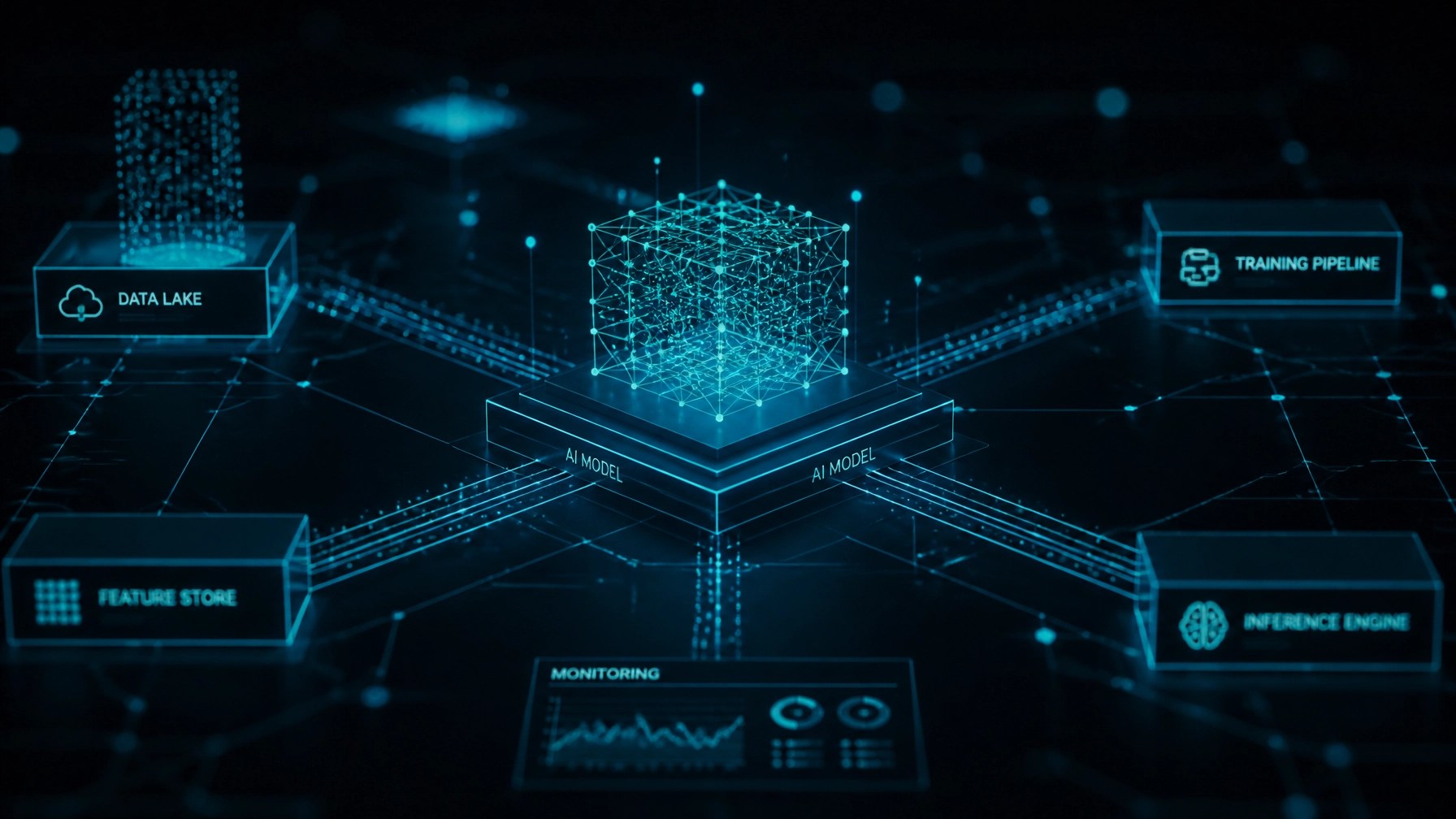
    Abstract technology visualization representing AI infrastructure and neural workflows. Sleek, glowing data lines and nodes connecting in a structured, architectural grid. Dark background with teal and cyan highlights. Minimalist, geometric, and high-tech. Shallow depth of field. No humans. Professional and clean.

    From Creative Exercise to Technical Protocol

    Most agencies treat AI as a "shiny new toy." At ZeroPoint Creative, we treat it as plumbing. It must be robust, it must be secure, and it must work without intervention. Alison is the public-facing evidence of our AI Staffing & Automation capabilities.

    By leveraging Alison, we have effectively eliminated "off-hours" at ZeroPoint. Whether a client in London enquires at 10:00 AM or a partner in New York reaches out at 3:00 AM GMT, the level of service and technical precision remains constant. This is the standard of operational excellence we offer our clients.

    We do not just sell these systems; we rely on them to run our own £500k+ annual operations. Alison is part of a wider "AI Team" that includes:

    • Eva: Our AI Executive Assistant, managing inbox prioritisation.
    • Sonny: Our AI Content Strategist, overseeing multi-channel distribution.
    • Rachel: Our AI Receptionist, handling telephonic routing and scheduling.

    Growth: Scalability Through Autonomous Staffing

    The deployment of Alison has a clear commercial objective: to allow ZeroPoint Creative to scale without the linear increase in headcount costs. This is the same framework we deploy for our clients.

    Our AI Staffing packages allow businesses to leverage this same technology. For an investment of just £190/month, a business can deploy a 5-role AI team that operates 24/7/365. For our existing Custom Care Plan clients, this can be integrated as an add-on for as little as £80/month.

    When you remove the constraints of human availability and manual data entry, you create a foundation for aggressive growth. You move from a reactive state to a proactive, performance-driven environment.

    Promotional graphic for Zero Point Creative’s fully managed AI staffing service, offering five 24/7 AI business roles for £190/month. Features include AI executive assistant, sales assistant, lead generator, customer service, and content roles. Clean, modern dark background with teal highlights and minimalist branding.

    Why Stability is the Only Metric That Matters

    In a world of "AI hype," ZeroPoint prioritises structural integrity. Alison is monitored 24/7 as part of our managed hosting environment. We ensure her prompts are refined, her data is secure (compliant with UK GDPR standards), and her performance is audited monthly.

    If your current website is a passive brochure, it is a liability. It is a system that requires constant human maintenance to produce results. By integrating an agent like Alison, you transform your digital presence into an active, revenue-generating engine.

    Key Takeaways:

    • Alison is live now: You can interact with her at the bottom-right of your screen at zeropointcreative.com.
    • Built-in precision: She was built entirely in-house by ZeroPoint Creative using our proprietary AI workflow infrastructure.
    • Operational Resilience: She eliminates lead decay by providing 24/7 instant engagement and qualification.
    • Commercial Scalability: AI staffing provides a path to growth that bypasses traditional recruitment bottlenecks.

    An individual portrait of a professional Technical Architect in a focused and thoughtful pose. The subject is a person in their late 30s, looking at a screen (out of frame). Shallow depth of field with a softly blurred, modern office background. Lighting is even and diffuse. Natural, slightly warm colour palette. Professional, calm, and authoritative atmosphere.

    Conclusion: Talk to Alison

    Precision is the only path to conversion. If you are ready to see how an AI-driven sales framework can rectify the inefficiencies in your own funnel, there is no better way to learn than by doing.

    Visit our homepage and initiate a conversation with Alison. Ask her about our technical SEO protocols, our managed hosting reliability, or how she can be cloned and customised to support your own business operations.

    She is ready. We are ready. Let’s build something resilient.

    Visit ZeroPoint Creative and Meet Alison →

  • WordPress 7.0 Secrets Revealed: How to Use the Abilities API to Automate Your Digital Operations

    WordPress 7.0 Secrets Revealed: How to Use the Abilities API to Automate Your Digital Operations

    Category: SEO

    For over a decade, WordPress website management has been a fragmented exercise in "plugin-stacking." Businesses have historically relied on a disparate collection of tools to handle everything from SEO to ecommerce, creating significant technical debt and operational friction.

    With the release of WordPress 7.0, the ecosystem has undergone a fundamental architectural shift. The introduction of the Abilities API and a provider-agnostic AI Client has transitioned WordPress from a content management system into an AI-native operational framework. For the modern enterprise, this is not merely a feature update; it is a structural revolution.

    At ZeroPoint Creative Ltd, we view digital assets as mission-critical infrastructure. This guide dissects how to leverage the WordPress 7.0 Abilities API to rectify systemic inefficiencies and automate your digital operations with clinical precision.

    The Problem: Systemic Failure of Legacy Management

    Traditional WordPress environments suffer from "visibility decay" and "data rot." When operations: such as inventory updates, content optimisations, or lead processing: are handled manually or via uncoordinated plugins, the risk of failure increases exponentially.

    Common systemic failures include:

    • Operational Friction: High-latency manual workflows that prevent real-time response to market changes.
    • Technical Debt: Over-reliance on "black-box" plugins that do not communicate, leading to security vulnerabilities and performance bottlenecks.
    • Visibility Decay: A lack of standardised data schemas makes it impossible for AI agents or automation tools to accurately "read" and manage the site.

    Unmanaged digital infrastructure is a liability. Without a proactive protocol, businesses face the constant threat of outages and data leakage. To understand the risks of reactive management, see our analysis on 7 mistakes you’re making with website maintenance.

    A group of professionals urgently troubleshoot multiple devices displaying website errors and 404 pages in a cluttered office setting.

    The Infrastructure: What is the Abilities API?

    The Abilities API is a technical registry of typed, permission-gated, and schema-validated functions. It defines exactly what your site can do: its "abilities": in a format that both humans and machines can interpret.

    In the 2026 digital landscape, your website must be "callable" by external AI agents and internal automation logic. The Abilities API provides the standardised interface required for this level of managed website maintenance.

    Key Components of an "Ability"

    Every ability registered within the WordPress 7.0 framework contains:

    1. Stable Namespaced ID: A unique identifier (e.g., zp-ops/issue-refund) to ensure no naming collisions.
    2. JSON Input/Output Schemas: Rigorous data definitions that ensure the automation tool knows exactly what data is required and what will be returned.
    3. Permission Callbacks: Integrated security checks to verify that the entity (user or AI agent) has the authority to execute the action.
    4. Execute Callback: The actual PHP logic that performs the task on your server.

    By standardising these operations, we mitigate the risks associated with ad-hoc API integrations and create a resilient ecosystem for growth.

    A modern, stylized “Z” logo in a gradient of blue and green, reflecting digital systems and seamless infrastructure management.

    Implementation: How to Automate Your Digital Operations

    To transition to an automated operational model, you must first audit your existing workflows and identify "high-friction" tasks. Once identified, these tasks are registered as abilities within the WordPress core registry.

    1. Defining the Operation

    Suppose your business requires a high-performance content audit protocol. Instead of a manual check, you register a content/audit ability. Using the wp_register_ability() function, you define the parameters (e.g., post ID, target keyword) and the expected output (e.g., SEO score, readability metrics).

    2. Leveraging the AI Client

    WordPress 7.0 includes a built-in AI Client (wp_ai_client_prompt()). This allows your site to "talk" to large language models in a provider-agnostic way. Within your ability’s execution callback, you can invoke the AI to analyse data, generate content, or make operational decisions.

    3. Orchestration via UI or Agents

    Once registered, these abilities appear in the WordPress Command Palette. Admins can trigger complex workflows: such as "Summarise all unoptimised posts and update their meta descriptions": with a single command. More importantly, these abilities can be leveraged by AI Staffing agents to manage the site 24/7 without human intervention.

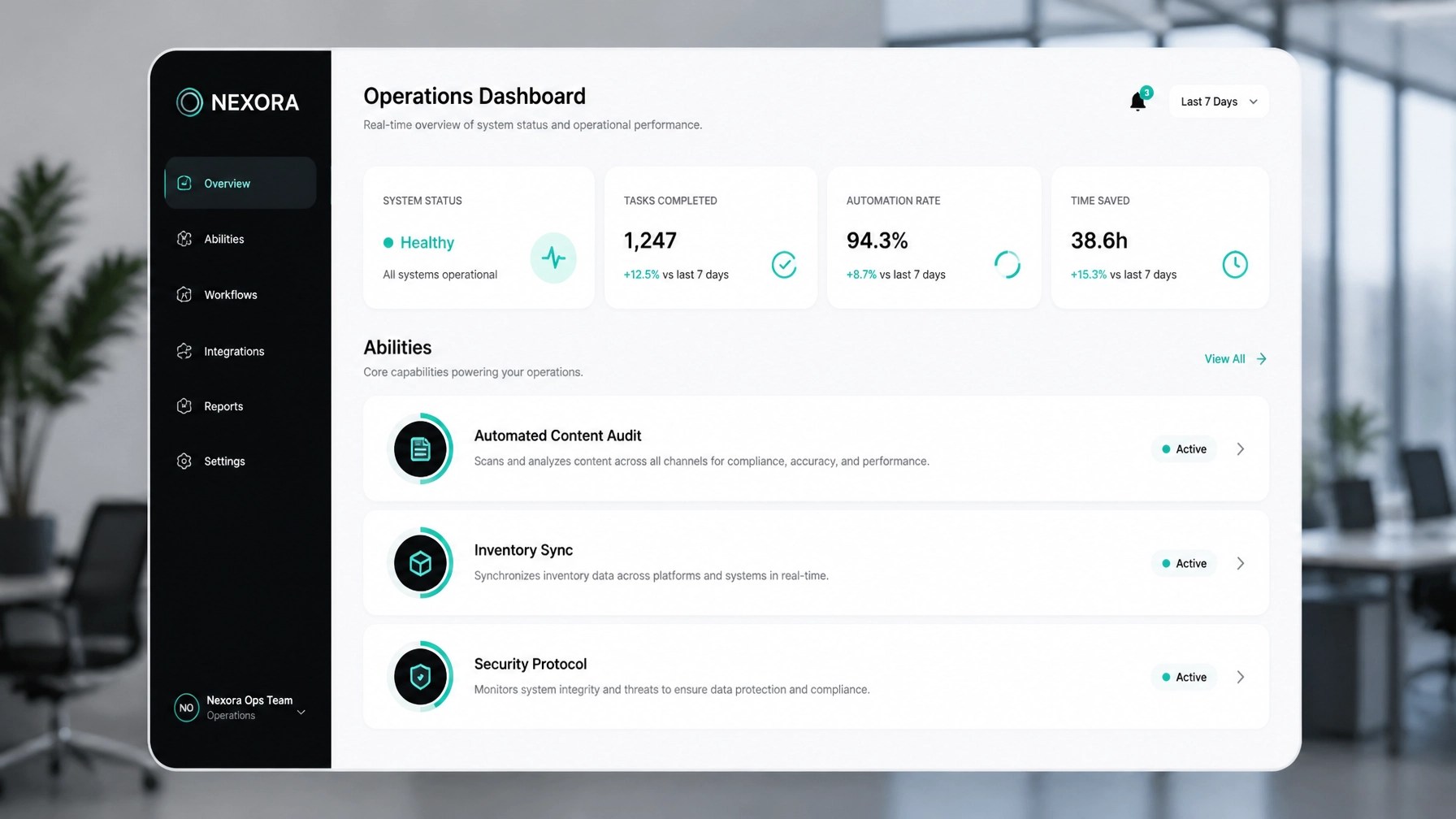
    A minimalist UI mockup of a digital operations dashboard showing a list of 'Abilities' such as 'Automated Content Audit'.

    Growth: Scaling Through Stability

    Precision is the only path to conversion. When your digital operations are handled by a standardised, automated system, you eliminate the "human bottleneck." This leads to:

    • Scalable Acquisition: Automated SEO and content workflows ensure your visibility never decays.
    • Predictable Performance: Managed infrastructure provides a stable foundation for high-traffic campaigns.
    • Reduced Overhead: Replacing manual labour with automated abilities significantly lowers operational costs, a critical factor given the rising impact of the National Living Wage on digital management costs.

    For businesses looking to professionalise their presence, our Core Plan provides the high-performance infrastructure required to leverage these advanced WordPress 7.0 features.

    Promotional graphic for Zero Point Creative’s fully managed AI staffing service, offering five 24/7 AI business roles.

    Conclusion: The Architecture of Excellence

    The WordPress 7.0 Abilities API is more than a technical upgrade; it is a blueprint for operational excellence. By treating your website as a technical system rather than a creative project, you rectify the structural weaknesses that prevent scaling.

    ZeroPoint Creative Ltd specialises in architecting these precision systems. We handle the complex infrastructure: the SSL, the backups, the security protocols, and the API integrations: so you can focus on commercial expansion.

    Stability is our primary metric. Precision is our method.

    Is your digital infrastructure ready for the automation era? Consult with our operational strategists to rectify your technical debt today.

  • How to Integrate AI Staffing With Your Existing Business Operations

    How to Integrate AI Staffing With Your Existing Business Operations

    Category: SEO

    Operational friction is the silent killer of commercial scalability. In 2026, the traditional model of linear human recruitment is increasingly obsolete, hampered by rising labour costs: driven by adjustments to the National Living Wage: and the persistent decay of candidate data quality. For modern businesses, the challenge is no longer just finding talent; it is architecting a digital infrastructure that leverages AI staffing to maintain operational continuity without the overhead of manual oversight.

    Integrating AI-driven staffing is not a creative "bolt-on" exercise. It is a technical protocol that requires clinical precision, systemic alignment, and a robust architectural framework. When executed correctly, AI staffing functions as a resilient, always-on layer of your digital ecosystem, mitigating the risks of resource inefficiency and visibility decay.

    1. The Problem: Systemic Failure in Manual Operations

    Many organisations suffer from a "leaky" operational bucket. This manifests as data leakage between siloed recruitment tools, high time-to-fill metrics for critical roles, and a lack of intent-based engagement with potential talent.

    The primary threat is operational friction. When a business relies on manual data entry or fragmented communication channels, it creates technical debt. This debt compounds, leading to missed targets and a degraded candidate experience that harms the employer brand. Furthermore, with the UK’s regulatory landscape tightening under UK GDPR and evolving AI governance standards, a "DIY" approach to AI staffing is no longer just inefficient: it is a compliance liability.

    To rectify these systemic failures, businesses must move away from "creative" staffing solutions and toward performance-driven infrastructure.

    ZeroPoint Creative's 24/7 AI Team roles illustrating the breadth of managed digital staffing

    2. Infrastructure: Architecting the Managed AI Staffing Layer

    Before deployment, a technical architect must define the integration model. At ZeroPoint Creative Ltd, we frame AI staffing as a managed add-on to your core digital infrastructure. This ensures that your AI agents: whether they are handling executive assistance, sales, or lead generation: operate within a secure, monitored environment.

    The Three Pillars of AI Staffing Infrastructure:

    1. AI Executive & Sales Assistants: Digital agents designed for high-frequency tasks such as lead capture and follow-up. These agents leverage intent-based algorithms to prioritise high-value interactions.
    2. Automated Workflows: The "connective tissue" that links AI agents to your existing CRM and communication platforms. Without automated workflows, AI becomes another silo.
    3. Managed Governance: Continuous monitoring and monthly performance reviews to ensure the system maintains structural integrity and remains aligned with business objectives.

    Leveraging a managed digital system allows businesses to offload the technical burden of maintenance, updates, and troubleshooting to dedicated guardians.

    3. Technical Integration: Mapping the Digital Ecosystem

    A common trap is the installation of point solutions that do not communicate with the broader ecosystem. Effective integration requires a deep audit of your current tech stack, including your Applicant Tracking System (ATS), Human Resource Information System (HRIS), and Customer Relationship Management (CRM) tools.

    Phase 1: Data Synchronisation

    You must ensure bidirectional data sync. If your AI staffing tool generates a lead but fails to update the CRM in real-time, you are experiencing data rot. The objective is frictionless data flow. For organisations using WordPress as their primary operational hub, leveraging the WordPress Abilities API can facilitate advanced automation between the website and external AI agents.

    Phase 2: Workflow Engineering

    Every digital service must be framed as a technical system. AI staffing should trigger specific, pre-defined protocols. For example:

    • Trigger: A new lead is captured via an intent-based landing page.
    • Action: The AI agent initiates an immediate, personalised follow-up.
    • Validation: The lead is scored against performance-focused metrics and pushed to the sales dashboard.

    Abstract data flows and digital infrastructure integration representing seamless AI staffing connectivity

    4. Compliance and Clinical Precision: Navigating UK GDPR and EU AI Act

    As a Technical Architect, risk mitigation is paramount. AI staffing involves the processing of sensitive personal data, making it a target for visibility decay and compliance breaches.

    In the UK, adherence to UK GDPR is non-negotiable. Your AI staffing infrastructure must be engineered with "Privacy by Design" at its core. This involves:

    • Data Minimisation: Ensuring the AI only processes the data necessary for the specific operational task.
    • Explainability: Maintaining the ability to audit and explain how the AI arrived at a specific recommendation or decision.
    • Human-in-the-Loop: While AI handles the volume, human oversight must be preserved for high-consequence decisions. This ensures clinical precision and prevents algorithmic bias from compromising your organisation’s integrity.

    Failure to rectify compliance gaps early in the integration process creates significant legal and operational risks. A business process automation consultant can help audit your current systems to ensure they meet these rigorous standards.

    5. Growth: Scalable Acquisition and Predictable Performance

    The ultimate outcome of a managed AI staffing integration is the transition from reactive recruitment to proactive, scalable acquisition. By automating the top-of-funnel engagement and middle-of-funnel nurturing, your human team is freed to focus on high-level strategic tasks.

    Stability is the Primary Metric

    With a resilient, always-on AI team, your business achieves a level of predictability that is impossible with manual staffing. You can scale your operations up or down without the friction of traditional hiring cycles. This is particularly critical for businesses looking to optimise their digital presence for 2026, where speed and responsiveness are the primary drivers of conversion.

    Professional team collaborating in a modern office, representing human oversight in an AI-driven environment

    Key Takeaways for Operational Excellence

    • Treat AI as Infrastructure: Shift your perspective from AI as a tool to AI as a core component of your technical architecture.
    • Eliminate Technical Debt: Rectify fragmented workflows by ensuring deep, bidirectional integration between AI agents and your CRM/ATS.
    • Prioritise Compliance: Mitigate risk by adhering to UK GDPR and emerging AI governance frameworks from the outset.
    • Leverage Managed Support: Avoid the "DIY trap" by partnering with digital guardians who provide continuous monitoring and performance engineering.
    • Focus on Outcomes: Measure success through reduced time-to-fill, increased lead quality, and overall operational stability.

    The path to commercial expansion in 2026 is paved with precision. By integrating AI staffing with clinical accuracy, you move beyond creative guesswork and into the realm of engineered, predictable growth.

    Technical Scaling Framework

    Feature Traditional Staffing AI-Driven Managed Staffing
    Availability Office Hours Always-On (24/7)
    Data Quality Manual/Prone to Error Automated/Data-Dense
    Scalability Linear/High Friction Exponential/Frictionless
    Cost Basis High Variable Labour Managed Subscription
    Compliance Disparate/Manual Centralised/Managed

    If your current digital infrastructure is suffering from visibility decay or operational friction, it is time to standardise your operations with a precision-engineered AI staffing solution.

  • Can an AI Social Media Manager Really Post for You? I Found Out ,  And Built a Full Team

    Can an AI Social Media Manager Really Post for You? I Found Out , And Built a Full Team

    In the current commercial landscape, the primary bottleneck for small to medium businesses (SMBs) is not a lack of vision, but a deficit of operational bandwidth. Administrative friction, lead decay, and the relentless demand for content creation often lead to systemic failure.

    At ZeroPoint Creative, we treat digital presence as a mission-critical system. For months, I have been asked the same question by stakeholders looking to optimise their overheads: "Can an AI social media manager really post for you?"

    I decided to find out. My objective was to move beyond the hype of "out-of-the-box" AI tools and build a resilient, multi-functional team that could handle complex workflows without requiring a bespoke, five-figure technical build. The result was the integration of Marblism into our operational stack.

    1. The Problem: The High Cost of Manual Labour and Data Decay

    For most SMBs, the traditional staffing model is becoming a liability. Between the rising National Living Wage and the inherent volatility of human-managed admin, the cost of "keeping the lights on" digitally has reached a tipping point.

    We see three core systemic failures in unoptimised businesses:

    • Operational Friction: High-value decision-makers spending 40% of their day on email triaging and appointment booking.
    • Visibility Decay: Social media channels and blogs falling silent because "the team was too busy," leading to a direct loss in search authority and brand trust.
    • Data Leakage: Leads arriving via phone or email but failing to be rectified or followed up on within the critical 5-minute window.

    Without a managed architectural solution, these businesses are essentially operating on technical debt.

    2. The Infrastructure: Introducing the Marblism Ecosystem

    Marblism is not just another generative AI wrapper; it is a standardised framework for deploying "AI Employees." For businesses that do not require specialised, custom-coded AI workflows but need immediate operational excellence, it provides a pre-configured digital workforce.

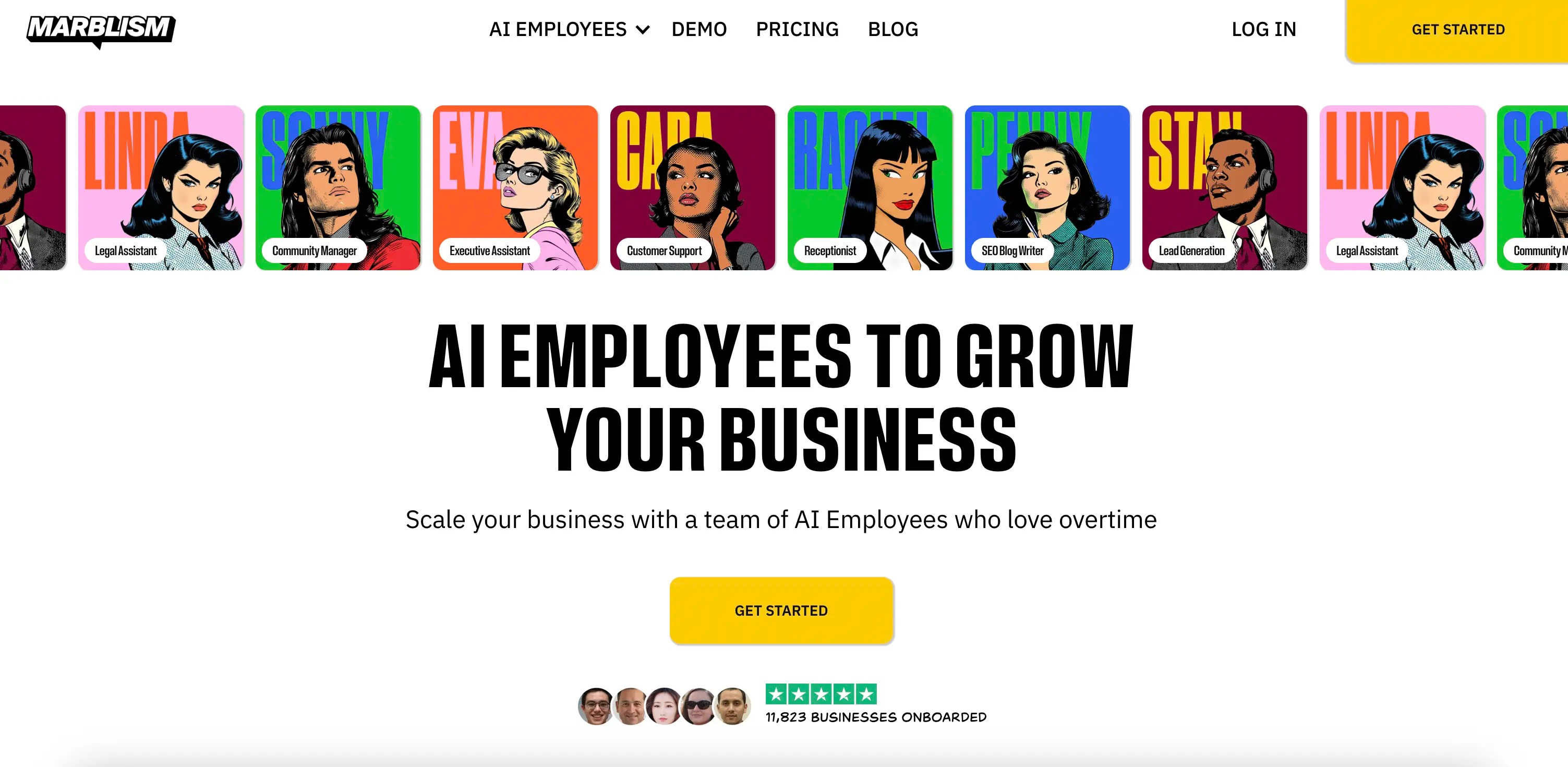
    The Marblism platform landing page showing AI employee options

    By leveraging this platform, we have transitioned from manual, fragmented tasks to an integrated ecosystem. These agents are designed to function within existing business structures, providing clinical precision across communications, sales, and content management.

    Eva: The AI Executive Assistant

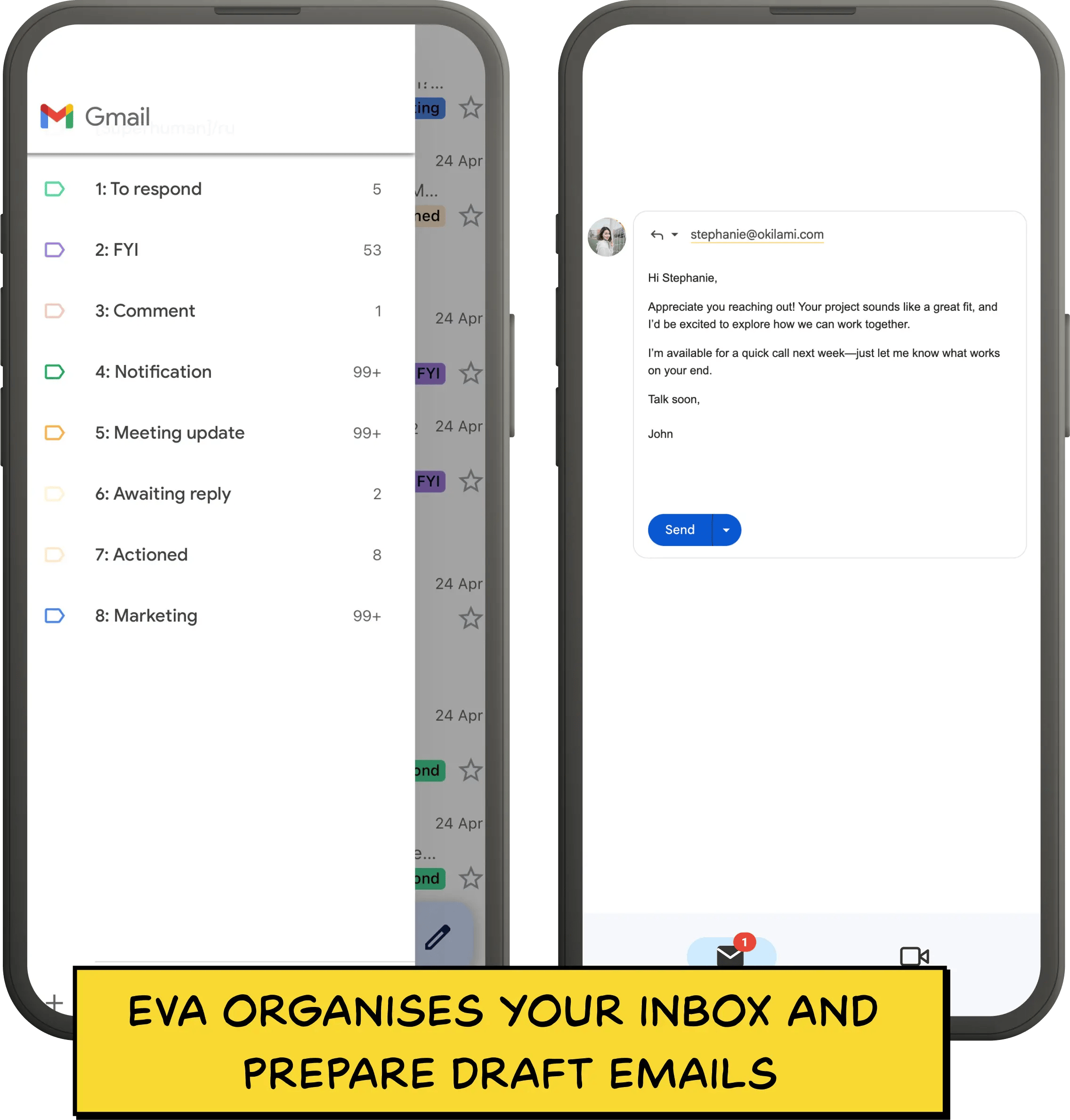
    Inbox management is often the single greatest point of failure for professional service providers. Eva acts as a Digital Guardian for your communication channels. She organises my inbox into logical categories and prepares drafts directly in the interface. This ensures that I only interact with high-priority strategic enquiries while routine logistics are handled with automated efficiency.

    Deploy Eva for your inbox

    Eva, the AI Executive Assistant

    Penny: The SEO Content Architect

    Content is the fuel for our SEO services. However, manual content production is slow and prone to inconsistency. Penny is engineered to write blog articles that are not just readable, but structured to rank on Google. By aligning Penny’s output with our technical SEO frameworks, we maintain visibility without the traditional overhead of a full-time copywriter.

    Optimise your content with Penny

    Penny, the AI Blog Writer

    Sonny: The Social Media Manager

    To answer the original question: Yes, an AI social media manager can post for you: if it is built into a resilient system. Sonny manages all social channels on autopilot. This mitigates the risk of "visibility decay" by ensuring a consistent, intent-based presence across all platforms without manual intervention.

    Automate your social presence with Sonny

    Sonny, the AI Social Media Manager

    Rachel: The Front-Line Receptionist

    Inbound phone calls are a major source of data leakage if missed. Rachel is a digital receptionist capable of answering calls, booking appointments, and transferring enquiries to the correct department. This ensures the structural integrity of your lead-capture system 24/7, removing the need for an expensive, human-staffed call centre.

    Integrate Rachel into your phone lines

    Rachel, the AI Receptionist

    Stan: The Performance-Driven Sales Rep

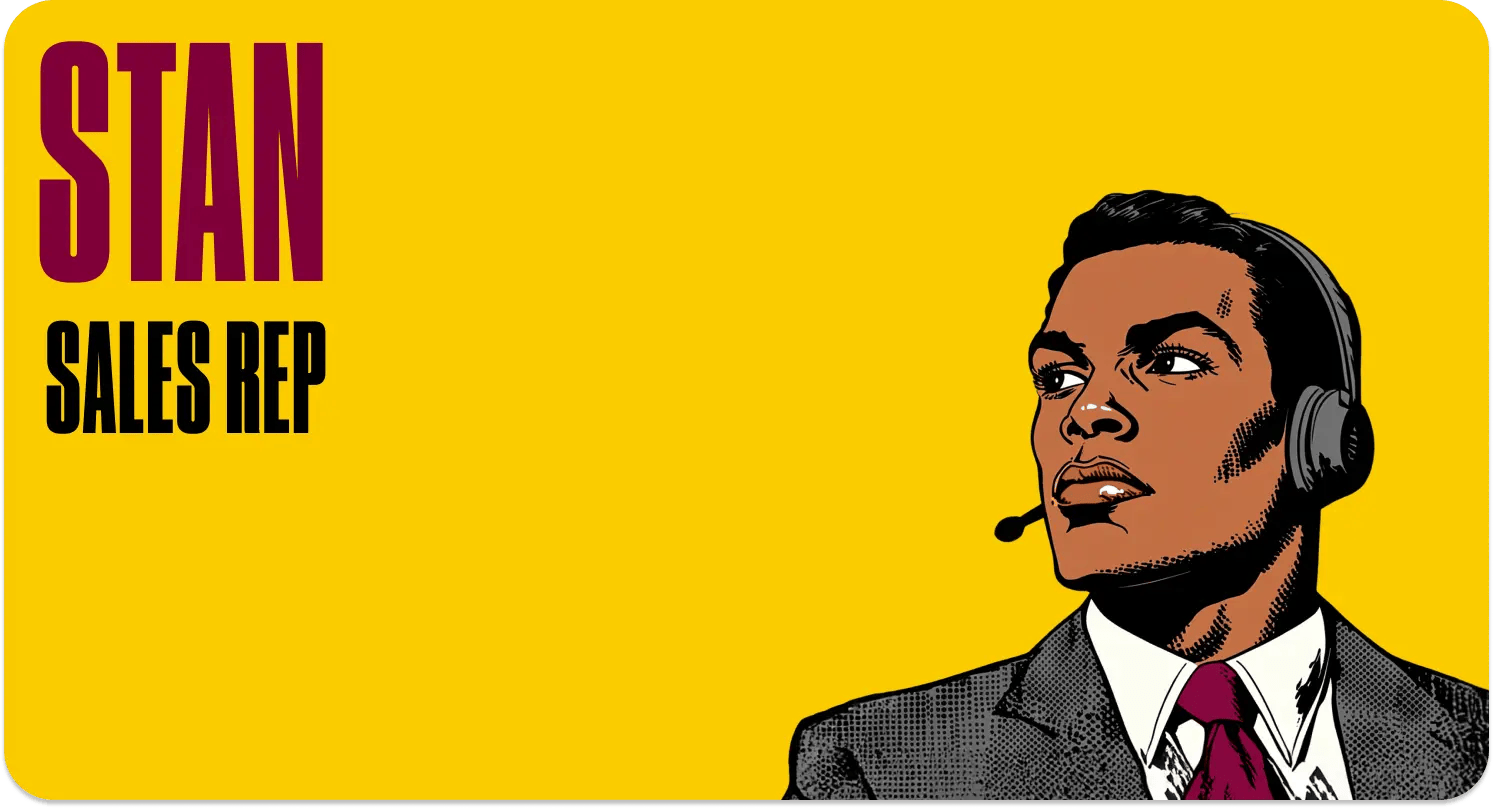
    Revenue growth requires consistent outreach. Stan is connected to a lead database of over 700 million records. He identifies targets, initiates email sequences, and nurtures prospects until they are ready to close. This is proactive performance engineering: turning the sales process into a predictable, always-on system.

    Scalable lead generation with Stan

    Stan, the AI Sales Rep

    3. Operational Oversight: Managing the Digital Workforce

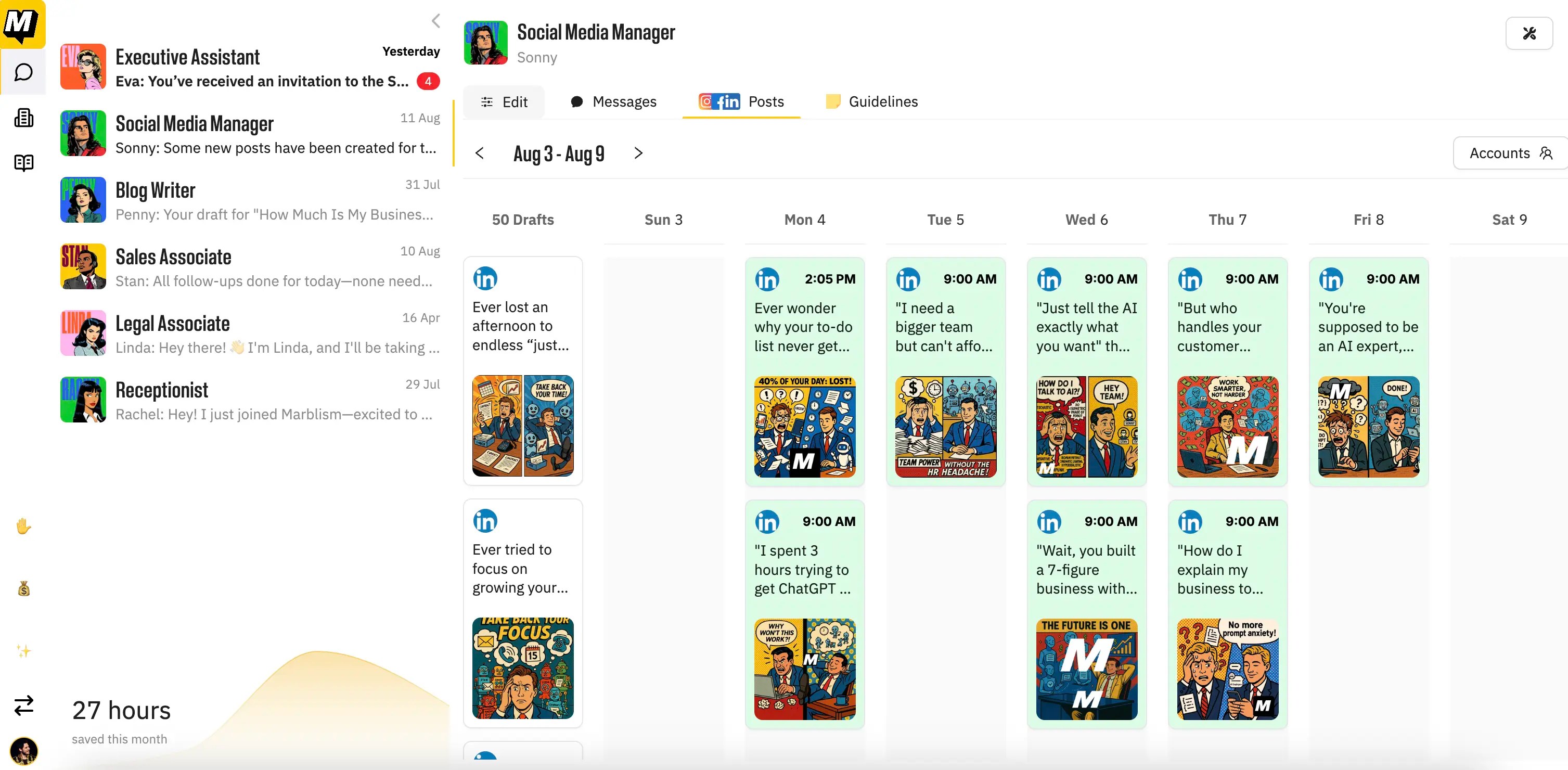
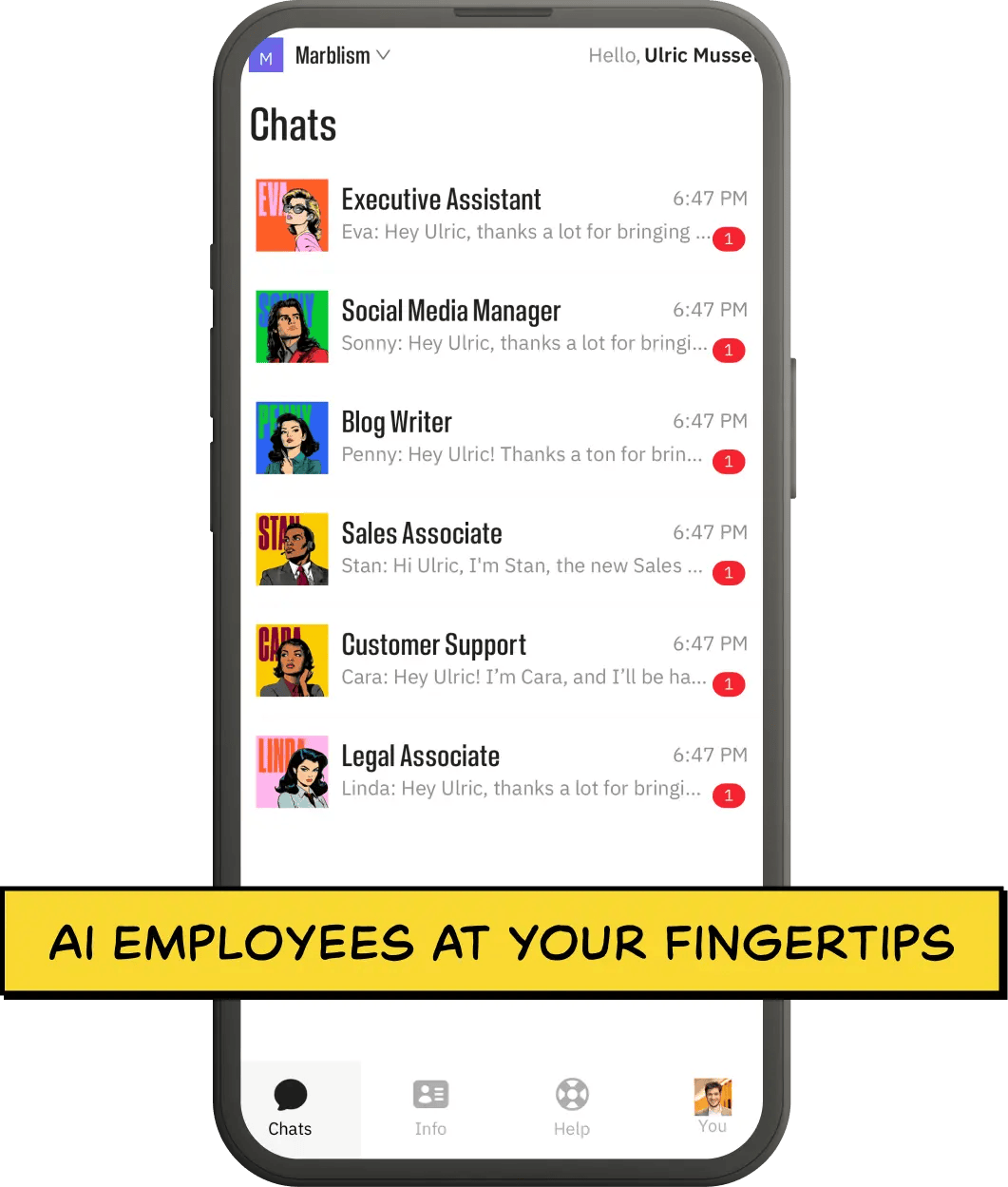
    A common concern with AI adoption is the "black box" effect: not knowing what your systems are doing. Marblism solves this through a unified dashboard. Every conversation, every draft, and every appointment booked is visible within a single administrative interface.

    A unified dashboard showing conversations with various AI employees

    This level of transparency allows us to maintain strict quality control. We do not view these as "bots," but as digital infrastructure that requires the same level of managed hosting and monitoring as any other high-performance system.

    4. Growth: The Outcome of Stability

    The transition from manual labour to an AI-driven workforce is not about "saving money" in a vacuum. It is about scalability. When your receptionist never sleeps, your sales rep never tires of outreach, and your social media presence is handled on autopilot, you move from reactive maintenance to proactive commercial expansion.

    By rectifying the inefficiencies in our own internal operations, ZeroPoint Creative can focus on higher-level architecture for our clients. Whether you are looking for AI staffing solutions or a fully managed digital presence, the conclusion is clear: clinical precision in your digital tools leads to predictable growth in your bottom line.

    If you are ready to stop managing tasks and start managing systems, I recommend exploring what Marblism can do for your specific business architecture.

    Build your AI team with Marblism here.


  • 7 Mistakes You’re Making with Business Workflow Automation (and How to Fix Them)

    7 Mistakes You’re Making with Business Workflow Automation (and How to Fix Them)

    Category: SEO

    In the current commercial landscape, automation is no longer a luxury; it is the fundamental infrastructure upon which modern businesses scale. However, the transition from manual operations to automated ecosystems is frequently compromised by technical debt and structural inconsistencies. At ZeroPoint Creative, we view digital services not as creative exercises, but as mission-critical technical systems. When these systems are poorly architected, they do not just fail: they create systemic risk.

    Identifying and rectifying these failures is essential for operational excellence. If your automation strategy feels like a series of disconnected "hacks" rather than a cohesive architecture, you are likely falling into one of these seven common traps.

    1. Automating Faulty or Unoptimised Processes (Technical Debt)

    The Problem: Systemic Failure
    The most frequent error in digital transformation is "automating the mess." When an organisation takes a manual process: riddled with bottlenecks, redundant steps, or logical flaws: and applies automation, it merely accelerates the rate of failure. Instead of solving the friction, you have encoded it into your infrastructure. This creates immediate technical debt that becomes increasingly expensive to rectify as your business scales.

    The Infrastructure: Technical Solution
    Before any code is deployed or any AI agent is integrated, a rigorous process review must be conducted. This involves mapping every data point and decision node within the workflow. By consulting with a business process automation expert, you can standardise the workflow before it is operationalised.

    The Growth: Outcome
    Optimising the logic before automation ensures that the system is lean, resilient, and ready for high-volume execution. A standardised process is a scalable process.

    2. Fragmented Ecosystems and Data Leakage

    The Problem: Systemic Failure
    Many businesses adopt automation in silos: a marketing bot here, a billing script there, and a CRM integration elsewhere. This fragmentation leads to "data leakage," where critical information is trapped between disconnected platforms. Not only does this reduce visibility, but it also creates significant operational friction as manual intervention is required to bridge the gaps.

    The Infrastructure: Technical Solution
    Architect a centralised data model where all automations communicate through a unified API layer or middleware. Leveraging technologies like the WordPress Abilities API allows you to turn your website into a central hub for business operations, ensuring data flows seamlessly between your core systems and your public-facing assets.

    The Growth: Outcome
    A unified ecosystem reduces overhead and provides a single source of truth, enabling data-dense reporting and clinical precision in decision-making.

    Professional portrait of a focused tech strategist reviewing a clean high-tech dashboard

    3. Ignoring UK GDPR and Compliance Requirements

    The Problem: Systemic Failure
    In the UK and EU, automation without compliance is a liability. Many businesses automate personal data processing: such as lead capture or customer support: without considering the UK GDPR or the emerging EU AI Act. Using "off-the-shelf" automation tools that store data in non-compliant jurisdictions or fail to provide audit logs puts your organisation at severe regulatory risk.

    The Infrastructure: Technical Solution
    Integrate "Privacy by Design" into your automation architecture. This means implementing least-privilege access for all automated agents and ensuring that data residency aligns with UK legal standards. Every workflow must have built-in logging and a clear protocol for data retention and deletion.

    The Growth: Outcome
    A compliant infrastructure is a resilient infrastructure. By mitigating legal risks early, you protect your commercial reputation and avoid the catastrophic costs of data breaches or regulatory fines.

    4. The "DIY" Platform Trap (Structural Weakness)

    The Problem: Systemic Failure
    The rise of "no-code" tools has led many business owners to believe they can build complex enterprise workflows themselves. While these platforms are useful for simple tasks, they often lack the structural integrity required for mission-critical operations. DIY solutions typically lack robust error handling, version control, and performance monitoring, leading to "ghost failures" where processes stop working without notification.

    The Infrastructure: Technical Solution
    Shift from DIY to managed digital systems. A professional implementation involves bespoke scripts, hardened security protocols, and integration with managed website maintenance services. This ensures that your automations are built on professional-grade infrastructure that is continuously monitored and updated.

    The Growth: Outcome
    Managed systems offer 24/7 reliability. When you move away from brittle DIY setups, you gain the stability needed to focus on commercial expansion rather than troubleshooting.

    Abstract technical visual of digital data flows and network nodes representing a resilient digital ecosystem

    5. Absence of Proactive Monitoring and Oversight (Visibility Decay)

    The Problem: Systemic Failure
    There is a dangerous "set it and forget it" mentality in automation. However, digital environments are dynamic; APIs change, browser standards update, and data formats evolve. Without proactive oversight, automations suffer from "visibility decay": the gradual degradation of performance that eventually leads to a total system collapse.

    The Infrastructure: Technical Solution
    Implement an "always-on" monitoring protocol. This involves automated health checks that ping your workflows every minute and alert technical teams the moment a latency threshold is crossed or an error is logged. Much like website maintenance protocols, your automation requires continuous auditing to ensure operational continuity.

    The Growth: Outcome
    Proactive monitoring ensures uptime. By catching issues before they impact the end-user, you maintain frictionless operations and predictable performance.

    6. Lack of "Human-in-the-Loop" Logic (Operational Friction)

    The Problem: Systemic Failure
    Over-automation is as detrimental as no automation. Attempting to remove humans from complex decision-making processes often results in "AI hallucinations" or logical errors that frustrate customers and staff. When a system lacks an exception-handling protocol, it creates friction that eventually requires human intervention to "fix," often after the damage is done.

    The Infrastructure: Technical Solution
    Engineer "Human-in-the-Loop" (HITL) checkpoints. This involves integrating AI automation where the technology handles the repetitive data processing, but high-stakes decisions are flagged for human review. This hybrid approach leverages the speed of AI with the clinical precision of human expertise.

    The Growth: Outcome
    Balancing automation with human oversight creates a superior customer experience and prevents the data rot associated with unsupervised AI agents.

    7. Failing to Scale with Infrastructure (Resource Inefficiency)

    The Problem: Systemic Failure
    A workflow that works for 100 leads a month will often break at 10,000. Many businesses fail to consider the resource impact of automation on their hosting environment or database performance. As the volume of data increases, poorly engineered automations consume excessive CPU and memory, leading to site slowdowns or infrastructure crashes.

    The Infrastructure: Technical Solution
    Build for scalability from day one. This requires performance-driven builds and high-performance managed hosting. By using tiered packages that grow with your business, you ensure that your digital infrastructure has the "headroom" to handle peak loads without compromising stability.

    The Growth: Outcome
    Scalable architecture allows for unlimited commercial expansion without the need for periodic, costly rebuilds.

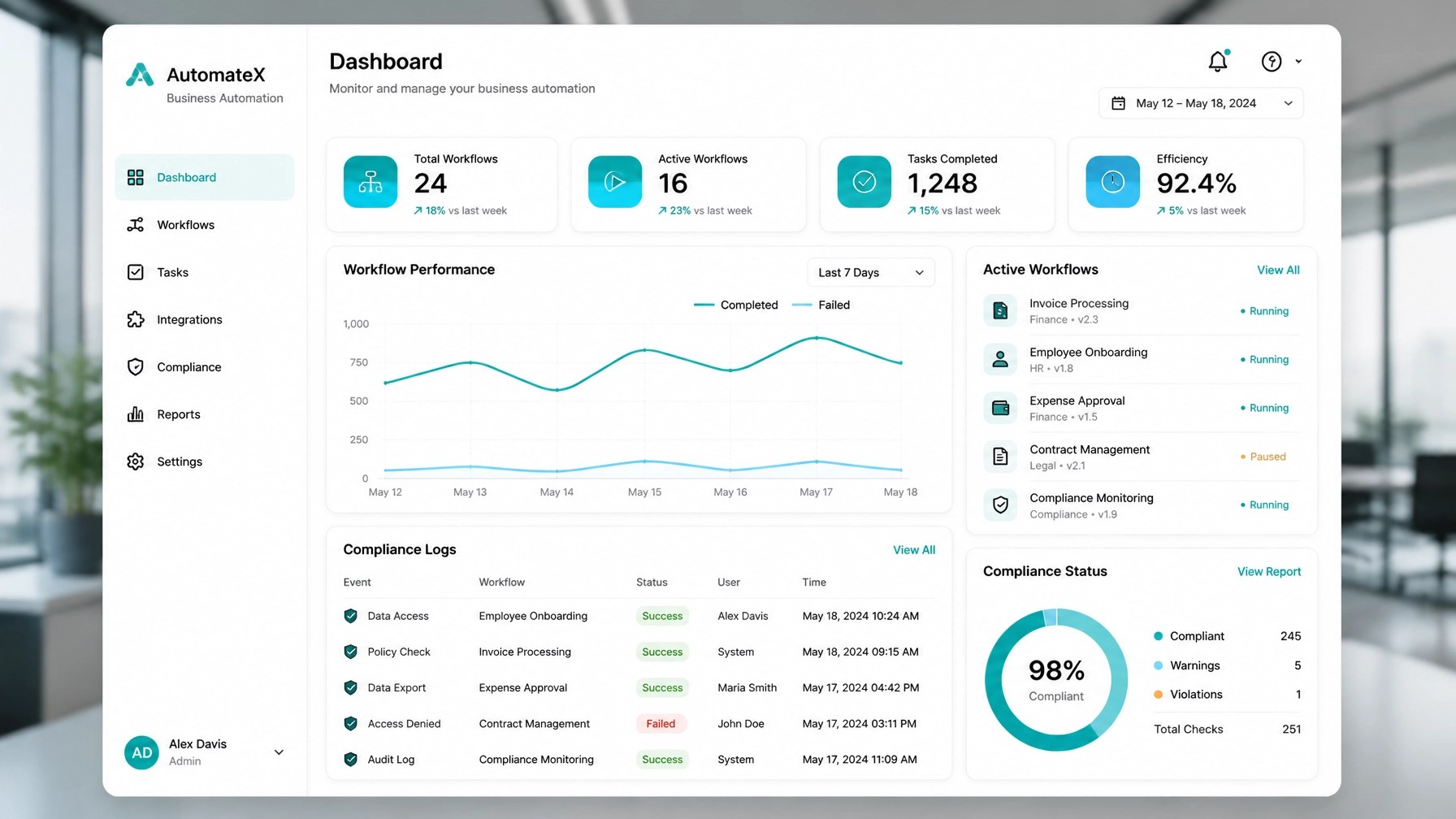
    Minimalist UI mockup of a business automation dashboard with teal and cyan accents

    Summary: Stability is the Primary Metric

    Automation should not be viewed as a creative project or a quick fix for operational inefficiency. It is a technical system that requires architectural foresight, clinical precision, and continuous managed support. By avoiding these seven common mistakes, you can transition from a state of operational friction to one of operational excellence.

    At ZeroPoint Creative, we specialise in architecting these resilient ecosystems. Whether you are looking to integrate AI staffing into your workflow or require a fully managed hosting environment that scales with your growth, our focus remains on precision, reliability, and stability.

    Precision is the only path to conversion.