
Category: SEO
Your business does not need more disconnected software. It needs an operational system that can reliably interpret information, make controlled decisions and move work between the platforms you already depend on.
That distinction matters.
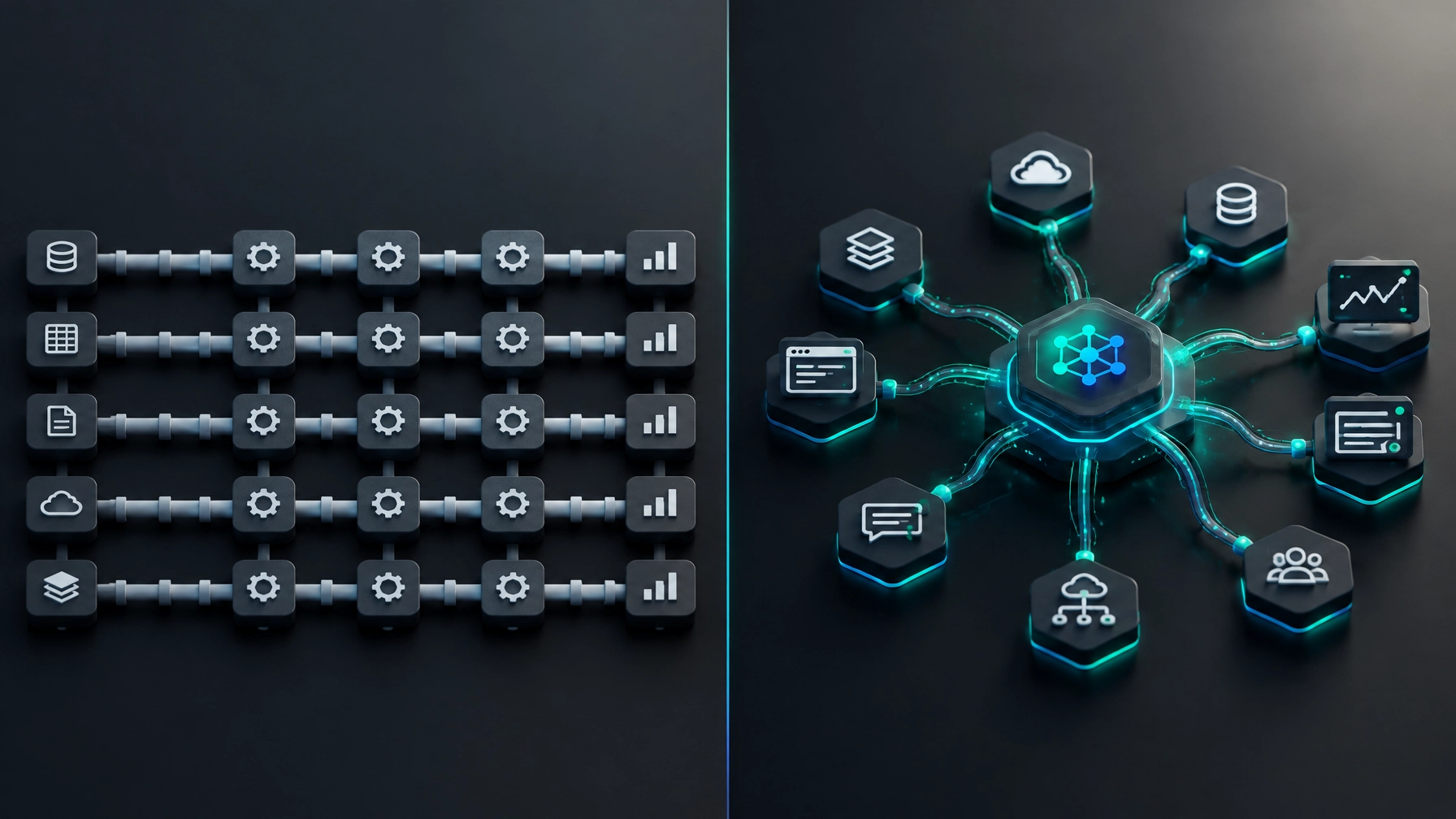
Generic automation tools are effective when a process is stable, repetitive and easy to express as a sequence of fixed rules. Bespoke agentic workflows are designed for more complex environments, where context, judgement, exceptions and multiple systems influence the outcome.
Neither model is universally superior. The correct choice depends on the architecture of the problem.
The Problem: Automation Without Operational Context
Many businesses begin with a simple objective: remove repetitive administration. A form should create a CRM record. An email should trigger a notification. A calendar booking should update a sales pipeline.
These are appropriate applications for generic automation.
The problem develops when a business attempts to extend the same approach across processes that require interpretation. A generic automation may move data from one platform to another, but it cannot necessarily determine whether the information is complete, identify an unusual request, assess intent or decide which operational route is appropriate.
This creates several structural weaknesses:
- Data leakage: Important context becomes separated across email, CRM records, documents and internal conversations.
- Operational friction: Staff are required to inspect, correct and re-route automated outputs.
- Technical debt: Multiple small automations become difficult to document, test and maintain.
- Governance gaps: The business cannot clearly establish what the system did, why it did it or when a human should intervene.
- Visibility decay: Workflows continue to run, but their commercial and operational performance gradually deteriorates.
The result is not genuine automation. It is accelerated administration with an additional layer of system risk.
A workflow that simply transfers information is not the same as a workflow that understands the operational requirement.
Generic Automation: Where It Performs Well
Generic automation tools are built around predetermined triggers, actions and conditions. They are the digital equivalent of a controlled production line.
For example:
When a customer completes a form, create a CRM record, send a confirmation email and notify the sales team.
This type of process is clear, repeatable and relatively easy to audit. Generic automation is usually the correct model when:
- The trigger is unambiguous.
- The required data is structured.
- The sequence rarely changes.
- The outcome is predictable.
- The process does not require significant judgement.
- The integrations are supported by standard connectors or APIs.
- A fixed approval route is sufficient.
Generic automation is also valuable for the connective layer of a wider digital ecosystem. It can synchronise records, generate notifications, update statuses, route documents and maintain basic reporting.
The strength of this model is determinism. You know which action follows which trigger.
However, generic automation becomes less effective when a workflow must interpret multiple sources of information, handle exceptions or adapt to an evolving business rule. Adding more conditions may appear to solve the issue, but it often produces a brittle structure that is difficult to govern.
Generic automation is reliable when the process is predictable. It becomes a liability when the process is not.
Bespoke Agentic Workflows: When Context Matters
A bespoke agentic workflow is designed around a specific business requirement rather than a generic sequence of software actions.
An agentic component may classify information, summarise evidence, identify missing details, select an appropriate next step or prepare a recommendation for approval. It does not simply follow one fixed path. It operates within a defined objective, a controlled set of tools and explicit boundaries.
This is particularly valuable when your workflow involves:
- Unstructured emails, documents or customer enquiries.
- Multiple systems with different data structures.
- Exceptions that cannot be described through a short list of rules.
- Intent-based routing or prioritisation.
- Internal knowledge that is unique to your organisation.
- A need for human approval at specific decision points.
- A process where operational context is distributed across several platforms.
The important distinction is that bespoke does not mean uncontrolled.
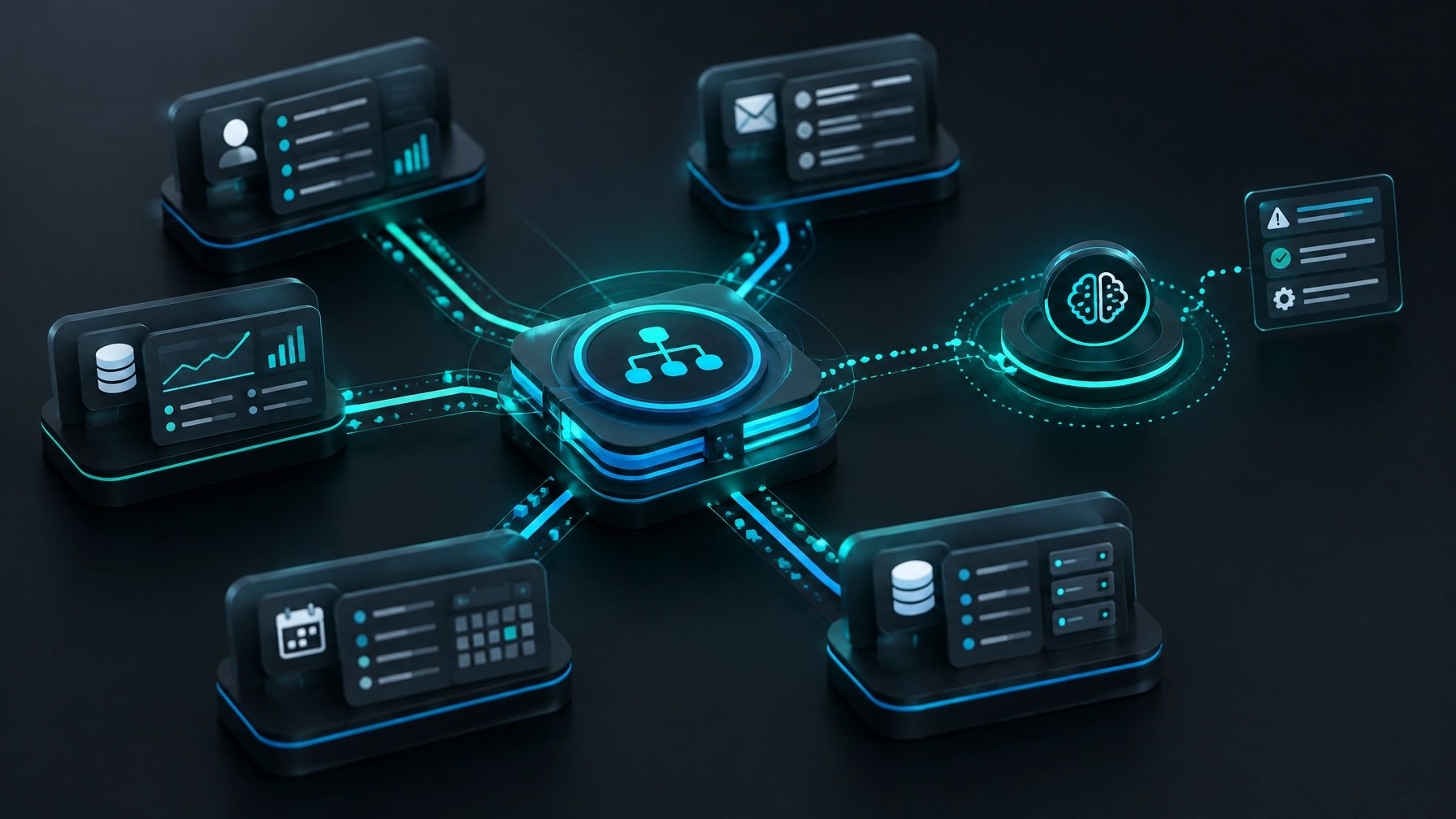
A properly engineered agentic workflow should sit inside a governed architecture. The agent may interpret and recommend, but the surrounding workflow should control permissions, escalation, logging, approval and failure handling.
That is the difference between an autonomous system and an unmanaged AI experiment.
Infrastructure: The Five Design Questions
Before selecting a model, assess the workflow clinically. The following questions establish whether generic automation is sufficient or whether a bespoke agentic architecture is justified.
1. Does the workflow require decision-making?
If the logic is always the same, a fixed automation is likely to be appropriate.
If the correct action depends on the meaning, urgency, risk or completeness of the information, an agentic layer may be more suitable. The agent can gather context and prepare a structured recommendation rather than forcing every possible scenario into rigid conditions.
2. How deep are the integrations?
Generic tools generally perform well with common platforms and standard APIs. They are effective for straightforward data synchronisation between systems such as email, calendars, CRM platforms, forms and document storage.
Bespoke workflows become more valuable when the process involves proprietary databases, internal APIs, legacy systems or detailed permission requirements. A bespoke architecture can be designed around the actual data model rather than the limitations of an available connector.
3. Where must humans approve the outcome?
Automation should not remove human accountability from high-consequence decisions.
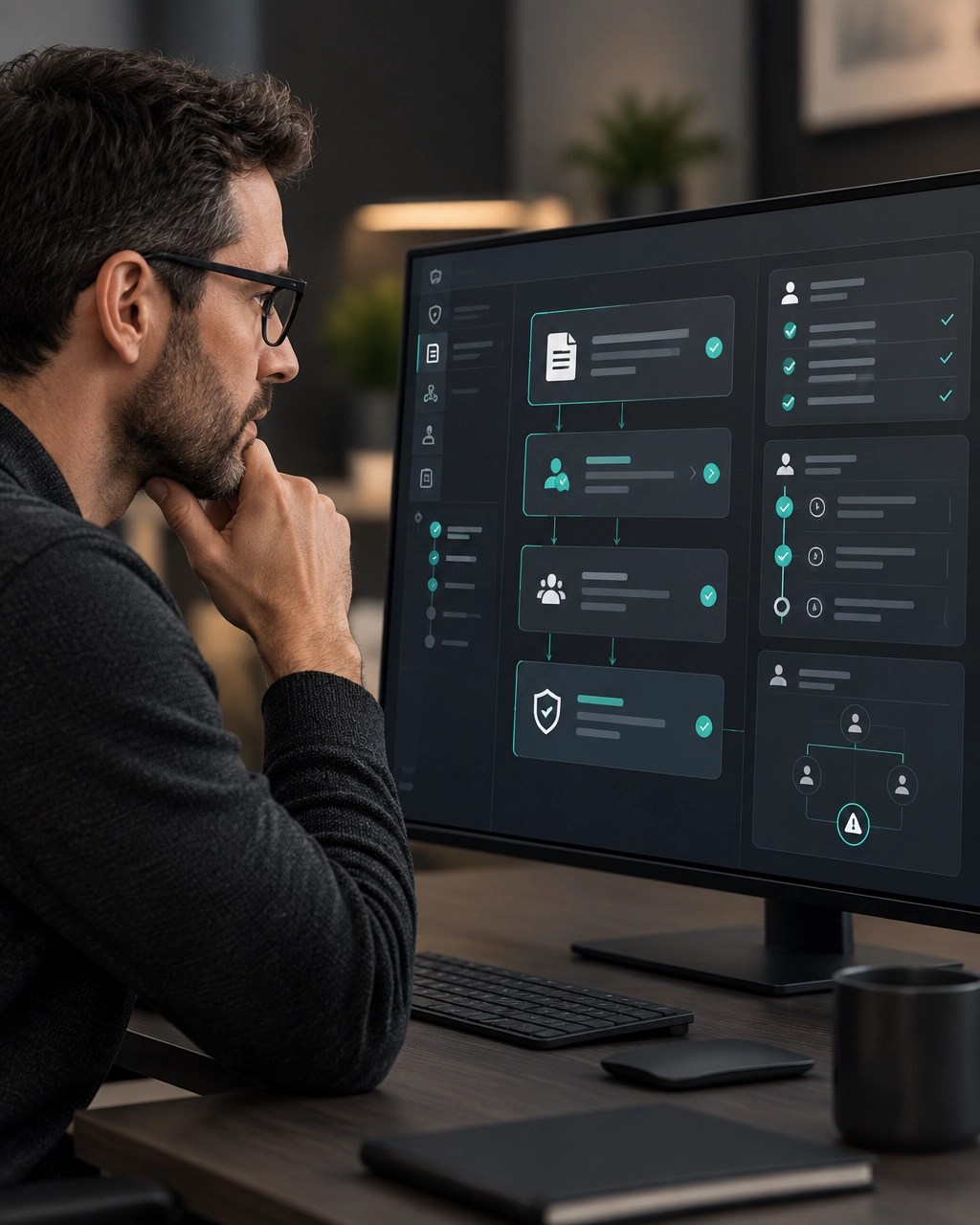
A governed workflow should define which actions can be completed automatically and which require review. An agent may collect evidence, classify a request and draft a response, while a human retains final approval for a sensitive decision.
This approach reduces cognitive load without creating an invisible decision-maker inside your business.
4. Who owns maintenance?
Generic automation may be fast to deploy, but it still requires oversight. APIs change. Authentication expires. Platforms alter data fields. Business processes evolve.
Bespoke agentic workflows require more deliberate engineering from the outset, including testing, monitoring, prompt and model review, permission management, fallback procedures and performance evaluation.
The correct question is not, “Which option requires no maintenance?” No serious digital system meets that standard.
The correct question is, “Which maintenance model can our business govern consistently?”
5. Can the workflow scale without becoming fragile?
A simple automation may perform correctly for a small volume of requests but become difficult to manage as transaction volume and exception rates increase.
Bespoke architecture allows the workflow to be designed for your expected operating conditions. It can incorporate queues, escalation routes, audit logs, role-based permissions and separate processing stages.
Scalability is not merely the ability to process more records. It is the ability to preserve structural integrity as complexity increases.
Introducing Nova: A MyGentic AI Assistant

Nova is MyGentic’s AI assistant, designed as part of a wider approach to business-specific agentic workflows.
The role of an assistant such as Nova is not to provide a generic layer of conversational technology and leave the business to determine the rest. The useful work begins with understanding the operational requirement: what information is available, which systems are involved, which decisions can be delegated, where approval is mandatory and how success will be measured.
That architecture determines whether an assistant becomes a productive operational layer or another isolated software product.
Through ZeroPoint Creative and MyGentic, bespoke workflows can be structured around the real requirements of a business. This may include lead handling, internal administration, customer communication, document processing, scheduling, reporting or cross-platform coordination.
Nova should operate within defined boundaries, with the appropriate human oversight and technical controls around it. Intelligence is valuable. Governed intelligence is operationally useful.
Transformation: The Hybrid Model Is Usually Strongest
The choice is not always generic automation or bespoke agentic workflow.
In many cases, the strongest architecture combines both.
Use deterministic automation for:
- Data transfer.
- Notifications.
- Status updates.
- Scheduled tasks.
- Fixed approval routes.
- Routine synchronisation.
- Audit and reporting events.
Use agentic components for:
- Classification.
- Summarisation.
- Contextual routing.
- Exception handling.
- Intent analysis.
- Drafting.
- Information retrieval.
- Preparing recommendations for human review.
The workflow layer provides control. The agentic layer provides adaptive reasoning.
This hybrid model allows a business to retain predictable governance while introducing flexibility where rigid rules create excessive technical debt.
Growth: Stability Before Scale
The commercial objective is not to deploy the most sophisticated system. It is to create a resilient operating model that reduces friction and supports expansion.
A well-architected workflow can help you:
- Reduce repetitive administrative handling.
- Improve the consistency of data capture.
- Respond to high-intent enquiries more reliably.
- Preserve context between platforms.
- Escalate exceptions before they become failures.
- Give teams clearer visibility of operational performance.
- Scale processes without adding equivalent manual overhead.
The benefits depend on governance. Without monitoring, data controls, human approval and maintenance ownership, automation simply moves risk out of sight.
ZeroPoint Creative approaches these systems as infrastructure. Through MyGentic, we can help define the workflow, map the integrations, establish approval boundaries and maintain the operational framework as your business develops. Our wider AI and automation services are supported by managed digital operations management and standalone AI staffing and automation support.
Key Takeaways
- Generic automation is appropriate for stable, repetitive and rule-based processes.
- Bespoke agentic workflows are better suited to context-dependent, multi-stage operations.
- Human approval should remain mandatory wherever decisions carry material operational, financial or compliance risk.
- Integrations must be designed around the actual business ecosystem, not only the connectors available in an off-the-shelf platform.
- Maintenance, monitoring and ownership must be defined before deployment.
- A hybrid architecture often provides the strongest balance between control and adaptability.
- Nova is MyGentic’s AI assistant, positioned within a governed workflow model rather than as an isolated software tool.
- Scalability depends on structural integrity, not simply on the number of automated tasks.
Conclusion: Choose the Architecture, Not the Trend
Generic automation is not obsolete. Bespoke agentic workflows are not a universal replacement.
The correct decision depends on the process.
If the requirement is fixed, structured and predictable, a generic automation may provide the fastest route to operational improvement. If the process depends on context, judgement, multiple systems and exceptions, a bespoke agentic workflow is more likely to deliver long-term value.
The critical requirement is architectural discipline.
ZeroPoint Creative and MyGentic can help you assess the operational problem, determine the appropriate automation model and design a governed workflow around your actual business requirements.
Contact Krishna to discuss your Agentic Workflow requirements. Start a conversation with ZeroPoint Creative.
Stability is the primary metric. Precision is the route to scalable growth.
Leave a Reply