Category: Uncategorized

  • Your Business Doesn’t Need More Software. It Needs Better Agentic Workflows.

    Your Business Doesn’t Need More Software. It Needs Better Agentic Workflows.

    Category: SEO

    Most small and medium-sized businesses do not suffer from a shortage of software. They suffer from fragmented software, inconsistent decisions and operational processes that depend too heavily on manual intervention.

    You may already have a CRM, email platform, calendar, accounting system, project-management tool, website forms and customer-support channels. The structural weakness is often not the absence of another application. It is the lack of a reliable architecture connecting the systems you already have.

    This is where agentic workflows become relevant.

    An agentic workflow is a goal-directed process in which an AI agent can interpret context, plan actions, interact with approved tools, check results and escalate exceptions to a human operator. It is not simply a chatbot with access to an API. It is a governed operational system.

    The Information Commissioner’s Office guidance on AI and data protection makes the position clear: businesses remain accountable for how personal data is processed, including when AI is involved. Where automated processing creates legal or similarly significant effects, UK GDPR safeguards and a Data Protection Impact Assessment may be required.

    The technology is available. The architecture must be deliberate.

    The Problem: More Software Often Creates More Friction

    Software is frequently purchased as a response to an isolated operational problem:

    • A CRM is added to improve lead management.
    • A booking platform is introduced to reduce email exchanges.
    • An AI writing tool is purchased to accelerate content production.
    • An accounting application is connected to handle invoices.
    • A customer-support platform is deployed to organise enquiries.

    Each decision may appear rational in isolation. The result, however, can be a data-dense but poorly integrated ecosystem in which information is repeatedly copied, reformatted and re-entered by people.

    This creates four common points of failure.

    1. Data leakage

    A lead arrives through a form but does not reach the CRM. A customer confirms an appointment by email, but the calendar is not updated. A sales conversation contains important context that never reaches the delivery team.

    The data exists. The workflow does not.

    2. Decision inconsistency

    Different members of staff apply different rules to the same enquiry. One lead receives an immediate response; another waits two days. One customer is escalated to a senior team member; another is left in a general inbox.

    This is not a people problem. It is a missing decision framework.

    3. Operational latency

    When a process relies on several manual hand-offs, every hand-off creates delay. Delays create lead decay, missed appointments, duplicated work and avoidable customer communication.

    4. Technical debt

    Out-of-the-box integrations are often sufficient for a basic trigger and response. They become liabilities when the business requires permissions, validation, exception handling, audit logs or human approval.

    DIY automation can appear inexpensive at the beginning. Without monitoring and ownership, it becomes brittle infrastructure.

    A business operator reviewing a connected workflow dashboard within a calm, data-dense digital environment

    The Infrastructure: Designing the Workflow Before Selecting the Tool

    An agentic workflow begins with the business outcome, not the software catalogue.

    At ZeroPoint Creative, the first stage is to map the operational process in detail. That means identifying:

    1. The trigger : what event starts the workflow?
    2. The context : what information must the system retrieve?
    3. The objective : what result must be achieved?
    4. The permitted tools : which systems may the agent access?
    5. The decision rules : what conditions alter the next action?
    6. The approval points : when must a person review or authorise an action?
    7. The audit trail : what must be recorded?
    8. The failure protocol : what happens when information is missing or a tool is unavailable?

    This structure separates an agentic workflow from a generic AI feature.

    A typical lead-management workflow might operate as follows:

    • A prospect submits an enquiry form.
    • The agent retrieves the relevant service information and checks whether the enquiry contains sufficient context.
    • The enquiry is categorised by intent, urgency and service requirement.
    • The CRM record is created or updated.
    • A suitable response is drafted using approved business information.
    • A calendar link is provided where appropriate.
    • High-value, sensitive or ambiguous enquiries are escalated to a member of staff.
    • Every action is logged for review.

    The agent is not given unrestricted control. It is given a defined operational perimeter.

    This is the principle behind ZeroPoint Creative’s AI staffing and automation support: AI should operate as a managed layer within your existing business infrastructure, not as another isolated subscription.

    The essential controls

    A resilient agentic workflow should include:

    • Role-based permissions.
    • Data minimisation.
    • Clear system boundaries.
    • Human approval for high-impact actions.
    • Error handling and escalation.
    • Version-controlled instructions.
    • Monitoring and performance review.
    • Secure logging of decisions and tool calls.

    The UK Government’s AI regulatory principles emphasise safety, security, transparency, fairness, accountability and contestability. These principles are not abstract governance language. They are practical design requirements for any business allowing AI to interact with customers, staff records or commercial systems.

    Infrastructure must be governed before it is automated.

    Transformation: From Isolated Applications to Agentic Operations

    The transformation is not achieved by replacing every existing application. In many cases, the correct approach is to retain the current tools and engineer the connective layer between them.

    Consider a small professional services firm managing new enquiries manually.

    Before the workflow

    • A prospect submits a form.
    • The message arrives in a shared inbox.
    • A team member reads it when available.
    • Details are copied into a spreadsheet.
    • A reply is written manually.
    • A follow-up reminder is created, sometimes.
    • The owner reviews the conversation later.

    This process is vulnerable to delay, inconsistent categorisation and data leakage.

    After the workflow

    • The enquiry triggers the agent.
    • The agent validates the data and identifies missing information.
    • The CRM is searched for an existing record.
    • The enquiry is classified according to approved criteria.
    • A response is drafted from controlled information.
    • The prospect is offered an appropriate next step.
    • A task is created for a human operator where judgement is required.
    • The complete interaction is recorded.

    The business still retains its CRM, inbox and calendar. The difference is that the systems now operate as an ecosystem rather than a collection of disconnected rooms.

    Introducing Nova

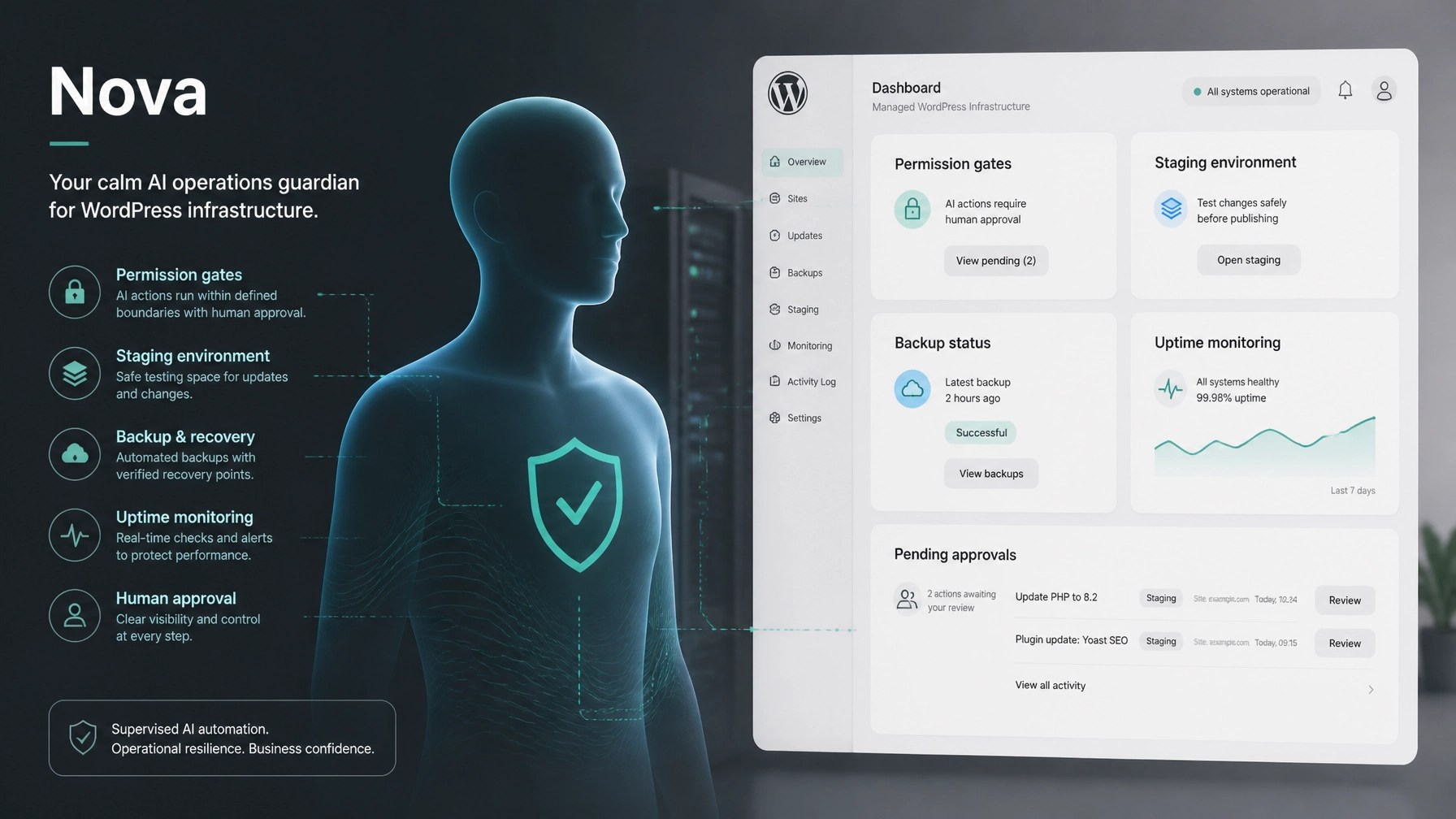
    Nova, the MyGentic AI assistant, represented as a calm and precise operational AI presence alongside a focused business operator

    Nova is Krishna’s MyGentic AI assistant.

    Nova represents the broader principle of agentic operations: an AI assistant should be configured around the organisation’s objectives, information, permissions and escalation requirements. It should not be treated as an anonymous, generic chatbot detached from the business context.

    For an SME, a MyGentic assistant such as Nova can form part of a wider architecture supporting administrative coordination, enquiry handling, operational prompts, information retrieval and workflow execution. The exact responsibilities must be defined by the business process.

    The objective is not to remove human judgement. It is to ensure that human judgement is applied where it creates the most value.

    That is transformation through orchestration.

    Growth: Stability Creates Capacity for Expansion

    Growth becomes more predictable when core operations are standardised.

    A well-designed agentic workflow can help a business establish:

    • Faster movement of information between systems.
    • More consistent handling of routine enquiries.
    • Clearer ownership of follow-up actions.
    • Reduced duplication across administrative tasks.
    • Better visibility across the customer journey.
    • More structured reporting for decision-makers.
    • A controlled route for human escalation.

    These are operational outcomes, not guaranteed performance claims. The value depends on process quality, data accuracy, system access and ongoing oversight.

    A workflow that is badly designed will simply automate a bad process at greater speed. That is why ZeroPoint Creative treats automation as an architectural discipline. Our business process automation consultancy focuses on the structure beneath the software: the rules, integrations, permissions and monitoring that determine whether the system remains reliable.

    The Digital Operations Management service provides another route for businesses that need continued support across workflows, systems and digital processes.

    Key Takeaways

    • More software does not automatically produce better operations.
    • Agentic workflows connect existing tools, people and decisions around a defined business objective.
    • AI agents require permissions, boundaries, approval gates and auditability.
    • DIY and out-of-the-box automation can create technical debt when processes become complex.
    • UK GDPR and AI governance requirements must be considered before personal data is processed.
    • Human oversight remains essential for sensitive, ambiguous or high-impact decisions.
    • Stability is the foundation for scalable commercial growth.

    Conclusion: Engineer the System You Actually Need

    Your business does not need another disconnected application added to an already crowded technology stack.

    It needs a coherent operating framework.

    ZeroPoint Creative acts as the technical architect behind bespoke AI workflows for modern businesses. We examine the existing ecosystem, identify operational friction, define the decision architecture and engineer a managed workflow designed around your actual requirements.

    The result is not automation for its own sake. It is a resilient, monitored and standardised digital system that allows your people to focus on decisions requiring experience, judgement and accountability.

    If you are assessing how Nova, MyGentic or a bespoke agentic workflow could support your operations, contact ZeroPoint Creative to discuss your requirements with Krishna.

    Precision is the only path to operational scale.

  • 10 Reasons Your Business Isn’t Scaling (And How Automated Infrastructure Fixes It)

    10 Reasons Your Business Isn’t Scaling (And How Automated Infrastructure Fixes It)

    Scaling a business is not a creative challenge; it is an engineering one. Most enterprises fail to reach the next tier of growth because they treat their digital presence as a brochure rather than a mission-critical operational system. When your digital infrastructure is fragmented, every new customer adds friction rather than momentum.

    In 2026, the landscape has shifted. With the UK National Living Wage rising to £12.71 per hour and the EU AI Act imposing rigorous compliance standards on automated systems, the cost of inefficiency is higher than ever. If your business is plateauing, it is likely due to structural weaknesses in your digital architecture.

    Here are the 10 primary reasons your business isn't scaling and the technical protocols required to rectify them.

    1. Technical Debt from Fragmented Infrastructure

    Many businesses operate on a "DIY" patchwork of plugins, unmanaged hosting, and disconnected tools. This creates technical debt: a systemic failure where legacy systems cannot handle increased load.

    The Infrastructure Fix: A managed, standardised environment. By leveraging fully managed WordPress hosting, you replace a fragile patchwork with a resilient, performance-driven foundation. Standardisation ensures that as your traffic grows, your infrastructure scales elastically without manual intervention.

    2. Dependency on High-Cost Manual Labour

    With the 2026 National Living Wage increase, relying on human staff for repetitive, low-value tasks is a scalable liability. Manual data entry, basic lead triage, and routine customer service are operational bottlenecks that drain capital.

    The Infrastructure Fix: AI-driven staffing and automated workflows. Transitioning to standalone AI staffing solutions allows you to automate high-volume tasks. This mitigates the impact of rising labour costs by redeploying human capital toward high-level strategy and complex problem-solving.

    Abstract technical visualisation of automated data flows and circuitry, representing a seamless digital ecosystem. Minimalist teal and cyan accents on a dark, professional background.

    3. Data Leakage and Siloed Information

    Scaling requires clinical precision in decision-making. If your customer data is trapped in separate silos: email, CRM, and website analytics: you suffer from "data leakage." You lose visibility into the customer journey, leading to wasted marketing spend and missed conversions.

    The Infrastructure Fix: Integrated digital operations management. Implementing a digital operations framework centralises your data streams. This creates a "single source of truth," allowing for data-dense reporting and intent-based scaling.

    4. Compliance Decay and Regulatory Risk

    The EU AI Act and UK GDPR updates have turned compliance into a technical requirement. Businesses scaling without a rigorous governance framework for their automated systems face fines of up to 7% of global turnover.

    The Infrastructure Fix: Structural integrity through managed governance. At ZeroPoint Creative, we treat compliance as an architectural layer. By architecting systems with built-in transparency and human oversight, you mitigate risk while maintaining the speed of automation.

    5. Visibility Decay (Technical SEO Failure)

    If your search visibility is declining, it’s rarely a "content" problem; it’s a technical SEO failure. Search engines prioritise infrastructure: site speed, schema markup, and crawl efficiency.

    The Infrastructure Fix: Technical SEO and performance engineering. Our SEO add-on isn't about keywords; it's about architectural optimisation. We rectify indexing errors and leverage high-performance code to ensure your system remains visible to search algorithms.

    6. Performance Bottlenecks and Latency

    A website that loads in four seconds instead of one is a system with a 75% efficiency leak. In a high-intent market, latency is the primary driver of bounce rates and lost revenue.

    The Infrastructure Fix: Performance-driven builds. Moving from a generic setup to a high-performance digital system ensures near-instantaneous load times. We prioritise shallow-depth-of-field visual compositions and lightweight code to maintain operational calm and speed.

    A professional woman in a modern, minimalist workspace, focused on a tablet displaying high-level project management metrics. The environment is clean and bright, reflecting operational excellence.

    7. Manual Workflow Friction

    If your team spends more than 10% of their time on administrative "glue work": moving data from one sheet to another: your business is suffering from operational friction. This friction compounds as you scale, eventually leading to burnout and system collapse.

    The Infrastructure Fix: Automated operational workflows. By architecting automation into your business operations, you create frictionless transitions between lead capture, fulfillment, and reporting. Precision is the only path to conversion.

    8. Lack of Proactive Monitoring

    Most businesses only "fix" their digital systems when they break. This reactive stance leads to downtime, lost data, and brand erosion. Scaling requires an "always-on" approach.

    The Infrastructure Fix: Continuous monitoring and a website care plan. We provide 24/7 technical guardianship, rectifying vulnerabilities before they become disruptions. Stability is our primary metric.

    9. Inconsistent Brand Execution

    As businesses grow, their digital touchpoints often become inconsistent. A mismatch between your LinkedIn presence, your website, and your e-commerce store signals a lack of professional execution.

    The Infrastructure Fix: Standardised digital assets. Whether it’s a full website build or managed ecommerce store infrastructure, we ensure a clean, modern, and consistent delivery across all platforms. Structural integrity breeds trust.

    10. Scalability Latency

    Scalability latency occurs when your infrastructure cannot keep pace with your ambitions. If launching a new service or landing page takes weeks instead of hours, your system is broken.

    The Infrastructure Fix: Agile, modular growth plans. Our tiered packages: Lite, Core, and Pro: are designed to grow with you. We provide the infrastructure for rapid deployment, allowing you to leverage market opportunities with clinical precision.

    Abstract server room infrastructure with glowing teal accents, representing a secure and scalable digital foundation. High-resolution, professional architectural photography.

    The Outcome: Commercial Expansion Through Stability

    Scaling is not about working harder; it is about building a more resilient machine. By shifting from a creative-first to an infrastructure-first mindset, you rectify systemic failures and create a foundation for predictable performance.

    Managed digital infrastructure is the "Digital Guardian" of your growth. It mitigates risk, reduces overhead, and ensures that your business remains resilient in an increasingly complex regulatory and economic environment.

    Is your infrastructure ready for the next tier? Explore our managed digital systems and begin your transition from operational friction to clinical excellence.

  • Why a Unified Digital Operations Strategy Will Change the Way You Scale in 2026

    Why a Unified Digital Operations Strategy Will Change the Way You Scale in 2026

    As we navigate the fiscal landscape of 2026, the distinction between a "digitised business" and a "digital-native operation" has reached a critical breaking point. For many organisations, the initial rush to adopt isolated tools: from AI-driven chatbots to headless CMS platforms: has resulted in a sprawling, fragmented architecture that now serves as a liability rather than an asset.

    Scaling a business in this environment is no longer a question of aggressive marketing or creative flair; it is a technical challenge that requires clinical precision. Without a unified digital operations strategy, growth is hampered by technical debt and operational friction. To scale effectively this year and beyond, decision-makers must transition from managing individual platforms to governing a cohesive, managed digital infrastructure.

    The Problem: Systemic Failure and the Friction of Fragmentation

    In the current digital ecosystem, fragmentation is the primary catalyst for visibility decay and data leakage. Many businesses operate on a patchwork of "out-of-the-box" solutions that were never designed to communicate. This lack of structural integrity creates what we define as "operational friction": a state where the cost of managing the digital environment grows faster than the revenue it generates.

    The Liability of Technical Debt

    Technical debt is often dismissed as a concern for the IT department, yet in 2026, it is a direct threat to commercial scalability. When a business relies on DIY website builds or unmonitored plugins, it accumulates silent liabilities. These liabilities manifest as sudden downtime, security vulnerabilities, and a sluggish user experience that directly impacts conversion rates.

    Furthermore, the implementation of the UK GDPR and the evolving EU AI Act has heightened the risk of non-compliance. A fragmented system makes it nearly impossible to ensure consistent data governance across every touchpoint. Without a centralised architectural framework, your organisation is not just inefficient; it is exposed.

    Visibility Decay and Resource Inefficiency

    When digital operations are siloed, visibility into performance metrics begins to decay. Decision-makers find themselves leveraging incomplete data, leading to misallocated budgets and missed opportunities. Additionally, rising labour costs: exacerbated by the National Living Wage figures: mean that manual intervention in digital workflows is no longer a viable scaling strategy. If your team is still manually synchronising data between your CRM and your website, your operation is suffering from systemic resource inefficiency.

    A focused digital architect in a minimalist office environment, representing calm expertise and precision

    The Infrastructure: Implementing a Unified Digital Backbone

    To rectify these systemic failures, businesses must adopt a unified digital operations strategy. This is not a creative exercise; it is the implementation of an engineered, standardised framework that positions your digital presence as a mission-critical operational system.

    Managed Architecture as a Foundation

    The first step in achieving ecosystem stability is to move away from unmanaged hosting and ad-hoc maintenance. At ZeroPoint Creative, we treat the website not as a standalone asset but as a component of your broader infrastructure. By leveraging managed hosting with continuous monitoring, businesses can mitigate the risks of downtime and security breaches before they impact the bottom line.

    A unified strategy ensures that every update, from core software to technical SEO, is executed with clinical precision. This standardised approach eliminates the variability that leads to technical debt. Our Core Plan is designed specifically to provide this level of structural integrity, offering a secure, high-performance environment that is "always-on."

    Automated Workflows and AI Integration

    In 2026, automation is the engine of operational excellence. A unified strategy integrates AI-driven staffing and automated workflows directly into your business operations. Rather than treating AI as a separate experiment, it becomes a core part of your digital infrastructure: handling lead capture, customer follow-ups, and data processing with zero manual friction.

    By embedding AI agents into a managed digital ecosystem, you reduce the marginal cost of scaling. You are no longer hiring headcount to handle routine tasks; you are deploying technical systems that perform with consistency and speed.

    Technical SEO as Infrastructure

    Traditional SEO is often framed as a content-led creative service. However, for sustainable growth, SEO must be viewed as an engineering challenge. Technical SEO: optimising for crawlability, site speed, and structured data: is the infrastructure that supports your visibility. Within a unified strategy, SEO and on-page optimisation are integrated into the continuous monitoring cycle. This ensures that as you scale your content or product lines, your technical foundation remains resilient against "visibility decay."

    Abstract tech visual representing seamless data flow and secure digital infrastructure

    The Growth: Non-Linear Scalability through Operational Excellence

    The ultimate goal of a unified digital operations strategy is to enable non-linear growth. In a linear model, doubling your output requires doubling your input (more staff, more tools, more hours). In a unified technical model, you scale the system, not the effort.

    Predictable Performance and Commercial Expansion

    When your digital infrastructure is standardised and managed, performance becomes predictable. You can forecast load times, conversion rates, and maintenance costs with precision. This stability allows leadership to focus on commercial expansion: entering new markets or launching new products: with the confidence that the underlying digital ecosystem will support the increased volume.

    For businesses looking to transition from a startup phase to a professional enterprise, the Website Pro-Growth Plan provides the necessary scaling framework. It offers the data-dense reporting and resilient hosting required to manage high-growth trajectories without the risk of system collapse.

    Reducing Overhead through Managed Oversight

    By delegating the technical details of your digital presence to a "Digital Guardian," you eliminate the need for expensive in-house technical management. A unified approach reduces overhead by consolidating disparate services into a single, high-performance managed package. This not only improves efficiency but also provides a level of expert oversight that is impossible to achieve with a DIY or unmanaged approach.

    Precision is the only path to conversion. By treating your digital operations as a technical system, you ensure that every interaction a customer has with your brand is frictionless and reliable.

    Conclusion: The Mandate for 2026

    The era of fragmented, "good enough" digital setups is over. To scale in 2026, your digital presence must be an engineered asset: resilient, compliant, and integrated. A unified digital operations strategy rectifies the chaos of the past and builds a foundation for the future.

    Whether you are looking to mitigate technical debt, leverage the power of AI automation, or simply standardise your digital infrastructure for better performance, the path forward is through operational excellence. At ZeroPoint Creative, we provide the architecture and the guardianship required to turn your digital operations into a scalable engine for growth.

    A clinical, architectural view of a modern data centre representing stability and reliability

  • Managed WordPress Hosting Vs VPS: Which Is Better For Your Business Website?

    Managed WordPress Hosting Vs VPS: Which Is Better For Your Business Website?

    For a modern UK business, your digital presence is not merely a website; it is a mission-critical operational system. Yet, many organisations treat their hosting environment as an afterthought: an "out-of-the-box" commodity rather than a foundational piece of technical architecture.

    When deciding between Managed WordPress hosting and a Virtual Private Server (VPS), you are not just choosing a price point. You are choosing a management philosophy. One path leads to technical debt and operational friction; the other leads to clinical precision and scalable growth.

    1. The Problem: Systemic Failure and Technical Debt

    The most common systemic failure in business digitisation is the "DIY Trap." Business owners often opt for a VPS because it promises lower base costs and total control. However, without a dedicated technical architect, a VPS quickly becomes a liability.

    The Friction of Manual Oversight

    On an unmanaged VPS, the burden of structural integrity falls entirely on your shoulders. This includes:

    • Security Patching: Manually updating the OS and server-level software to mitigate vulnerabilities.
    • Performance Decay: Without active optimisation, data rot and unoptimised databases lead to visibility decay in search engines.
    • Resource Inefficiency: In the UK, the rising cost of technical labour: further compounded by adjustments to the National Living Wage: means that spending internal hours on server maintenance is an expensive use of human capital.

    Professionals reacting to a website outage caused by technical debt

    When your site experiences downtime or a security breach, the cost is not just the repair bill; it is the erosion of brand trust and lost commercial opportunity. If your team is busy troubleshooting 404 errors or server timeouts, they are not focused on expansion.

    2. The Infrastructure: Managed Excellence vs. Manual Control

    To rectify these inefficiencies, you must view your hosting as managed infrastructure. Below is a clinical comparison of the two frameworks to help you align with your operational goals.

    Managed WordPress Hosting: The Technical Architect’s Choice

    Managed WordPress hosting is an engineered ecosystem. It is designed specifically to leverage the WordPress core, providing a standardised environment where security, performance, and updates are handled by a "Digital Guardian."

    • Always-On Monitoring: Proactive identification of threats before they impact uptime.
    • Standardised Security: Hardened environments compliant with UK GDPR and industry standards.
    • Frictionless Scaling: Resource allocation that grows with your traffic, without requiring manual server reconfiguration.

    VPS: The Custom Construction

    A VPS offers a slice of a physical server with root access. While it provides high levels of customisation, it requires significant technical expertise to maintain. It is a "bare-metal" approach that lacks the built-in management protocols of a dedicated WordPress service.

    Technical Comparison Table

    Feature Managed WordPress Hosting Virtual Private Server (VPS)
    Primary Focus Performance-driven WP architecture Generic server control
    Management Fully managed (Updates, Backups, Security) Manual / Self-managed
    Security Hardened WP-specific protocols Your responsibility (Firewalls, OS patches)
    Technical Skill Low (Handled by ZeroPoint experts) High (Requires sysadmin expertise)
    Optimisation Out-of-the-box clinical precision Manual configuration required
    Scalability Frictionless / Built-in Manual resource provisioning

    3. The Growth: Scaling with Stability

    Stability is the primary metric of success. A resilient digital infrastructure allows your business to move from reactive troubleshooting to proactive commercial expansion.

    Mitigating Risk, Maximising ROI

    By leveraging a managed hosting add-on or a comprehensive Website Pro-Growth Plan, you remove the technical bottlenecks that stifle acquisition.

    When your hosting is managed as a technical system rather than a creative exercise, you achieve:

    1. Reduced Overhead: Lower TCO (Total Cost of Ownership) by eliminating the need for internal server maintenance.
    2. Predictable Performance: Consistent page speeds that improve SEO rankings and conversion rates.
    3. Compliance Alignment: Ensuring your data handling remains compliant with UK-specific regulations through secure, managed environments.

    Technical architect projecting calm authority over a managed digital ecosystem

    Practical Advice for Business Decision-Makers

    If your website is the engine of your B2B lead generation or e-commerce revenue, the risk of a DIY VPS environment is a liability you cannot afford. Managed WordPress hosting is the investment in operational excellence.

    • Choose Managed Hosting if: You require a high-performance, secure, and reliable site without the technical debt of server management.
    • Choose VPS if: You are a technical organisation needing a custom server stack for non-WordPress applications and have the in-house capacity to manage infrastructure 24/7.

    At ZeroPoint Creative Ltd, we build and manage precision digital systems. Our core offering includes launch-ready WordPress websites backed by performance-focused infrastructure. We handle the technical protocols so you can focus on the mission.

    ZeroPoint Creative Managed Hosting Offer

    Summary of Outcomes

    Managed WordPress hosting transforms your website from a fragile asset into a resilient operational framework. By choosing a managed service, you are opting for clinical precision over guesswork, ensuring your digital architecture is always-on, always-secure, and always-optimised for growth.

    Precision is the only path to conversion. Stability is our primary metric.

  • Top 5 AI Automation Ideas to Reclaim 15+ Hours of Your Work Week

    Top 5 AI Automation Ideas to Reclaim 15+ Hours of Your Work Week

    The Hidden Cost of Operational Friction

    For the modern UK enterprise, manual administrative overhead is no longer just an inconvenience; it is a systemic risk. With the National Living Wage continuing to apply upward pressure on labour costs and the increasing complexity of the digital ecosystem, relying on human intervention for repetitive tasks is an inefficient use of high-value capital.

    Most business owners suffer from "visibility decay": a state where data is trapped in silos, leads are lost to slow response times, and technical debt accumulates because the "human-in-the-loop" model cannot scale. When you spend 15 hours a week on manual booking, invoicing, and lead triage, you are not managing a business; you are maintaining a legacy system.
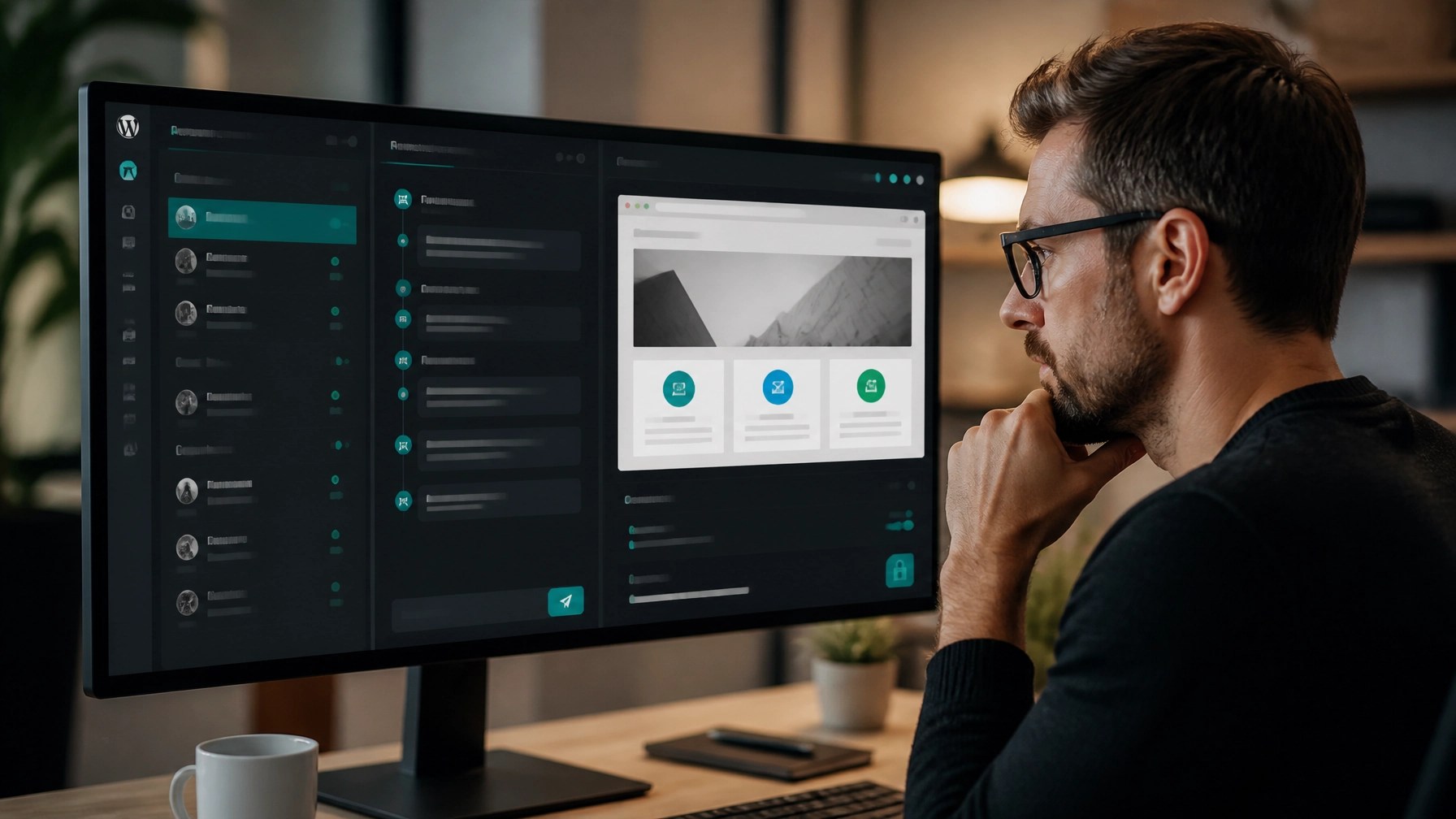
    To rectify this, we must shift the perspective from creative management to digital operations management. By implementing a robust business workflow automation framework, you can mitigate these risks and transition your operations into a high-performance, resilient infrastructure.

    Infrastructure: The 5-Point Automation Protocol

    The objective of AI automation for business is not to replace human insight, but to engineer a foundation where insight is the only manual requirement. Here are five technical frameworks to reclaim your operational capacity.

    1. Autonomous Customer Support & Triage

    The primary source of time leakage for most SMEs is the "information request cycle": answering the same 20 questions via email, WhatsApp, and live chat.

    By leveraging a custom AI agent integrated directly into your website infrastructure, you can automate up to 80% of these interactions. These systems are trained on your specific FAQs, service protocols, and pricing structures to provide clinical precision in responses.

    The Workflow:

    • Capture: AI intercepts enquiries 24/7.
    • Triage: The system identifies intent (support vs. sales).
    • Execution: Basic queries are resolved instantly; complex tickets are summarised and routed to the relevant stakeholder.

    This protocol ensures operational continuity without increasing headcount. For a deeper look at how this fits into a hybrid workforce, review our guide on AI staffing and architecting the hybrid workforce for 2026.

    Promotional graphic for Zero Point Creative’s fully managed AI staffing service, offering five 24/7 AI business roles

    2. Intent-Based Lead Qualification

    Data leakage often occurs at the point of lead entry. Manual qualification is slow, subjective, and prone to error. A standardised automation workflow ensures every lead is enriched and prioritised based on commercial value.

    The Workflow:

    • Ingestion: Form submissions are pushed to a central CRM via Zapier or Make.
    • Enrichment: AI evaluates the lead’s budget, timeline, and industry against your "Ideal Client Profile" (ICP).
    • Activation: High-priority leads trigger an instant, personalised follow-up and schedule a meeting via an integrated booking tool like Calendly.

    This eliminates the "friction" of manual outreach and ensures your sales energy is reserved for high-probability conversions. Proper CRM setup is the architectural prerequisite for this level of precision.

    3. Frictionless Financial Administration

    Financial admin is often the greatest drain on a business owner’s cognitive load. Manual invoicing and payment chasing represent significant resource inefficiency.

    The Workflow:

    • Trigger: When a project status is updated in your project management system, an invoice is automatically generated in QuickBooks or Xero.
    • Maintenance: AI-driven reminders are dispatched based on invoice age, maintaining a polite but clinical persistence to secure cash flow.
    • Reconciliation: Automated expense categorisation flags anomalies, reducing the time required for monthly reporting and VAT compliance.

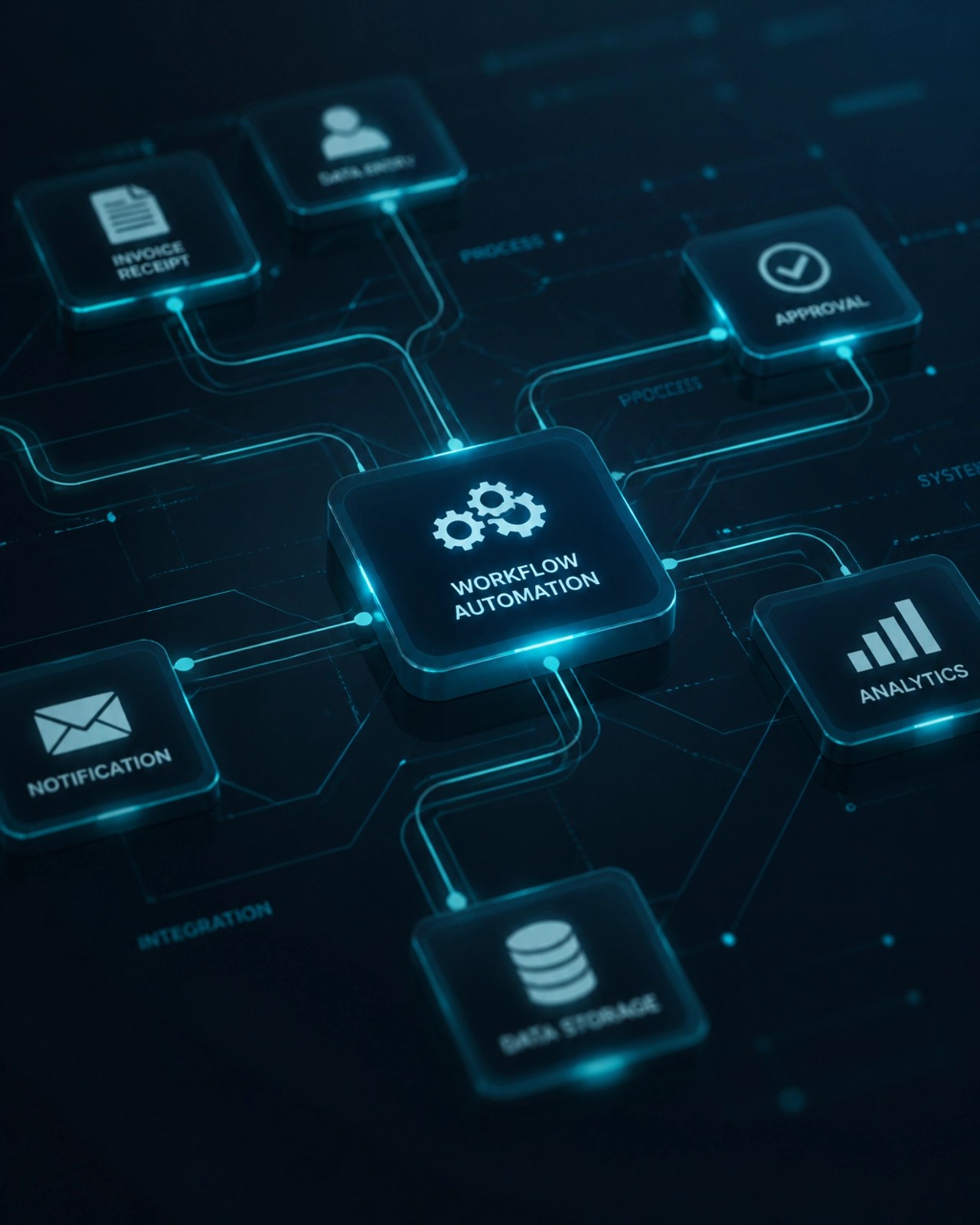
    Abstract technical visual representing business workflow automation with sleek data lines and nodes

    4. Systematised Content Synthesis

    Content creation is frequently misclassified as a purely creative exercise. In reality, maintaining a consistent digital presence is an engineering challenge.

    Instead of manual drafting, use a "Content Synthesis" workflow. By providing an AI agent with core technical data or raw meeting transcripts, you can generate a week’s worth of social updates, newsletters, and blog outlines in minutes.

    The Workflow:

    • Source: Raw data or voice memos are ingested.
    • Synthesis: AI standardises the output to align with your brand voice and UK English standards.
    • Distribution: Content is batch-scheduled across all platforms, ensuring visibility without daily manual intervention.

    For those leveraging the latest infrastructure, WordPress 7.0’s native AI capabilities provide a significant advantage in automating these workflows directly within your CMS.

    5. Automated Governance & Reporting

    Managing a business without data-dense reporting is like flying without instruments. However, manual reporting is often "data rot": by the time you read the report, the information is obsolete.

    The Workflow:

    • Aggregation: Data is pulled from your CRM, Google Ads, and website performance logs.
    • Analysis: AI identifies trends, such as "visibility decay" in specific search terms or "operational bottlenecks" in your service delivery.
    • Summary: A clinical, high-level dashboard is delivered to your inbox every Monday morning, highlighting only the metrics that require executive action.

    Professional tech architect in a focused pose reviewing digital project management metrics on a tablet

    Growth: Transitioning to Managed Digital Operations

    The transition from a manual, reactive business to an automated, proactive enterprise requires more than just "tools"; it requires a managed architectural strategy. Implementing these five ideas will reclaim 15+ hours of your week, but the real value lies in the scalability they unlock.

    At ZeroPoint Creative, we specialise in architecting operational excellence for businesses that refuse to be limited by their own admin. Our managed packages are designed to handle the technical complexity so you can focus on high-level strategy.

    Stability is our primary metric. Precision is the only path to conversion.

    Key Takeaways

    • Rectify Inefficiency: Identify manual tasks that consume more than 2 hours per week and target them for automation.
    • Leverage AI Agents: Use AI to handle the "front-line" of customer support and lead qualification to mitigate response delays.
    • Systematise Everything: Treat marketing and finance as technical systems, not creative chores.
    • Protect Your Time: Automation is the only way to scale without a proportional increase in overhead.

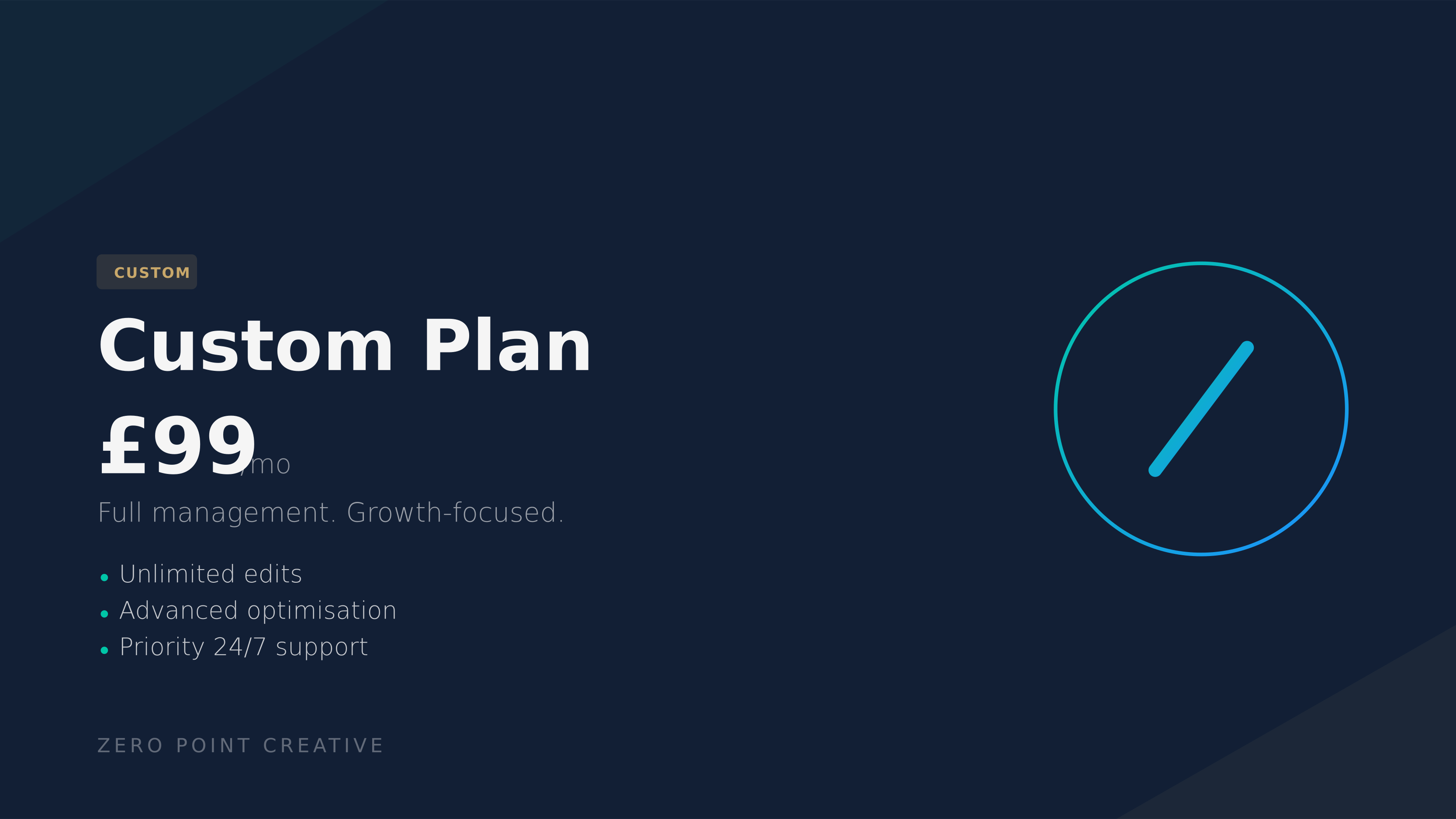
    Overview of Zero Point Creative's Custom Plan for managed digital growth and advanced optimisation


  • Stop Wasting Time on Manual Admin: 7 Quick Hacks for Digital Operations Management

    Stop Wasting Time on Manual Admin: 7 Quick Hacks for Digital Operations Management

    Operational friction is the silent killer of commercial scalability. For most modern businesses, "admin" is not merely a task; it is a symptom of fragmented infrastructure and technical debt. When high-value decision-makers spend hours on manual data entry, lead triaging, or server monitoring, they are not just "working": they are leaking resource efficiency.

    In the UK, with the National Living Wage reaching record highs and the complexity of UK GDPR requiring clinical precision in data handling, manual administration is no longer a sustainable workflow. It is a liability.

    To rectify this, you must stop viewing digital management as a creative exercise and start treating it as a technical system. This guide provides 7 quick-win hacks to leverage business workflow automation and ai automation for business, transforming your digital environment into a resilient, always-on ecosystem.

    1. Centralise Your Digital Ecosystem

    Fragmented tools lead to "data rot." When your CRM, email, and project management tools do not communicate, you create silos of manual re-keying. Digital operations management begins with a unified architectural framework.

    By integrating your core systems into a single operations platform, you eliminate the friction of constant tab-switching. This centralisation allows for a "single source of truth," ensuring that data flows seamlessly from a lead form directly into your fulfillment pipeline without human intervention.

    Technical Implementation: Leverage our digital operations management services to audit your current stack and architect a unified workflow.

    A technical strategist in a focused, thoughtful pose in a modern office

    2. Deploy AI-Driven Lead Triaging

    Manual lead qualification is a resource-intensive bottleneck. Using ai automation for business, you can deploy intelligent agents that categorise, score, and route incoming enquiries based on intent-based metrics.

    Instead of a staff member manually reading every email, an AI agent can identify "high-intent" leads, provide immediate automated responses, and book consultations directly into your calendar. This ensures that your human capital is reserved for high-stakes conversion rather than basic sorting.

    Technical Implementation: Explore our AI Staffing Placement to install a 24/7 sales assistant into your ecosystem.

    3. Automate Technical Maintenance and Updates

    Technical debt accumulates every time a WordPress plugin or server security patch is ignored. Manually checking for updates is an inefficient use of time and introduces the risk of visibility decay or security breaches.

    Standardise your maintenance by moving to a managed infrastructure. An automated monitoring system can perform health checks, execute backups, and apply security patches in a controlled environment. This proactive approach mitigates the risk of downtime and ensures structural integrity without manual oversight.

    Technical Implementation: Offload the technical burden with our Managed Hosting Add-On or a comprehensive Website Care Plan.

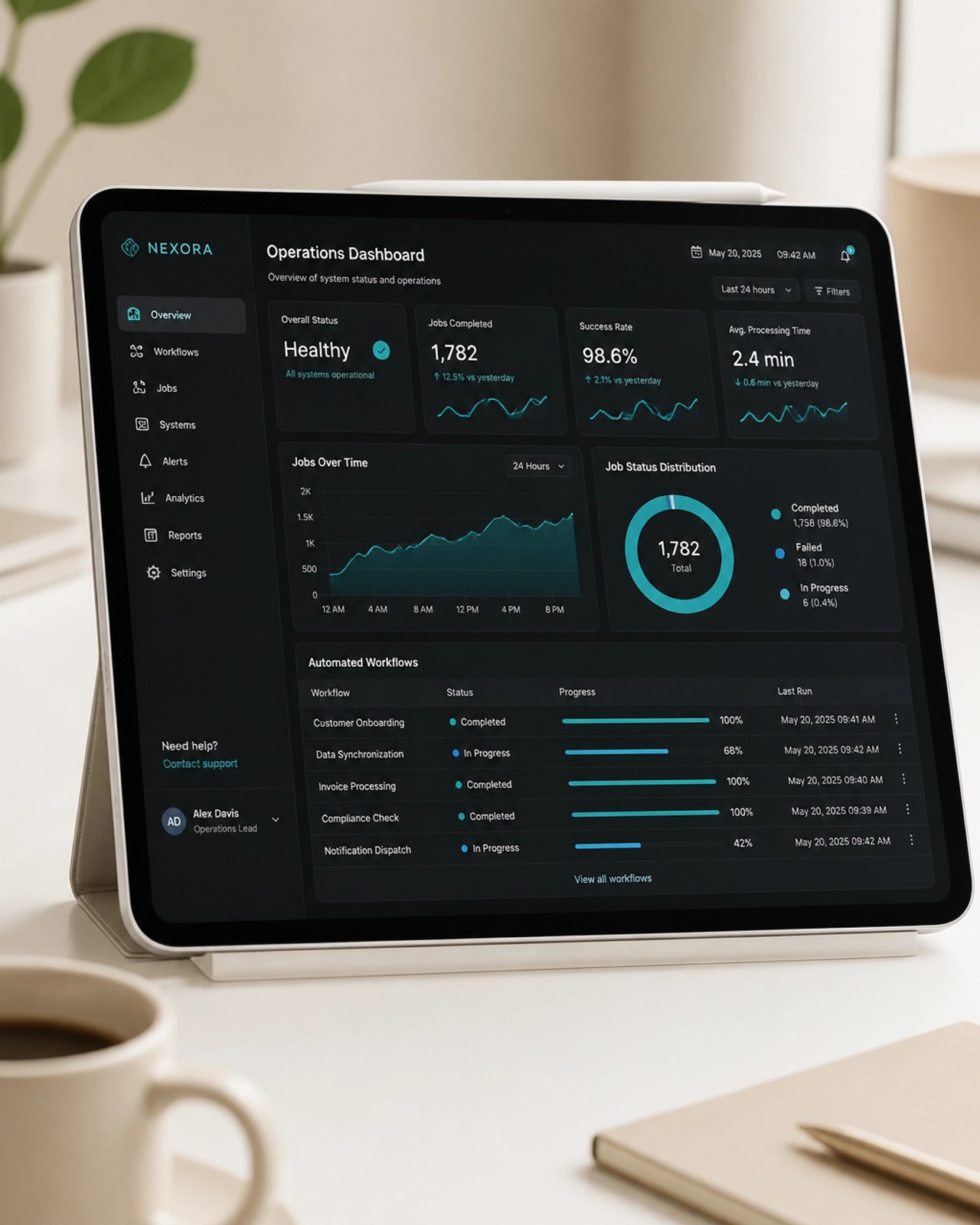
    A digital operations dashboard UI on a high-end tablet

    4. Standardise Data Entry via Cross-Platform Integrations

    The "copy-paste" method is a systemic failure. Every time a human manually moves data from a spreadsheet to a CRM, the probability of error increases. Business workflow automation aims to rectify this by creating frictionless data pipelines.

    Use tools like Zapier or Make to bridge the gap between disconnected software. For example, when a sale is made on your managed e-commerce store, the customer’s data should automatically trigger an invoice in your accounting software and an onboarding sequence in your CRM.

    Technical Implementation: Standardise your data flows by mapping out your top 5 repetitive tasks and leveraging API integrations to automate the transfer.

    5. Implement Automated Anomaly Alerts

    Manual monitoring is reactive. By the time you notice your site is slow or your ads are underperforming, the damage is done. Shift to an "always-on" monitoring posture by setting up automated alerts for performance anomalies.

    Whether it is a sudden drop in technical SEO rankings or a spike in server latency, automated notifications allow you to mitigate risks before they impact your bottom line. Precision monitoring is the only way to maintain a performance-driven digital presence in a competitive market.

    Technical Implementation: Integrate an SEO Add-On to ensure your search visibility is constantly monitored and optimised against algorithmic shifts.

    An architectural shot of a modern server room

    6. Leverage AI-Assisted Content Deployment

    Content management often becomes an operational bottleneck. Manually formatting, tagging, and scheduling blog posts or social updates consumes hours that could be spent on strategy.

    By using AI-assisted workflows, you can automate the structural elements of content delivery. AI can suggest metadata, optimise image alt-text for SEO, and schedule posts across multiple platforms simultaneously. This turns a multi-hour manual task into a 15-minute review process.

    Technical Implementation: Scale your output with our Content Add-On, designed to provide high-quality, managed content delivery.

    7. Automate Compliance and Data Audits

    In the era of UK GDPR, data governance is a mission-critical operation. Manual audits of how you store and process personal data are prone to oversight, which can lead to significant regulatory risk.

    Automated compliance tools can scan your databases for PII (Personally Identifiable Information), monitor consent logs, and ensure that your data retention policies are being strictly followed. This architectural approach to compliance reduces the risk of data leakage and ensures your business remains resilient against shifting regulations like the EU AI Act.

    Technical Implementation: Ensure your digital infrastructure is built on a foundation of compliance with our Website Pro Growth Plan, which includes secure, managed infrastructure as standard.

    A solo professional working with a dual-monitor setup

    Infrastructure for Growth: From Admin to Architecture

    Admin work is not a badge of honour; it is a barrier to expansion. By implementing these 7 hacks, you move away from being a "reactive manager" of digital tools and become a "technical architect" of a scalable system.

    Reliability is built through performance-focused infrastructure. When you automate the mundane, you reclaim the cognitive bandwidth required to focus on commercial expansion. Stability is the primary metric for success in 2026. Precision is the only path to conversion.

    Ready to rectify your operational friction? Let ZeroPoint Creative manage your technical infrastructure so you can focus on scaling your business. View our full range of digital systems here.

  • How to Choose the Best Managed WordPress Hosting (2026 Comparison Guide)

    How to Choose the Best Managed WordPress Hosting (2026 Comparison Guide)

    In 2026, a website is no longer a static digital brochure; it is a mission-critical component of your operational infrastructure. For modern businesses, the choice of managed WordPress hosting is a decision regarding structural integrity and commercial scalability. Selecting a substandard hosting environment is not merely a budget compromise: it is the deliberate introduction of technical debt into your organisation.

    When your digital ecosystem resides on unmanaged or low-tier infrastructure, you inherit a suite of systemic risks: latency, security vulnerabilities, and operational friction. This guide provides a clinical evaluation of the leading managed WordPress hosting providers in 2026, enabling you to leverage a system that facilitates growth rather than obstructing it.

    1. The Problem: The Latency Trap and Security Decay

    Many business owners treat hosting as a commodity. This is a strategic error. Shared or unmanaged environments often suffer from "visibility decay." As search engines and AI discovery agents increasingly prioritise performance metrics: such as Time to First Byte (TTFB) and Interaction to Next Paint (INP): a slow site becomes invisible.

    Furthermore, the threat landscape has evolved. Relying on "out-of-the-box" security plugins is no longer a viable risk mitigation strategy. Without a managed protocol, your site remains susceptible to data leakage and malware, which can compromise both your brand's reputation and your UK GDPR compliance.

    At ZeroPoint Creative, we rectify these systemic failures by positioning managed digital infrastructure as the foundation of your digital presence.

    2. Infrastructure: The 2026 Technical Standards

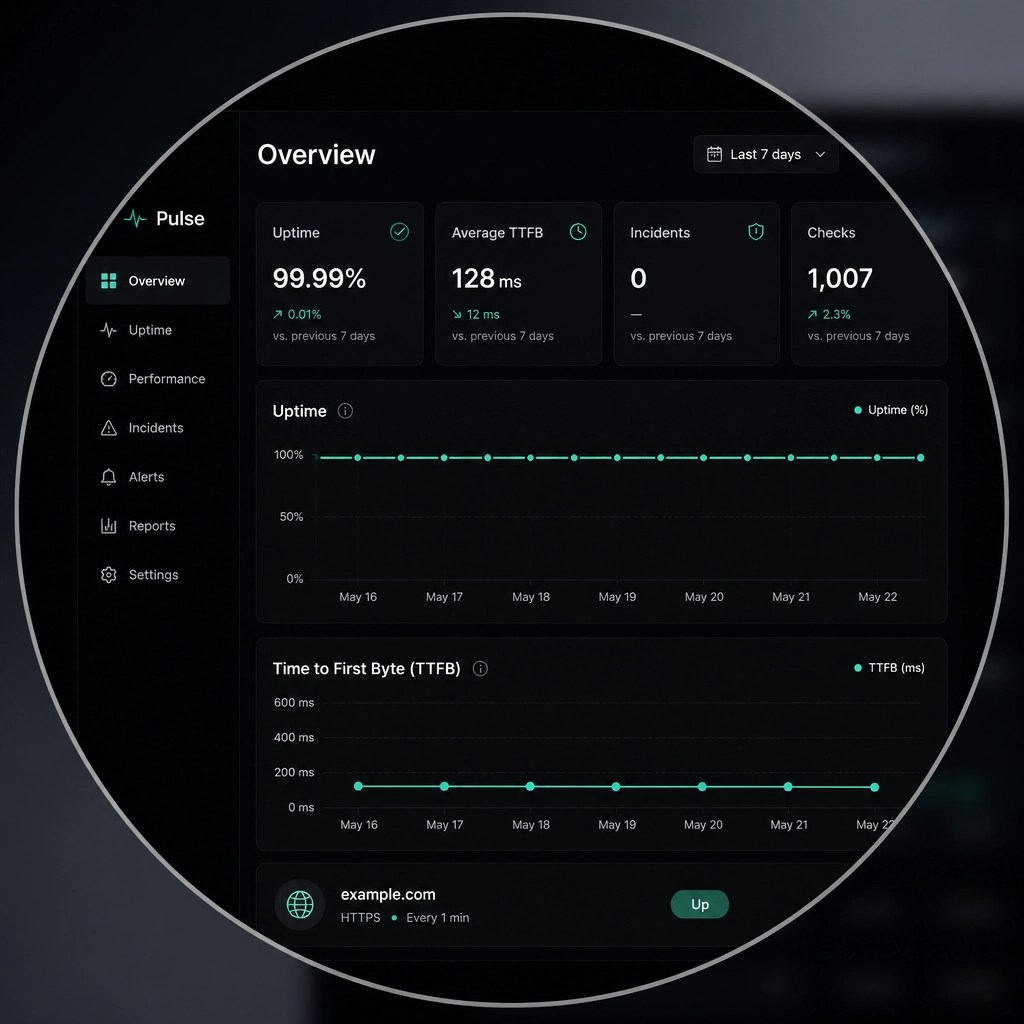
    Minimalist UI dashboard showing high-performance website metrics and low latency.

    To achieve operational excellence, your hosting provider must meet specific architectural benchmarks. When evaluating wordpress website management options, prioritise the following metrics:

    • Global Edge Delivery: In 2026, content must be served from the "edge": servers physically closest to the user: to mitigate latency. Look for integrated Enterprise-grade CDNs.
    • NVMe Storage & Object Caching: Legacy SSDs are insufficient. NVMe (Non-Volatile Memory Express) storage combined with advanced object caching (like Redis or Memcached) is mandatory for high-performance builds.
    • Automated Governance: Managed hosting should include automated daily backups, staging environments for risk-free updates, and real-time security monitoring.
    • Performance-Driven Support: Support should be proactive, not reactive. You require a technical architect, not a generalist chatbot.

    3. 2026 Comparison Guide: Leading Managed WordPress Providers

    Below is a clinical comparison of the most resilient hosting providers currently available for professional business applications.

    Provider Core Strength Technical Framework Estimated Entry (Monthly)
    Kinsta Performance & Polish Google Cloud C2 Machines + Cloudflare Enterprise ~$35
    WP Engine Enterprise Ecosystem Managed AWS/GCP + Genesis Framework ~$20
    SiteGround Mid-Tier Value Google Cloud + Custom SuperCacher ~$3 – $15
    Cloudways Developer Flexibility DigitalOcean / AWS / GCP Vultr ~$14 (Scalable)
    ZeroPoint Creative Full Operational Guard Precision Managed Hosting + 24/7 Support £19 – £99

    Kinsta: The Performance Specialist

    Kinsta remains a primary choice for high-traffic, performance-sensitive sites. Their use of Google Cloud’s fastest machines and an integrated Cloudflare Enterprise tier ensures a TTFB that often leads the industry. It is a premium, data-dense solution for those who prioritise raw speed above all else.

    WP Engine: The Agency Architect

    WP Engine is engineered for multi-site setups and complex enterprise requirements. Their platform includes advanced developer tools and the Genesis Framework, making it a robust infrastructure choice for organisations managing a large digital footprint.

    SiteGround: The Value Proposition

    SiteGround provides a stable entry point into managed environments. While it lacks the dedicated resource isolation of Kinsta, its "SuperCacher" technology and responsive support make it a resilient choice for smaller businesses seeking wordpress speed optimization services.

    Abstract tech visual representing global edge delivery and interconnected data flows.

    4. The ZeroPoint Advantage: Digital Guardianship

    While traditional hosts provide the server, ZeroPoint Creative provides the management. Most business owners do not want to manage a hosting dashboard; they want a high-performance asset that functions without intervention.

    Our Managed Hosting Add-on and Website Care Plans go beyond simple server space. We act as your Digital Guardians, handling the technical protocols that keep your system resilient:

    1. Continuous Monitoring: We don't wait for your site to go down. Our systems monitor performance 24/7, rectifying issues before they impact your operations.
    2. Architectural Optimisation: We leverage bespoke server-side caching and code-level optimisations to ensure your WordPress build is engineered for maximum conversion.
    3. Frictionless Scaling: As your business grows, your infrastructure scales with you. Our Pro-Growth Plans are designed for commercial expansion without the technical headaches of manual migrations.

    5. Growth: Turning Stability into Scale

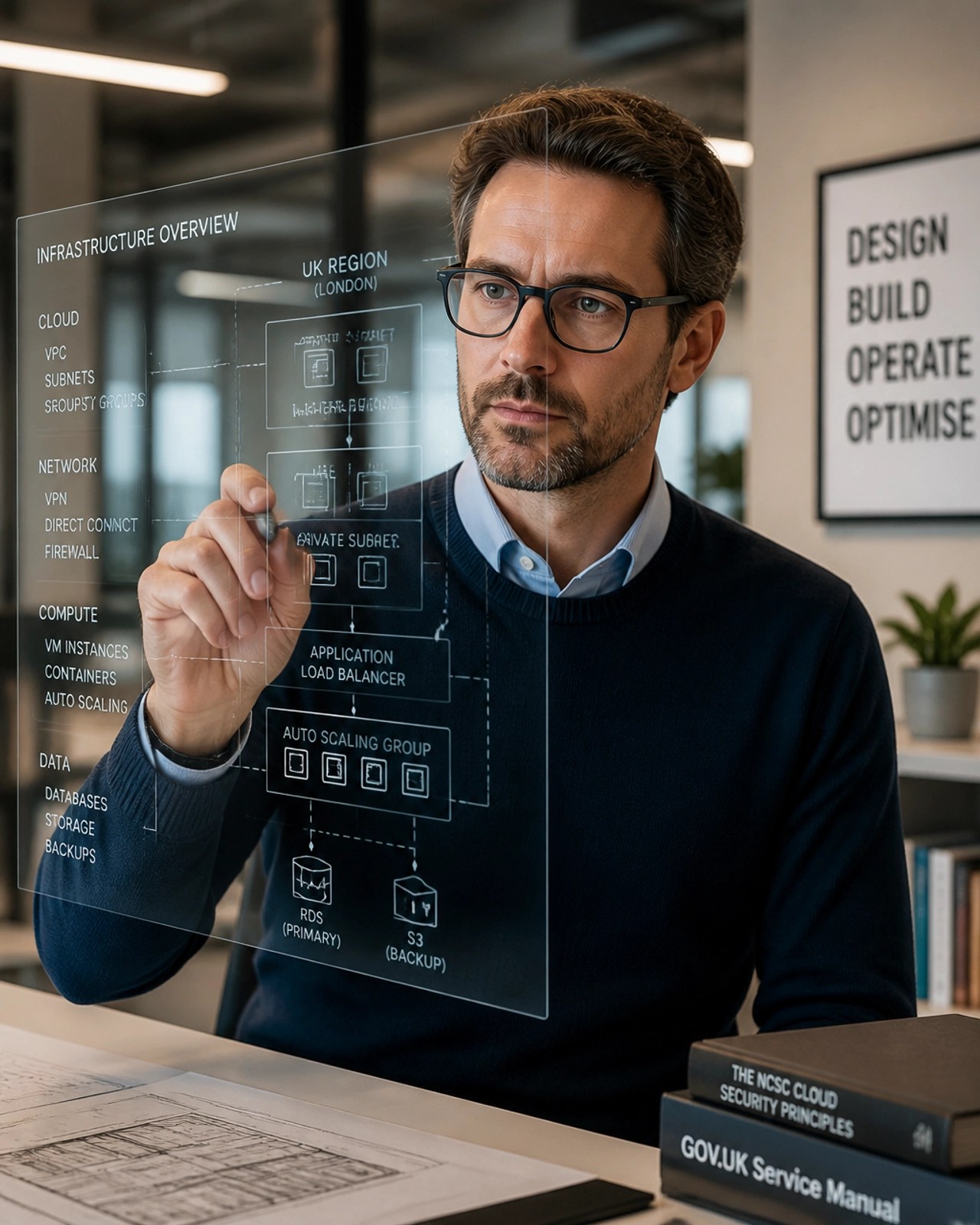
    Portrait of a professional technical architect analysing digital infrastructure diagrams.

    Stability is the primary metric for growth. When your hosting environment is managed with clinical precision, you free your internal resources to focus on high-value operations. A fast, secure website is not a luxury; it is a competitive advantage that improves SEO rankings, reduces bounce rates, and establishes intent-based trust with your customers.

    By standardising your digital infrastructure on a managed platform, you mitigate the risk of visibility decay and ensure your brand is resilient in a dynamic, AI-driven market.

    Key Takeaways for Decision-Makers

    • Reject DIY Traps: Low-cost shared hosting creates long-term technical debt.
    • Prioritise Performance: Seek providers with NVMe storage and global edge delivery to ensure 2026 speed standards.
    • Choose Management over Maintenance: Managed WordPress hosting should include proactive security and performance engineering, not just server space.
    • Invest in Resilience: Use a partner like ZeroPoint Creative to handle the technical architecture, ensuring your digital presence is always-on and always-optimised.

    For businesses seeking a hands-off, high-performance solution, our Digital Operations Management provides the ultimate operational framework for modern growth.


  • Does SEO Still Matter in 2026? How to Optimise for AI Search Agents and SGE

    Does SEO Still Matter in 2026? How to Optimise for AI Search Agents and SGE

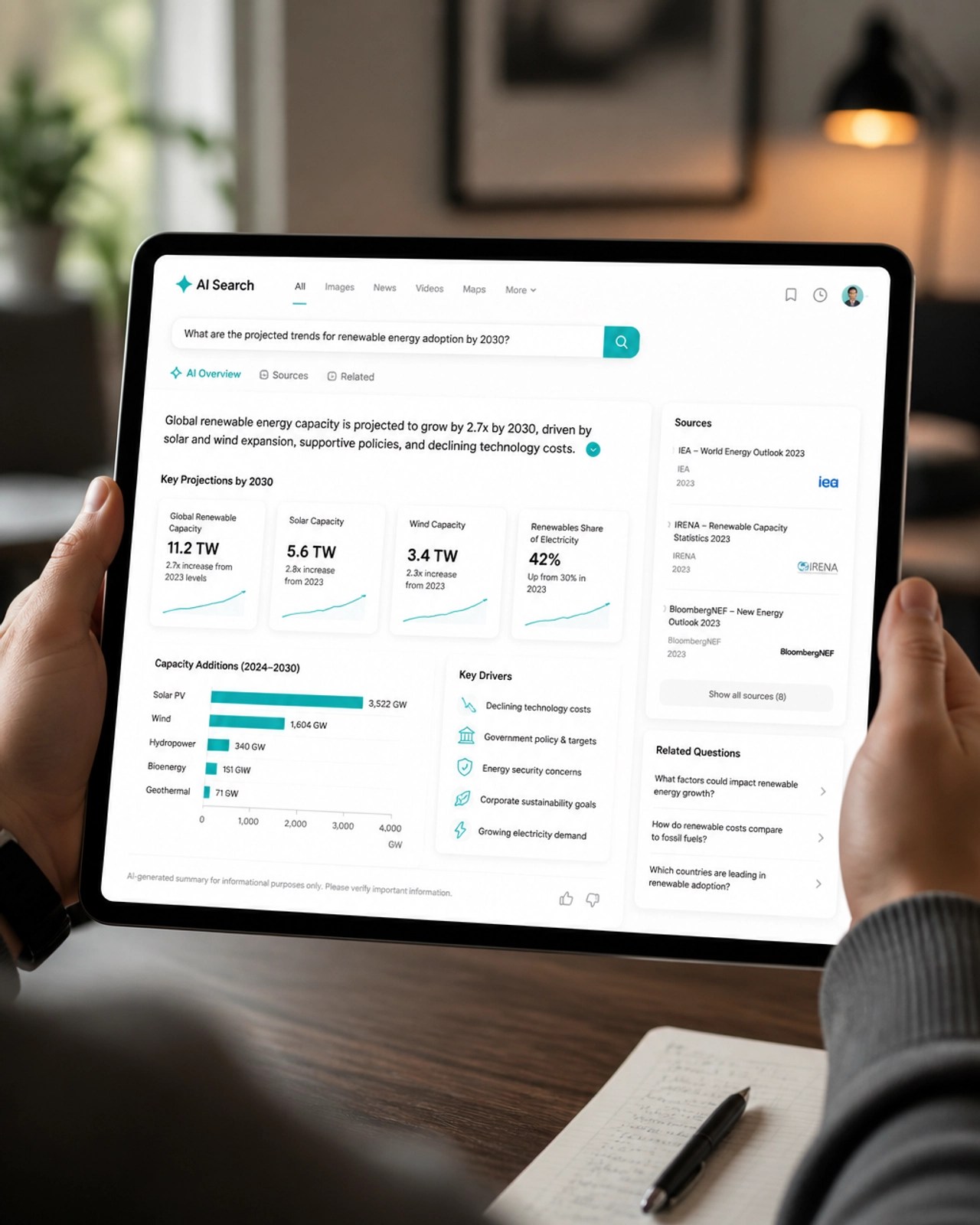
    The digital landscape has undergone a seismic shift. In 2026, the question is no longer whether your website ranks on the first page of Google, but whether your data is being ingested, synthesised, and cited by the AI agents that now mediate the majority of human-internet interactions.

    Traditional search, as we knew it, is decaying. The rise of Search Generative Experience (SGE), AI Overviews, and autonomous search agents like Perplexity and ChatGPT-Search has created a "zero-click" environment. For the unmanaged business, this represents a systemic failure in visibility. For the technically astute, it is an opportunity to engineer a new kind of digital dominance.

    1. The Systemic Failure: Visibility Decay and Data Leakage

    Traditional SEO was built on the premise of the "blue link": a binary path from search result to website. That path is being erased. Today, generative engines provide answers directly on the results page, satisfying user intent without ever sending a single visitor to your domain.

    This creates two critical risks:

    • Visibility Decay: If your content is not structured for LLM (Large Language Model) consumption, you simply cease to exist in the "Answer Engine" results.
    • Data Leakage: Without proper bot governance, AI scrapers may harvest your proprietary data to train their models without providing a citation or attribution, effectively turning your intellectual property into a public utility.

    Many businesses are still operating with significant technical debt: legacy site architectures, bloated code, and unoptimised metadata: that acts as a barrier to AI crawlers. In 2026, a website that is not machine-readable is a liability.

    Ks4Zk3RWCP2.webp

    2. Infrastructure: Technical SEO Services for the AI Era

    To rectify this, businesses must transition from "Ranking Optimization" to "Generative Engine Optimization" (GEO). This requires a managed, engineered approach to digital infrastructure. At ZeroPoint Creative, we treat technical SEO services not as a creative exercise, but as a technical protocol for machine communication.

    The infrastructure for 2026 SEO rests on three pillars:

    A. Bot Governance and Access Control

    Your robots.txt file is no longer sufficient. We now implement llms.txt, a machine-access protocol that explicitly defines how AI agents can interact with your data. By allowing high-intent agents like OAI-SearchBot or PerplexityBot while restricting non-beneficial training scrapers, we ensure your content is cited where it matters, without being cannibalised.

    B. Semantic Schema and Entity Mapping

    In an AI-driven search ecosystem, "keywords" are secondary to "entities." AI agents don't look for strings; they look for things. We utilise advanced JSON-LD schema to map your brand, services, and products as distinct entities within the global knowledge graph. This includes:

    • About and Organization Schema: To reinforce your EEAT (Experience, Expertise, Authoritativeness, and Trustworthiness).
    • FAQPage and HowTo Markup: To feed direct answers into SGE modules.
    • Entity Mapping: Linking your content to recognised industry concepts to ensure the AI understands exactly what your business represents.

    C. Performance Engineering and Server-Side Rendering

    AI crawlers are less forgiving of latency than human users. High-performance infrastructure is mission-critical. We employ managed website maintenance services that prioritise server-side rendering (SSR). This ensures that when an AI bot hits your page, it receives fully rendered, structured data immediately, rather than waiting for client-side JavaScript to execute.

    mU3h8XnmSoA.webp

    3. AI Automation for Business: Integrating the Workflow

    Search is no longer a siloed marketing channel; it is an integrated component of your operational ecosystem. To stay ahead, businesses must leverage ai automation for business to manage the vast amount of data that search agents require.

    Modern business workflow automation allows for the real-time update of digital assets across the web. For example, when your product inventory changes or a service is updated, automated workflows can immediately update your site’s structured data and push those changes to search agents via IndexNow protocols.

    This "Always-On" monitoring ensures that the AI answers being generated about your business are accurate, current, and authoritative. Failure to automate these updates results in "data rot," leading AI agents to favour competitors who provide fresher, more reliable data streams.

    7jJG8IIjdAR.webp

    4. Growth: Dominating the Answer Engine

    When your digital architecture is optimised for AI agents, the outcome is not just traffic: it is commercial expansion. By becoming the primary citation source for generative answers, you establish a level of authority that traditional ranking cannot match.

    The benefits of a managed technical SEO strategy in 2026 include:

    • Scalable Acquisition: Being cited in an AI Overview positions your brand as the definitive solution to a user's problem.
    • Predictable Performance: By eliminating technical debt and automating data feeds, your visibility becomes a consistent, manageable asset.
    • Reduced Overhead: Automated workflows handle the heavy lifting of content distribution and schema management, allowing your team to focus on high-level strategy.

    Precision is the only path to conversion in the age of AI. At ZeroPoint Creative, we build the precision systems that ensure your business remains visible, resilient, and ready to scale in an agentic search world.

    Key Takeaways for 2026

    • Shift Focus: Move from "Ranking" to "Citations." The goal is to be the data source for the AI.
    • Modernise Protocols: Implement llms.txt and rich entity-centric schema to communicate directly with LLMs.
    • Automate Everything: Use workflow automation to maintain data freshness and prevent visibility decay.
    • Prioritise Infrastructure: Managed hosting and technical SEO are the bedrock of digital stability.

    Stability is our primary metric. If your digital infrastructure is not engineered for the AI search agents of 2026, you are building on sand.

    99_icm0bh5y.webp

  • Untitled post 1649

    3. Growth: Scaling Your Digital Presence

    Once the infrastructure is stabilised, the focus shifts to commercial expansion. WordPress 7.0 enables businesses to scale their digital operations without a proportional increase in headcount or overhead.

    Scalable Content Acquisition

    With the native AI layer, you can operationalise content production. By leveraging the WordPress Abilities API, you can set up automated protocols for:

    1. Draft Generation: Using your specific brand voice stored as a core "capability."
    2. Metadata Optimisation: Ensuring every page is engineered for search visibility without manual entry.
    3. Context-Aware Personalisation: Offering smarter block recommendations to users based on their intent.

    This "always-on" monitoring and optimisation ensure that your site remains competitive in a landscape increasingly dominated by AI-driven search.

    Reduced Operational Overhead

    The integration of native AI reduces the reliance on expensive, manual labour for routine tasks. This is particularly relevant in the current economic climate, where the rising National Living Wage and operational costs necessitate high levels of efficiency. By shifting these routine tasks to a managed AI framework, your team can focus on high-value strategic initiatives.

    For businesses looking to further scale, our AI staffing solutions complement the WordPress 7.0 ecosystem, providing a hybrid workforce that is both scalable and cost-effective.

    Commercial Expansion Through Performance

    A performance-driven build: optimised for speed and usability: leads to predictable performance. When your digital infrastructure is frictionless, customer acquisition becomes a matter of technical execution rather than creative guesswork.

    Commercial growth is the inevitable byproduct of technical excellence and operational mastery.

    Key Takeaways for Stakeholders

    • Standardisation is Key: Use the WordPress 7.0 Connectors API to centralise AI management and eliminate plugin bloat.
    • Prioritise Governance: Implement the Abilities API to define clear boundaries for AI automation, mitigating risk and ensuring compliance.
    • Invest in Infrastructure: AI features require wordpress speed optimization services and robust managed hosting to deliver a return on investment.
    • Scale Intelligently: Transition from manual content operations to an "always-on" managed AI ecosystem to reduce overhead and drive acquisition.

    WordPress 7.0 is not just a tool; it is the blueprint for the next generation of business-critical digital systems. At ZeroPoint Creative, we specialise in architecting these systems, ensuring your digital presence is resilient, secure, and engineered for growth.


    Ready to Architect Your Future?

    Don't let technical debt hinder your expansion. Contact ZeroPoint Creative today to discuss our managed digital operations and how we can help you leverage the power of WordPress 7.0.

  • WordPress Studio Just Went Agentic: 5 Ways It Changes How You Manage Your Website

    WordPress Studio Just Went Agentic: 5 Ways It Changes How You Manage Your Website

    Category: SEO

    On 24 August 2026, WordPress.com announced a redesigned WordPress Studio desktop experience built around Studio Code, its AI WordPress expert. The new interface is available in beta for macOS, Windows and Linux, combining a local site list, an AI conversation and a live preview in one workspace.

    That is a material change in how WordPress development may be managed. It is not, however, an announcement that WordPress Studio can autonomously manage every website.

    The distinction matters. Studio Code can build and modify local WordPress sites, themes and plugins through natural-language prompts. It can run certain audits, create content and prepare changes for review. The official workflow still places the local environment between experimentation and production, with the user deciding when to sync changes to supported hosting.

    For business owners, the implication is clear: agentic capability may reduce implementation friction, but it does not remove the requirement for permissions, staging, backups, monitoring or human approval.

    The operational problem: faster changes can create faster failure

    Website management has traditionally suffered from fragmented ownership. One supplier controls the domain, another handles hosting, a freelancer updates plugins and an internal employee publishes content. No single party retains complete operational context.

    An AI agent can reduce some of that friction. It can also amplify the consequences of a poorly defined instruction.

    A prompt that appears simple : “update the enquiry form”, “install this plugin” or “make the site faster” : may affect code, permissions, layouts, integrations, structured data and customer-facing content. If those changes are made directly against production without a controlled process, the business inherits technical debt at machine speed.

    This is why the Information Commissioner’s Office guidance on UK GDPR security is relevant. Article 32 requires controllers and processors to implement technical and organisational measures appropriate to risk, including confidentiality, integrity, availability, resilience, restoration and regular testing.

    The agent is not the control framework. It is one component within it.

    Business owner reviewing a local WordPress development environment with an AI workflow and live preview

    Key takeaways

    • WordPress Studio’s new agentic desktop experience is currently beta, not a universal production management system.
    • Its strongest current use case is supervised local development and prototyping.
    • Production changes should pass through permissions, staging, backups, testing and explicit approval.
    • AI automation for business requires governance, monitoring and exception handling.
    • Managed WordPress website management remains essential because infrastructure stability extends beyond code generation.

    1. Website development becomes more intent-based

    The first change is a shift from instruction-by-instruction implementation to intent-based development.

    Instead of manually creating a page structure, installing a theme, configuring blocks and checking the result across multiple interfaces, a business owner or developer can describe the intended outcome in natural language. Studio Code can then work on a real local WordPress installation, creating or modifying elements within that environment.

    The official documentation describes capabilities including site creation, plugin and theme management, content changes, performance audits and block validation. Its live preview also allows the operator to inspect the result while the work is taking place.

    This has practical value. It can accelerate:

    • Early-stage site prototypes
    • Landing page structures
    • Internal content experiments
    • Block-theme development
    • Repetitive taxonomy or content administration
    • Developer handover and feedback cycles

    However, intent is not the same as specification. “Make the site more professional” is not a measurable technical requirement. A resilient workflow converts the instruction into defined acceptance criteria: page speed thresholds, accessibility checks, brand constraints, conversion objectives, data handling rules and approval points.

    Definitive result: agentic development can reduce implementation time when business intent is converted into controlled, testable specifications.

    2. Local development and staging become non-negotiable

    The second change is architectural. Agentic capability makes a local or staging environment more valuable, not less.

    WordPress Studio is designed around local development. Changes can be made and reviewed without immediately altering a public website. According to WordPress.com, users can then sync suitable work to supported production or staging environments when it is ready.

    That separation is a primary risk-control mechanism. It provides a place to:

    • Test plugin compatibility
    • Review layout and responsive behaviour
    • Check forms and integrations
    • Run performance assessments
    • Validate structured content
    • Confirm metadata and internal links
    • Roll back unsuccessful experiments

    A production website is a live commercial system. It handles customer journeys, personal information, payment processes, search visibility and brand credibility. It should not be treated as an unrestricted test environment for an experimental AI workflow.

    WordPress Studio’s beta status reinforces this point. Beta features are still being developed and may change. A capability that performs correctly in one local build should not automatically be considered production-ready across every theme, plugin stack, hosting platform or custom integration.

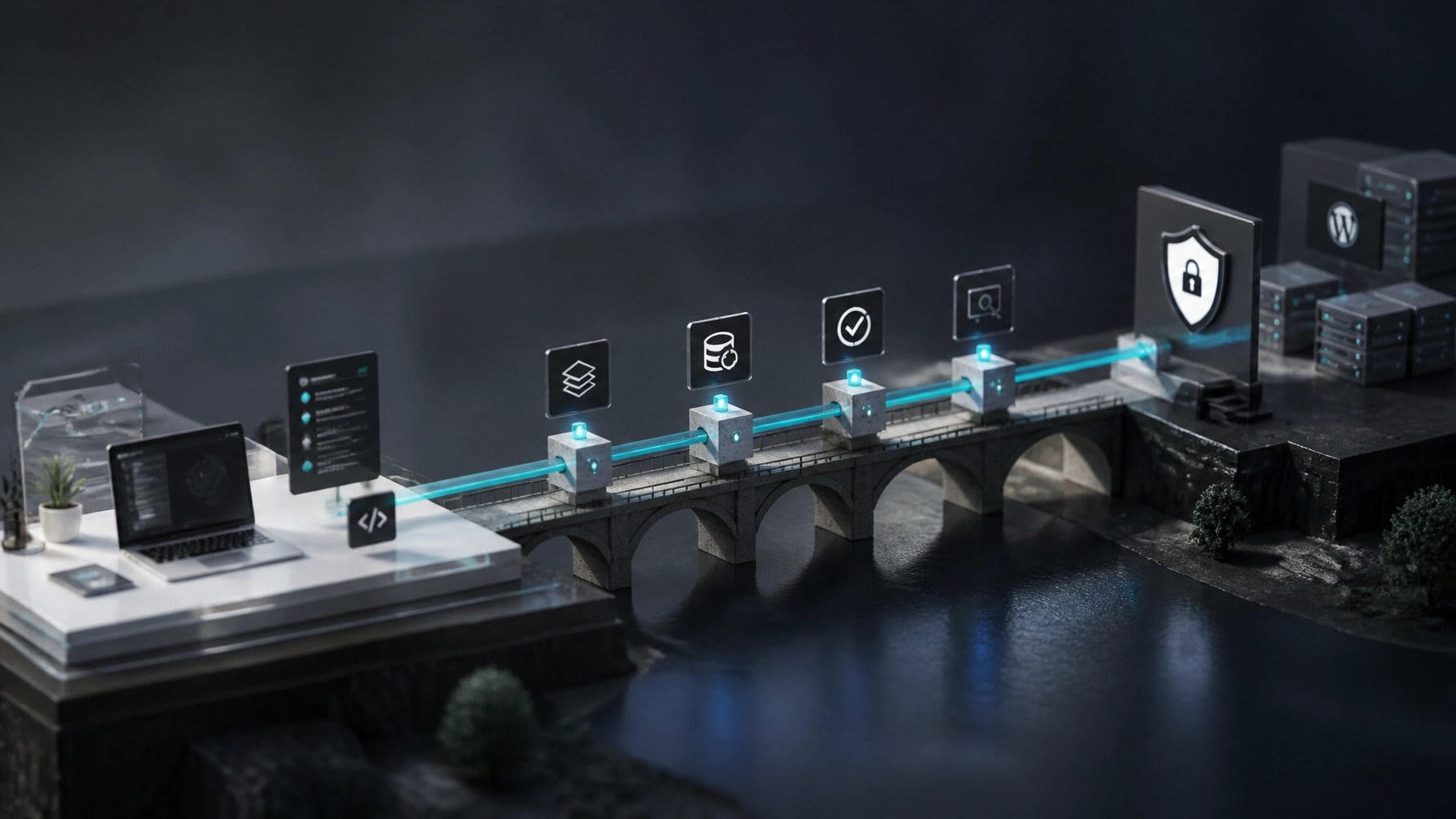
    Secure digital architecture connecting local development, staging and protected production infrastructure

    Definitive result: staging converts agentic experimentation from a live-site liability into a recoverable development protocol.

    3. Permissions and human approval become part of the product

    The third change concerns authority.

    An AI agent that can create files, run commands, install plugins or modify a site requires clearly defined boundaries. The correct question is not simply, “What can the agent do?” It is, “What is the agent authorised to do within this environment, and who approves the outcome?”

    A business-grade permission model should distinguish between:

    • Local development access
    • Staging access
    • Production access
    • Content publication rights
    • Plugin and theme installation rights
    • Customer-data access
    • Administrative credentials
    • Financial or transactional systems

    The principle of least privilege should apply. An agent does not require unrestricted administrator access merely because that access is technically convenient.

    Human approval is equally important. The responsible operator must be able to inspect the proposed change, understand its effect and reject it where necessary. This is particularly important for regulated content, legal statements, pricing, accessibility, customer data and search-critical pages.

    WordPress Studio allows agentic features to be disabled, and the new experience can be switched back to the classic workflow. That flexibility is useful. It provides a control point while teams establish confidence and operating standards.

    Definitive result: permission boundaries and explicit approval prevent automation from becoming uncontrolled production access.

    4. Monitoring and backups become the operational safety net

    The fourth change is that AI-assisted development increases the requirement for continuous oversight.

    A generated change may be technically valid but commercially harmful. A plugin may function while degrading performance. A content update may read well while weakening search intent. A template change may pass desktop review while damaging mobile usability. These are not purely coding failures. They are operational failures.

    Before introducing agentic tooling, a business should establish:

    • Scheduled, off-site backups
    • Tested restoration procedures
    • Uptime and performance monitoring
    • Security hardening
    • Change records
    • User and permission reviews
    • Staging-to-production controls
    • A defined incident response process

    A backup that has never been restored is an assumption, not a recovery plan. ZeroPoint Creative’s Security and Backups service is designed around scheduled backups, security controls, monitoring and practical recovery support.

    Monitoring must also cover search performance. Changes to headings, metadata, internal links, schema, indexability or page speed can create visibility decay even when the website appears operational. Our SEO services treat these issues as a technical performance protocol rather than a one-off content exercise.

    Definitive result: monitoring identifies harmful drift, while tested backups preserve the ability to recover without extended commercial disruption.

    5. AI automation for business moves from prompts to governed workflows

    The fifth change is strategic. Agentic WordPress capabilities demonstrate how AI automation for business is likely to mature: not as a replacement for operational judgement, but as a supervised workflow layer.

    A useful automation should have five defined components:

    1. Trigger : what starts the workflow?
    2. Action : what does the system perform?
    3. Permission : what is it allowed to access?
    4. Approval : which actions require human confirmation?
    5. Evidence : how is the result logged and assessed?

    At ZeroPoint Creative, we refer to this supervised operational layer as Nova. Nova is not a claim that WordPress Studio can independently control every website. It represents a controlled way to coordinate AI-assisted tasks with human oversight, resilient infrastructure and measurable outcomes.

    Nova, a supervised AI operations guardian beside a monitored WordPress infrastructure dashboard

    For example, an approved workflow might identify a broken link, create a proposed correction, present the change in staging and request approval before publication. A less responsible workflow would grant an AI tool broad production access and assume that a successful response means a successful business outcome.

    This is also where Digital Operations Management becomes relevant. The service coordinates workflows, systems and routine online processes so that automation remains aligned with business requirements rather than becoming another disconnected tool.

    Definitive result: governed automation reduces repetitive workload while retaining the accountability required for commercial and compliance-critical decisions.

    What should a business do now?

    Do not begin by connecting an experimental agent to your live website. Begin with an infrastructure assessment.

    A controlled adoption path should look like this:

    1. Inventory your WordPress sites, themes, plugins, integrations and data flows.
    2. Confirm that reliable backups exist and that restoration has been tested.
    3. Establish a local or staging environment separate from production.
    4. Define permissions and identify actions requiring approval.
    5. Pilot low-risk tasks such as prototypes, audits or non-sensitive content structures.
    6. Review performance, accessibility, SEO and security outcomes.
    7. Record successful workflows before standardising them across the business.
    8. Monitor the system continuously and review the process as the beta develops.

    Businesses seeking a broader framework can review ZeroPoint Creative’s managed website packages, which combine hosting, updates, backups, monitoring and ongoing support.

    Conclusion: agentic capability requires stronger infrastructure

    WordPress Studio’s agentic beta is a significant development in WordPress website management. It shows how natural-language instructions, local development and live preview can compress parts of the implementation cycle.

    It does not eliminate technical responsibility. It does not make every website autonomous. It does not replace staging, permissions, backups, monitoring or human approval.

    The commercial opportunity is real when the capability is introduced as part of a managed architecture. The businesses most likely to benefit will be those that standardise their environments, protect production access and measure outcomes with clinical precision.

    The correct objective is not maximum automation. It is dependable automation.

    That is how faster implementation becomes operational excellence, and how operational excellence supports scalable growth.

    Sources and References