

For many small businesses, the immediate problem is not a lack of software. It is the accumulation of repetitive work across email, lead handling, appointment booking, customer communication, content administration and internal reporting.
That friction creates operational drag. Important enquiries remain unanswered, routine actions depend on one person, and business knowledge becomes trapped in disconnected inboxes, spreadsheets and informal processes.
AI staffing can help. But an AI employee should not be treated as an unrestricted digital worker with access to every system. It should be designed as a controlled operational component, with defined responsibilities, limited permissions, documented escalation routes and appropriate human oversight.
The UK Information Commissioner’s Office confirms that UK GDPR applies when personal data is processed through AI systems, while the EU AI Act identifies areas such as employment and worker management as high-risk use cases. The principle is clear: delegate routine execution, not accountability.
Problem: Your Business Is Carrying Too Much Repetitive Work
Small and medium-sized businesses often operate with a narrow management structure. A founder or senior employee may be responsible for sales, customer service, administration, marketing, scheduling and technical coordination at the same time.
This creates several structural weaknesses:
- Response delays: Enquiries are answered when someone has capacity rather than when the customer is ready to act.
- Process inconsistency: Different people handle similar tasks in different ways.
- Data leakage: Customer information is copied between platforms without a clear governance model.
- Knowledge dependency: One person becomes the only reliable source of operational context.
- Visibility decay: Follow-ups, content updates and reporting are postponed until they become urgent.
- Technical debt: Quick, disconnected automations accumulate without a coherent operating framework.
Adding another generic software subscription rarely rectifies this. It may create another login, another dashboard and another unmonitored process.
The correct question is not, “What can AI do?” It is, “Which responsibilities can be delegated safely without weakening the structural integrity of the business?”
Key takeaway: AI staffing is an operational design challenge, not a software purchasing exercise.
Infrastructure: What Should an AI Employee Actually Do?
An AI employee is most effective when its role is narrow enough to govern and broad enough to produce useful operational continuity.
Suitable tasks generally share four characteristics:
- They are repetitive.
- They follow identifiable rules.
- They have a measurable output.
- They can be escalated when the situation falls outside those rules.
Examples include:
Administrative coordination
An AI employee can help organise incoming information, summarise conversations, prepare internal notes, categorise enquiries and identify actions requiring human attention.
It may also prepare appointment information, draft reminders and maintain a structured task queue. The final authority should remain with an authorised person where the action has commercial, legal or reputational consequences.
Lead response and qualification
AI can acknowledge a new enquiry, ask pre-approved qualifying questions, identify the relevant service area and route the lead to the correct person.
It can also draft follow-up messages based on the information supplied by the prospect. It should not make unsupported claims, negotiate unusual terms or promise outcomes outside the approved service framework.
Customer communication
For routine questions, an AI employee can provide information from an approved knowledge base, explain next steps and identify when a human response is required.
Human review should remain mandatory for complaints, refunds, disputes, sensitive personal information, contractual interpretation and any communication that could materially affect the customer’s position.
Content and operational support
AI can prepare content briefs, summarise source material, create internal drafts and identify gaps in a publishing schedule. A human should approve factual claims, regulatory statements, brand-sensitive content and material that represents the organisation publicly.
Internal reporting
An AI employee can consolidate information from approved systems into a data-dense operational summary. This can help a business owner see open enquiries, overdue actions, upcoming appointments and unresolved issues without manually checking every platform.
The purpose is not to remove judgement. It is to ensure that judgement is applied to the right issues.

What Should Remain Human-Controlled?
Delegation must stop where the consequences become significant.
AI should not independently make final decisions about:
- Recruitment, rejection or candidate ranking.
- Dismissal, promotion, pay or performance assessment.
- Credit, eligibility or access to essential services.
- Complaints outcomes involving legal or financial consequences.
- Refunds, contract changes or account closures outside defined rules.
- Medical, legal or financial advice without qualified professional review.
- Sensitive personal data handling without an approved governance process.
The ICO’s AI guidance emphasises the importance of applying data protection principles to AI systems, including lawful processing, data minimisation, transparency and the ability to explain decisions. Its guidance on AI and data protection should be reviewed before introducing AI into a process involving personal data.
If your organisation serves customers or workers in the European Union, the EU AI Act framework is also relevant. It applies a risk-based approach and identifies employment-related systems, including recruitment tools, as high-risk areas.
Human oversight must be meaningful. A person who automatically approves every AI recommendation without understanding or questioning it is not providing an effective control.
Key takeaway: An AI employee may prepare, classify, recommend and coordinate. A named human must retain authority over consequential decisions.
Transformation: Define the Role Before Selecting the Tool
The most common implementation failure is beginning with a platform rather than a responsibility.
Before selecting technology, define the AI employee’s role in operational terms.
1. Name the role
Avoid vague instructions such as “help with the business”. Specify the function:
- Lead response assistant.
- Appointment coordination assistant.
- Customer service triage assistant.
- Internal administration assistant.
- Content operations assistant.
A defined role creates a clear boundary.
2. Document the inputs
List the information the AI employee is allowed to access. This might include a service catalogue, approved FAQs, calendar availability, internal process documents or lead enquiry forms.
Do not provide unrestricted access simply because a platform makes it technically possible.
3. Define the outputs
Specify what the AI employee is expected to produce:
- A drafted email.
- A categorised enquiry.
- A booked appointment.
- An internal summary.
- An escalation notification.
- A prepared task for human approval.
Every output should have an owner and a measurable quality standard.
4. Establish authority levels
Create three operational categories:
- Autonomous: the AI may complete the action without approval.
- Review required: the AI may prepare the action, but a human must approve it.
- Prohibited: the AI must not perform the action.
This authority model is more important than the personality or name assigned to the AI employee.
5. Build escalation routes
The AI must know when to stop. Escalation triggers may include unclear requests, angry customers, sensitive personal data, unusual pricing, legal language, technical failures or missing information.
A controlled pause is a successful outcome. It prevents the system from creating avoidable risk.
Nova: A Practical Example of AI Staffing
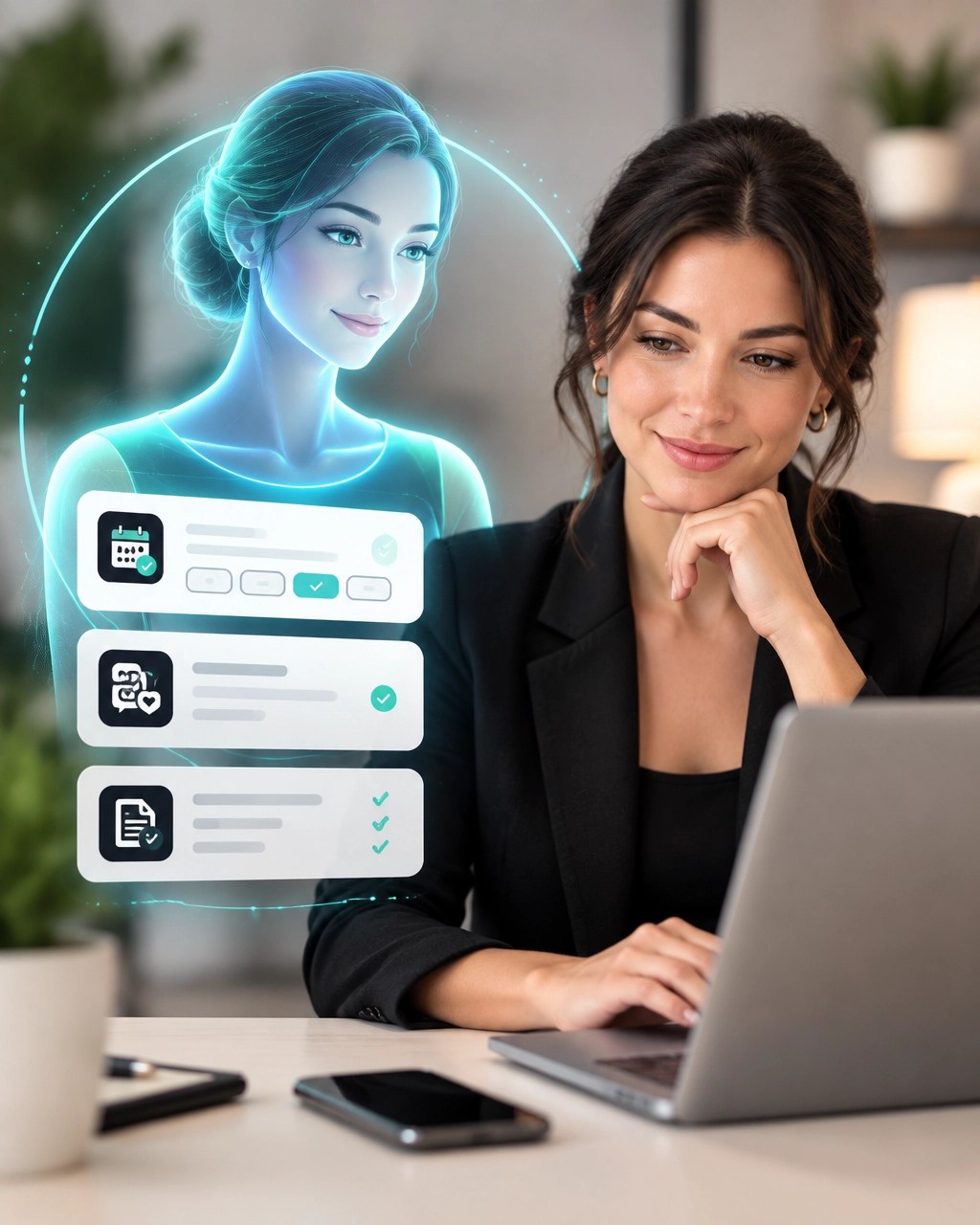
Nova is Krishna’s MyGentic AI assistant. She provides a practical example of how an AI assistant can support a business owner without replacing human accountability.
Nova helps manage business activity, respond to social media enquiries and book appointments. These are operational responsibilities with clear value, but they still require boundaries around authority, tone, privacy and escalation.
Nova should not be understood as a substitute for Krishna’s judgement. She is an operational layer that helps route information, maintain responsiveness and keep routine activity moving.
That distinction matters. The objective is not to create the illusion of a human employee. The objective is to create a reliable, governed system that supports the person responsible for the business.
How to Integrate an AI Employee into Existing Operations
Integration should be incremental and documented.
Begin by mapping the current process:
- Where does the request originate?
- Which system receives it?
- Who currently handles it?
- What information is required?
- What happens when the request is unclear?
- Which actions require approval?
- How is completion recorded?
Then identify one workflow with a clear operational boundary. Lead response, appointment coordination or internal summarisation are often suitable starting points because the outputs can be defined and reviewed.
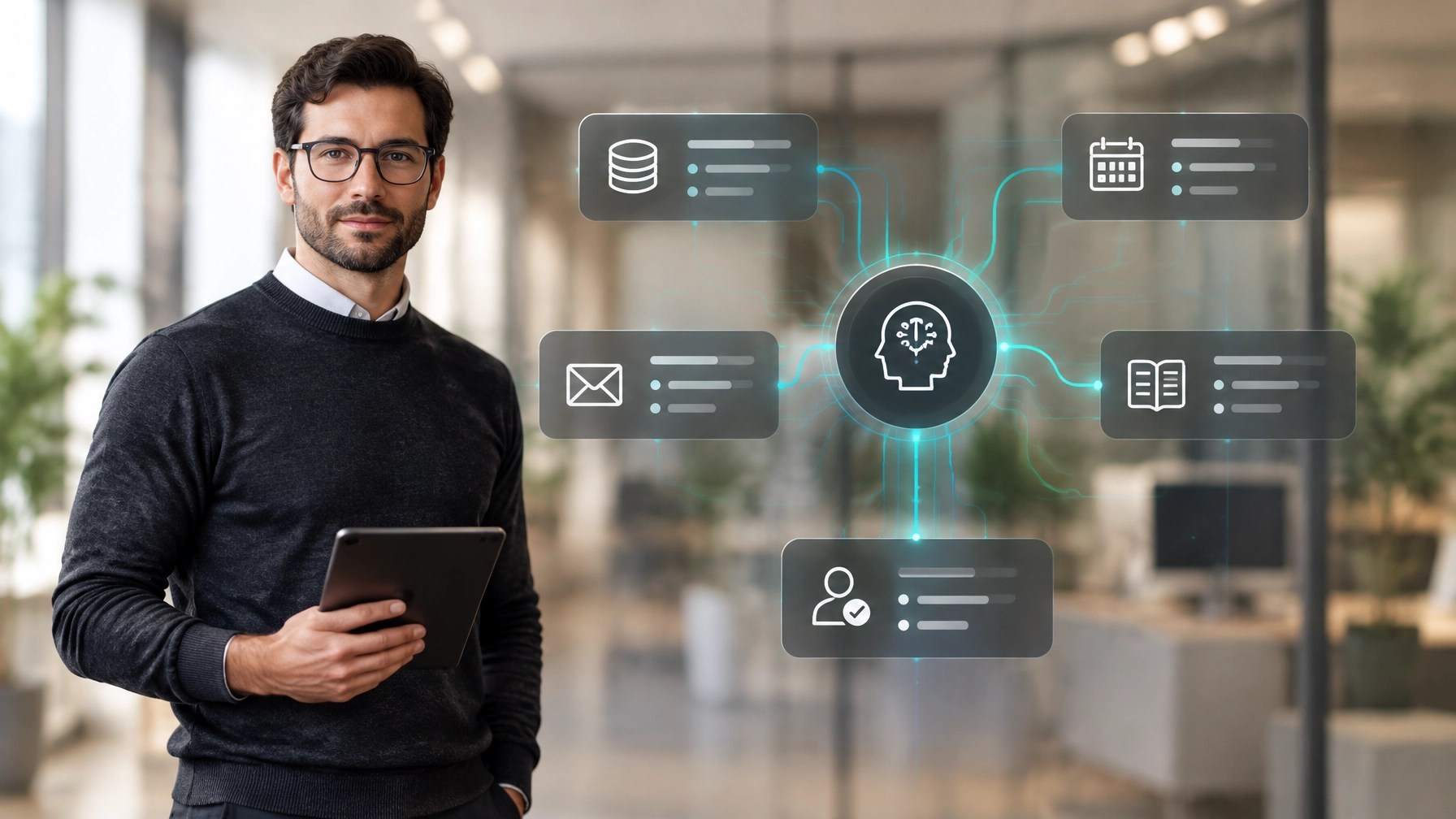
Connect only the systems required for that role. An AI employee responsible for appointment coordination may require access to an approved calendar and booking process. It does not automatically require access to payroll, financial records or unrelated customer files.
A resilient integration should include:
- Approved data sources.
- Role-based permissions.
- Human approval points.
- Error and escalation handling.
- Activity logging where appropriate.
- A process for reviewing inaccurate outputs.
- A named owner responsible for the system.
AI Employee Readiness Checklist
Before delegating work to an AI employee, confirm the following:
- The task is repetitive and clearly defined.
- The business outcome is measurable.
- The AI employee has a named operational owner.
- The approved data sources are documented.
- Unnecessary access has been removed.
- Autonomous, review-required and prohibited actions are defined.
- Human escalation triggers are documented.
- Customer-facing AI interaction is clearly identified where appropriate.
- Personal data processing has been assessed.
- A data protection impact assessment has been considered for higher-risk processing.
- Staff know when and how to challenge an AI output.
- Outputs are monitored during the initial operating period.
- There is a process for suspending the AI employee if it behaves incorrectly.
If several boxes remain unchecked, the infrastructure is not ready for autonomous delegation.
Growth: Stability Before Scale
AI staffing should not be measured by how much activity is automated. It should be measured by whether the business becomes more consistent, visible and controllable.
When a defined AI employee handles suitable routine work, your team can direct more attention towards complex customer requirements, commercial judgement and service delivery. The business gains a clearer operating rhythm without surrendering accountability.
ZeroPoint Creative provides AI staffing and automation support for businesses that need assistance with administration, lead response, customer communication, content and operational workflows. We also provide digital operations management for organisations that need their systems, workflows and routine online processes managed as one coherent infrastructure.
The correct architecture will depend on your business model, existing systems, data environment and risk profile.
If you are considering an AI employee, contact ZeroPoint Creative to discuss your requirements with Krishna. The first step is not selecting a tool. It is identifying the responsibility that should be delegated, the controls that must remain in place and the operating framework required to make the system dependable.
Stability is the primary metric. Growth follows.
Leave a Reply