

A website rarely fails in one dramatic event. More often, its structural integrity declines through unattended updates, expired certificates, untested backups, broken integrations and small performance regressions that remain invisible until a customer, administrator or search engine encounters them.
This is the operational gap that digital operations management is designed to close.
The Information Commissioner’s Office states that organisations must apply appropriate technical and organisational measures to protect personal data, preserve confidentiality, integrity and availability, restore access after an incident, and regularly test whether those measures remain effective. The ICO’s data security guidance is clear on one point: security is not a one-off configuration exercise.
It is an ongoing responsibility.
The problem: your website is treated as a completed project
Many businesses commission a website, approve the final pages and consider the work complete. The site then becomes part of the company’s operating environment, but without a defined owner for the work that follows.
Who monitors uptime and performance?
Who checks whether WordPress core, plugins and themes remain supported?
Who verifies that backups have completed and can actually be restored?
Who notices when a form stops sending enquiries after a third-party integration changes?
Who reviews SSL status, access permissions, domain records and security alerts?
When those questions have no named answer, responsibility becomes distributed across people who are already occupied with sales, finance, service delivery or administration. The website remains live, but nobody is operating it as a system.
That distinction matters. A website is not a static brochure. It is a connected service involving hosting, domains, DNS, SSL, content, forms, analytics, integrations, user permissions, search visibility and customer journeys.
The National Cyber Security Centre’s guidance on operating a secure online service describes online services as sociotechnical systems involving people, technology, business processes and supply chains. The implication is practical: technical controls without ownership are incomplete controls.
A website without operational ownership is an unmanaged business dependency.
The agitation: reactive maintenance creates technical debt
Reactive maintenance begins with a visible failure. Managed operations begin before the failure becomes visible.
The reactive pattern is familiar:
- A plugin update is postponed because the site appears to be working.
- A theme or integration remains in place after its supplier has changed its technical requirements.
- A backup is assumed to exist because a dashboard shows a successful task, but no restore test has been completed.
- A form silently stops passing data to a mailbox or CRM.
- An SSL certificate approaches expiry without a defined escalation path.
- A user retains administrator access after their role has changed.
- A page becomes slower after several content, script or configuration changes.
- A search engine encounters broken links, missing metadata or inaccessible content before the business does.
None of these events needs to produce an immediate outage. That is what makes them operationally dangerous.
Unpatched components, silent plugin conflicts and unreviewed access permissions accumulate beneath the visible layer. Staff then spend time diagnosing symptoms rather than improving the customer journey. A director becomes the escalation point for technical work. A web developer is contacted only when the business is already under pressure. The cost is not limited to the repair itself. It includes interruption, uncertainty, context switching and delayed commercial work.
This is not an argument for indiscriminate automation or an out-of-the-box maintenance package. A tool can report a warning, but it cannot determine its business significance, assign ownership or decide whether a change should be made immediately, tested first or escalated.
The NCSC recommends active vulnerability management, appropriate patching, logging, monitoring and tested incident processes. It also states that organisations should understand the responsibilities shared between themselves and their service providers.
Reactive maintenance preserves the appearance of control while technical debt continues to accumulate.
What digital operations management actually covers
Digital operations management is the managed layer between your digital infrastructure and your commercial operation. It provides a repeatable operating framework for keeping systems observed, maintained and accountable.
1. Monitoring and alerting
Monitoring establishes a baseline for normal operation and identifies deviations that require attention. Depending on the system, this can include:
- Website availability checks
- Performance observation
- SSL and domain status
- Security events and suspicious activity
- Backup completion
- Form and integration behaviour
- Changes to users, permissions or critical settings
The NCSC explains that logging provides traceability and that security monitoring helps identify anomalies against an understanding of normal system behaviour. Monitoring is therefore not simply a dashboard feature. It is an early-warning protocol.
2. Patching and update discipline
WordPress core, plugins and themes require controlled maintenance. Updates should be assessed according to their purpose, compatibility and risk, rather than applied randomly or ignored indefinitely.
A disciplined process can include:
- Reviewing the proposed change.
- Confirming that a current backup exists.
- Testing material changes where appropriate.
- Applying the update.
- Checking key pages, forms and integrations.
- Monitoring the site after deployment.
- Recording the outcome.
The NCSC identifies software updates and patching as core operational security activities. This is why WordPress website management is more than logging into an administrator panel and clicking “update”.
3. Backups and restore testing
A backup is not a resilience strategy until it can be restored.
The ICO states that organisations should be able to restore access and availability to personal data after a physical or technical incident, with measures tested and improved where necessary. The NCSC’s GDPR security outcomes also identify appropriate backups, recovery planning and tested incident management as part of minimising impact.
A managed process should therefore consider:
- What is backed up
- Where backups are stored
- How long they are retained
- Who can access them
- Whether backup completion is monitored
- How restoration is tested
- What happens if a restore fails
The correct cadence depends on the business, data and risk. There is no universal timetable that substitutes for assessment.
4. Security posture
Security operations include access control, administrator permissions, SSL, secure hosting, software vulnerability awareness and the handling of third-party services.
The ICO recommends identifying a person with day-to-day responsibility for information security. The NCSC recommends stronger authentication for privileged access and appropriate controls over management and maintenance access.
This is where a named operational owner has greater value than another disconnected tool. The owner ensures alerts become decisions, decisions become documented changes, and changes are reviewed for their effect.
5. Content, integrations and technical SEO
Digital operations also cover the functional layer that customers see.
Content updates must preserve page structure, internal links, forms, metadata and accessibility. Integrations must be checked when external services change. Technical SEO must be treated as an ongoing system of crawlability, indexation, structured information, performance and intent alignment.
A site can remain technically online while its visibility decays. That decay may arise from broken links, duplicated pages, poor information architecture, unreviewed redirects or content that no longer reflects the commercial service.
A managed operation provides a route to investigate and rectify these issues before they become embedded.

Maintenance retainer versus operations function
A maintenance retainer usually provides a defined volume of work, such as updates, edits or troubleshooting. That can be useful, but it does not automatically create operational accountability.
A digital operations function is broader. It defines:
- Which systems are in scope
- Who owns day-to-day oversight
- Which signals are monitored
- What counts as a critical issue
- How incidents are logged
- How changes are approved
- When issues are escalated
- How recurring failures are reviewed
- How the operation changes as the business grows
The difference is structural.
A retainer may answer the question, “Can someone work on the site when requested?” An operations function answers, “Who is responsible for the site remaining understood, observed and serviceable over time?”
Maintenance is an activity. Operations is an accountability model.
Ownership and escalation: the missing control
A named owner does not need to perform every task personally. They do need authority to coordinate the correct response.
Effective ownership includes:
- A known route for reporting issues
- A record of changes and incidents
- Clear categorisation of urgency
- Confirmation of what has been investigated
- Communication about the action taken
- Review of recurring failures
- Defined boundaries between client, provider and third-party suppliers
This model also matters where business knowledge is shared with digital assistants or automated workflows. Information provided by the client remains client-owned. Clients must be able to request deletion and revoke access to information when appropriate. Nova may support a route to communication and booking, but she does not replace client ownership, governance or human approval.
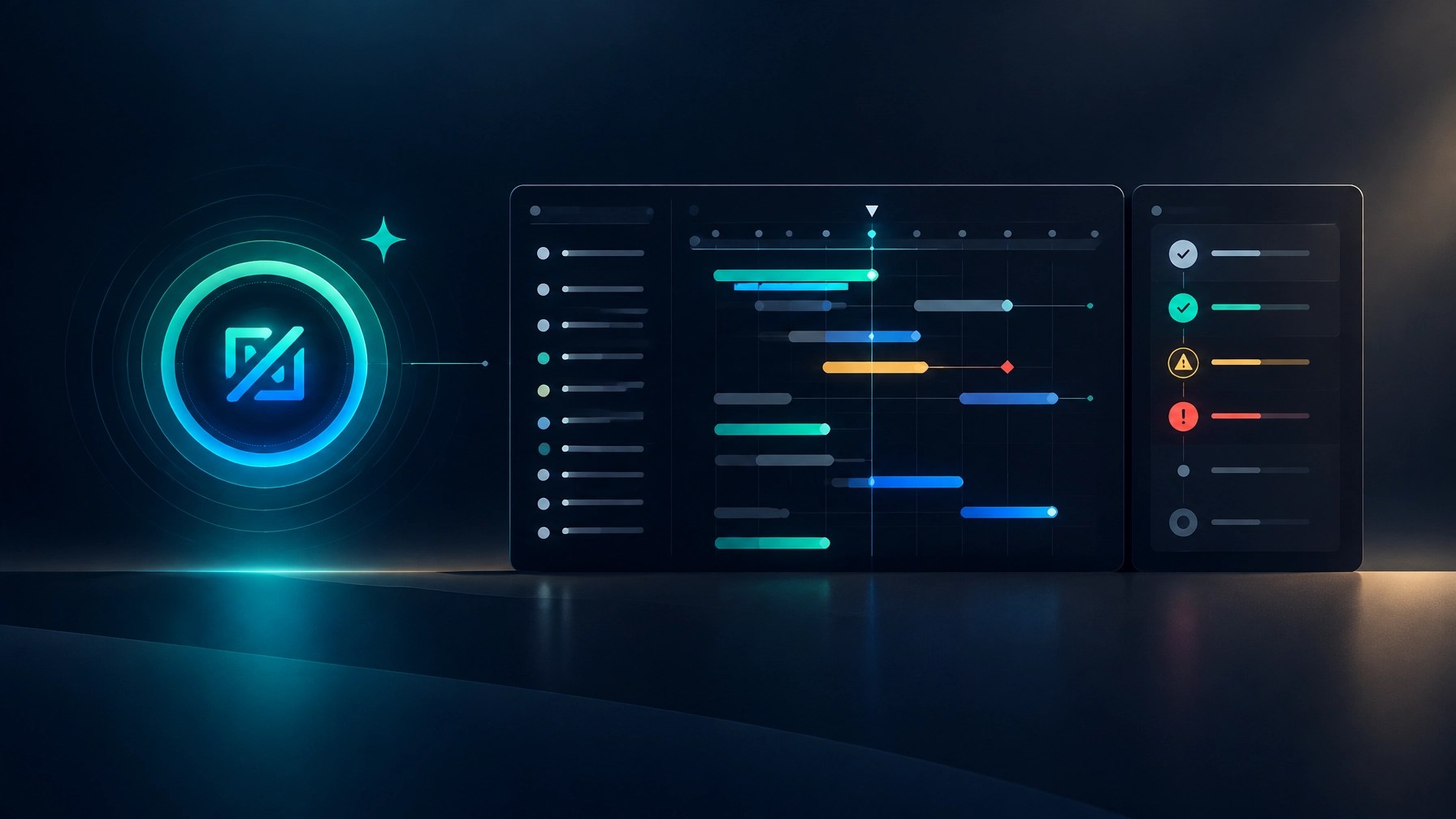
Tools support the function. They do not own the function.
The commercial argument: reliability is part of the customer experience
Reliability is not merely a technical preference. It is a commercial feature.
A customer who encounters a broken form, a slow page, an expired certificate or inconsistent information is not assessing your internal workflow. They are assessing whether your business appears dependable.
Search visibility is also connected to technical condition. Search engines need to access, interpret and retrieve your content. Technical SEO cannot compensate indefinitely for neglected infrastructure, broken pathways or unstable page delivery. Equally, managed operations do not guarantee a ranking position or a specific volume of enquiries.
The commercial objective is more controlled: reduce preventable friction, preserve service continuity, maintain the integrity of the customer journey and create a stable platform for improvement.
Stability is not the opposite of growth. It is the operating condition that allows growth to be managed.
How ZeroPoint Creative manages the digital layer
ZeroPoint Creative Ltd builds and manages digital infrastructure for modern businesses that need reliable, hands-off support.
Our managed digital operations approach can include:
- Managed hosting and secure infrastructure
- Continuous monitoring
- SSL management
- Backups and recovery support
- WordPress core, plugin and theme updates
- Website maintenance services
- Content and page updates
- Integration support
- Technical SEO and on-page optimisation
- Troubleshooting across connected digital systems
- 24/7 managed support
- Domains, DNS and related digital administration
The service can be structured through three factual operating levels:
- Lite for businesses requiring a managed foundation and essential support.
- Core for businesses requiring broader content, monitoring and maintenance coverage.
- Custom for businesses with more complex infrastructure, integrations or operational requirements.
The correct package depends on the systems in place, the level of risk, the volume of change and the degree of support required. It should be assessed rather than selected as an arbitrary out-of-the-box solution.
Key Takeaways
- A website is an operational system, not a project that ends at launch.
- Digital failures usually accumulate quietly through neglected updates, integrations, permissions and testing.
- Backups must be monitored and restore procedures must be tested.
- Website maintenance services should include a defined process, not only access to occasional technical labour.
- WordPress website management requires update discipline, security observation, performance checks and escalation ownership.
- Digital operations management connects monitoring, maintenance, security, content, integrations and technical SEO.
- A named owner is more valuable than a collection of disconnected tools.
- Client-owned business knowledge must remain under client control, with deletion and revocation available where appropriate.
- Stability supports customer confidence and provides a more resilient foundation for commercial expansion.
Contact ZeroPoint Creative
If your website is live but nobody is responsible for what happens next, contact ZeroPoint Creative Ltd.
Email info@zeropointcreative.com, call 0800 870 8203, or use the call symbol on zeropointcreative.com to reach Nova.
ZeroPoint Creative Ltd
71–75 Shelton Street
Covent Garden
London
WC2H 9JQ
For more context, review our digital operations support service, security and backup infrastructure, and technical SEO services.
Sources and References
- Information Commissioner’s Office, A guide to data security
- Information Commissioner’s Office, UK GDPR guidance and resources
- National Cyber Security Centre, GDPR security outcomes
- National Cyber Security Centre, Building and operating a secure online service
- UK GDPR, legislation.gov.uk
- ZeroPoint Creative, Digital Operations Support
- ZeroPoint Creative, Contact
- ZeroPoint Creative, SEO Services
