

For the modern business owner, the diary is not merely a list of appointments; it is the central nervous system of the enterprise. Yet, for most, it is a system in a state of entropy. Manual diary management represents a significant technical debt: a fragmented process of back-and-forth emails, time-zone miscalculations, and context-switching that erodes the primary asset of any leader: time.
At ZeroPoint Creative Ltd, we do not view scheduling as a creative or administrative task. We view it as an engineering challenge. By implementing managed AI diary ecosystems, we rectify the systemic inefficiencies that cause "data leakage" in your daily schedule. This guide outlines how an architectural approach to automation can reclaim upwards of 10 hours of your week, transforming your calendar from a source of friction into a resilient performance engine.
1. The Problem: Systemic Failure and Administrative Friction
Most business owners operate under a "DIY" scheduling model that is inherently high-risk. This manual approach is a liability. Every "What time works for you?" email is a point of friction that increases the cognitive load on the sender and the recipient. In the UK, with the National Living Wage increasing operational costs, the traditional model of hiring human administrative staff for routine coordination is becoming increasingly inefficient.
The Cost of Visibility Decay
When your diary is managed manually, you suffer from visibility decay. You lose sight of "deep work" windows. Meetings are shoehorned into gaps without regard for cognitive recovery or travel buffers. This lack of structural integrity leads to:
- Decision Fatigue: Small, repetitive decisions regarding meeting times drain the mental energy required for high-stakes strategic choices.
- Operational Leakage: The time spent coordinating a 30-minute meeting often exceeds 15 minutes of administrative overhead. Over a week of 10 meetings, this represents 2.5 hours of lost billable potential.
- Context-Switching Penalty: Frequent interruptions to check availability disrupt flow states, reducing overall output quality.

In the current UK economic climate, where large-scale businesses are projected to save 7.9 billion employee hours through AI adoption, small to medium-sized enterprises (SMEs) cannot afford to ignore these inefficiencies. Failure to optimise your time-management infrastructure is a direct threat to your commercial scalability.
Precision is the only path to conversion. Without a managed system, your diary is a leak in your balance sheet.
2. The Infrastructure: Engineering a Managed AI Ecosystem
To rectify these failures, ZeroPoint moves beyond "off-the-shelf" booking links. We build integrated AI-driven staffing and automation workflows tailored to your specific digital operations. Our approach treats your diary as a mission-critical infrastructure project.
The Architectural Framework
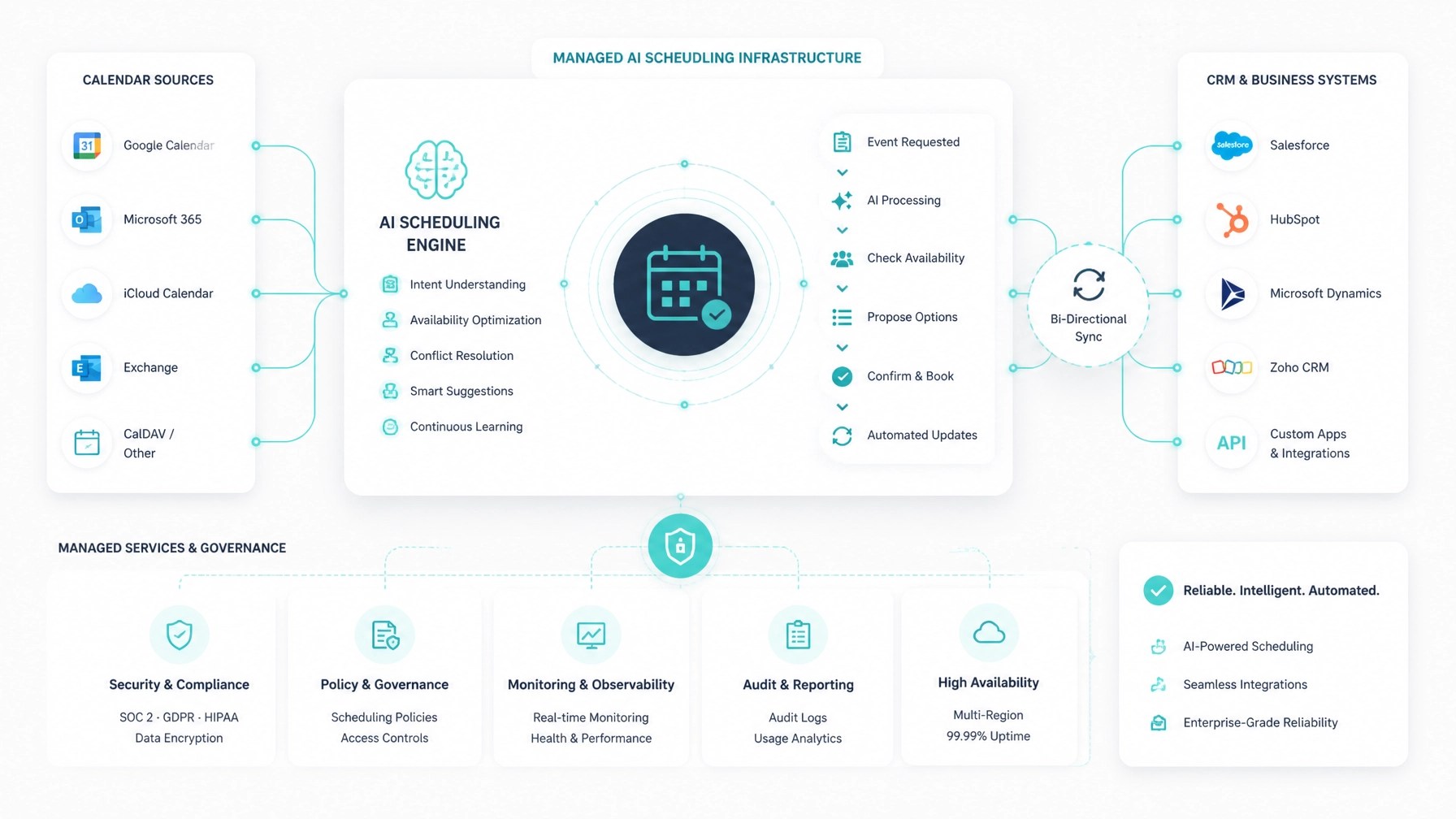
An engineered diary system consists of three core layers:
- The Intake Layer: Instead of manual email exchanges, we implement intent-based intake systems. These platforms assess the priority and nature of the request before offering availability.
- The Integration Layer: We synchronise your diary with your managed website and CRM. This ensures that a booked meeting automatically triggers a data-dense profile of the attendee, delivered to your inbox before the call starts.
- The Governance Layer: AI agents act as technical guardians. They monitor for double-bookings, manage buffer zones with clinical precision, and handle rescheduling protocols without human intervention.
Mitigation of Technical Debt
By leveraging our AI Staffing Add-On, you replace a fragmented process with an "always-on" monitoring system. We don't just "set up a tool"; we architect a workflow that aligns with UK GDPR and operational standards. This ensures that your data remains secure while your availability remains fluid.
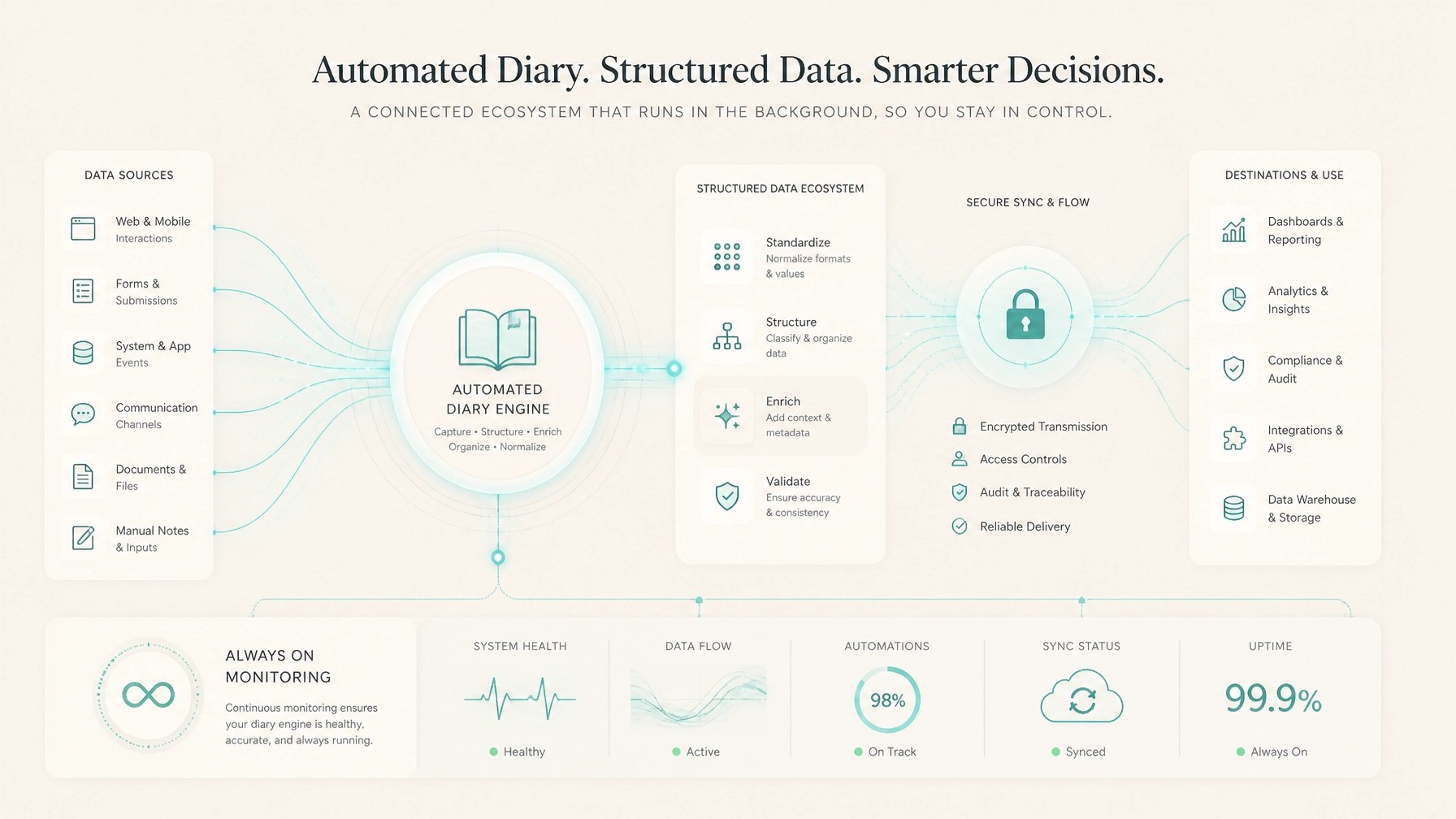
Stability is our primary metric. When your scheduling infrastructure is resilient, it functions in the background, allowing you to focus on the technical execution of your core services.
3. The Growth: Reclaiming Your Strategic Capacity
When the administrative friction is removed, the result is not just "more time": it is the ability to leverage that time for commercial expansion. Recent UK productivity statistics indicate that firms using AI tools for routine tasks see a measurable boost in performance and customer satisfaction.
Predictable Performance
A managed diary system allows for a standardised approach to business development. You move from a reactive state (answering emails) to a proactive state (executing strategy). The 10 hours reclaimed each week are reallocated to:
- System Optimisation: Refining your internal digital operations.
- High-Value Acquisition: Focusing on large-scale contracts rather than administrative minutiae.
- Risk Mitigation: Ensuring your business infrastructure is prepared for future regulatory or economic shifts.

Scalability Through Standardisation
At ZeroPoint, we offer tiered packages designed to grow with your business. Whether you are using our Lite, Core, or Custom plans, our goal remains the same: to provide a frictionless digital experience that handles the technical details so you don't have to.
The move from manual to automated diary management is a transition from a fragile DIY setup to a resilient, professional infrastructure. It is an investment in your company’s structural integrity.
Operational excellence is not an accident; it is engineered.
Summary: The ZeroPoint Protocol
Reclaiming 10 hours of your week is not a creative exercise: it is a technical requirement for growth. By identifying systemic failures in your current diary management and replacing them with a managed AI infrastructure, you mitigate risk and enable scalable performance.
If you are ready to rectify your administrative inefficiencies and standardise your digital operations, explore our AI Staffing solutions or review our integrated digital marketing protocols.
Stability is within reach. Precision is the standard.
